Pedro Lilienfeld
Let the higher philosophy reflect, I repeat, and glance backward
to some extent. How far has the knowledge of nature progressed,
how much is left, and what may the men of the future expect?
Johannes Kepler, 1610
Introduction (written 2026)
In the early 2000s I was asked to write a chapter on the history of aerosol optics, and more specifically about the optical characterization of aerosols. This chapter was then published in what I would characterize as a rather obscure book with very limited circulation entitled History & Reviews of Aerosol Science, copyrighted by the American Association for Aerosol Research and whose Chairperson of the Editorial Committee was my colleague and friend, Gilmore J. Sem. After obtaining the requisite permission from that organization, I am publishing this chapter in my blog, in what follows. It represents another of my excursions into the history of science in a field that has received only limited attention.
Chapter
The evolution of the photometry of airborne particles followed three sequential phases: observation, interpretation and quantification. Early efforts were directed at understanding the nature of atmospheric optical phenomena, principally the blue color of the sky, rainbows and halos, clouds and smokes. It is generally accepted that Leonardo da Vinci was the first to seek a scientific explanation of the clear sky’s hue. Later on, Newton attributed the sky’s blueness to optical interference of sunlight by water droplets. The earliest work on the interpretation of rainbows can be traced back to Theodoric of Freiberg in 1310.
The first efforts at quantification of atmospheric transmission were achieved during the 18th century when Bouguer and de Saussure, carried out ingenious experiments to determine the attenuation of light by the atmosphere. The extensive light scattering investigations by John Tyndall during the 1860s are considered especially insightful and were to pave the way for the rigorous mathematical treatment of molecular scattering by Lord Rayleigh and his definitive interpretation of the blue color of the sky in 1899. The rigorous and generalized mathematical modeling of light scattering by spherical particles remains the achievement of Gustav Mie in 1908.
The 20th century sets the stage for the rapid development of atmospheric visibility measurement techniques based on the attenuation and/or scattering at either natural or artificial light beams. Early photometers were based on visual sensing. Instruments incorporating photoelectric detection later supplant these devices. Concurrently, single particle detection was achieved leading to a variety of counting and sizing instruments. Other devices were developed based on the wavelength dependence of light scattering for the determination of particle size. Among early portable light scattering photometers for monitoring industrial and mining environments are instruments such as the Tyndalloscope.
ANTECEDENTS AND BEGINNINGS
The beginnings of aerosol photometry can be traced to the first attempts at comprehending the plethora of optical phenomena presented by the earth’s atmosphere. These visual manifestations of light scattering and absorption were the subject of early wonderment and curiosity that led to speculative pursuits for rational explanations. Although the elucubrations of Aristotle twenty-four centuries ago are of historical interest, they inform us more about the mode of thinking in classical Greece than provide us with solid foundations for the understanding of phenomena such as the blue color of the daytime sky and the origin of rainbows.
Although the pervasive search for the origin of the sky’s blueness, pursued up until the first decade of the 20th century, may be at the fringes of the general subject of aerosol photometry, nevertheless we should consider that subject as seminal in the closely related field of the optics of suspended particles. We must keep in mind that the limiting case of the generalized theory of light scattering for particles that are much smaller than the wavelength of the illuminating radiation applies not only to air molecules but also to visible light scattering by ultra-fine particles, as we will discuss further on.
The practical application of the optical effects of aerosols most probably predates any attempt at understanding such behavior: the cloaking effects of adventitious mists and smokes was, no doubt, used in ancient warfare, as the generation of artificial obscurants is still a present day means to hide the deployment of troops and equipment.
If we are to identify one person as the father of aerosol photometry, this distinction should be assigned to Leonardo da Vinci (Italian, 1452 – 1519) (O’Connor and Robertson, 2002). Perhaps not surprisingly, this multifaceted Renaissance genius left us with writings of tantalizing foresight on the subjects of sky blueness, and the visual appearance of smokes and mists, even generated under controlled conditions. Da Vinci’s interest in these scientific matters sprung from his keen observational eye as an artist. As J. D. Hey (1983a) suggests in his comprehensive review of the history of light scattering, Leonardo’s motivation
“was originally aroused by the problem of aerial perspective in landscape painting”. The systematic and perspicacious mind of the peerless Italian master is evidenced in the following paragraph cited by Hey (1983a):
You know that in an atmosphere of equal density the remotest obiects seen through it, as mountains, in consequence of the great quantity of atmosphere between your eye and them appear blue and almost of the same hue as the atmosphere itself when the sun is in the East. Hence you must make the nearest buildings above the wall of its real color, but make he more distant ones less defined and bluer; thus, if one is to be five times as distant, make it five times bluer. And by this rule the buildings which above a given line appear of the same size will plainly be distinguished as to which are the most remote and which are larger than the others
(Richter, 1970) An early interpretation of atmospheric turbidity as manifested by the whitening of the sky near the horizon can be gleaned from this statement:
And if the sky, as you see it, ends on a low plain, that lowest portion of the sky will be seen through a denser and whiter atmosphere, which will weaken its true color as seen through that medium, and the sky will look whiter than it is above you, where the line of sight travels through a smaller space of air charged with heavy vapor.
(Richter, 1970)
Da Vinci also became aware of the darkening of the blue color of the sky as he ascended the Monte Rosa in the Alps and correctly attributed this phenomenon to a thinning of the air as a function of altitude, and that above the atmosphere the sky must appear black. His interpretation of the origin of the sky’s blue color, however, proved to be only partially correct. He did attribute this appearance to scattering of sunlight, but by “warm vapor evaporated in minute and insensible atoms”. The idea that minute water droplets dispersed throughout the atmosphere constitute the scattering medium that yields its blue color was to prevail for another 400 years, until the very end of the 19th century.
As M. Kerker (1997) notes in his review of aerosol light scattering instrumentation, Leonardo may also have been the first to carry out laboratory experiments with smoke and spray mist aerosols. This is evidenced by the following citation from Hey (1983a):
If you produce a small quantity of smoke from dry wood and the rays of the sun fall on this smoke, and if you place behind the smoke a piece of black velvet on which the sun does not shine, you will see that all the smoke which is between the eye and the black stuff will appear of a beautiful blue color. And if instead of the velvet you place a white cloth the smoke is ashy pale; too much smoke hinders and thin smoke does not produce the perfection of this blue. Hence a moderate amount of smoke produces the finest blue. Water violently ejected in a fine spray and in a dark chamber where the sunbeams are admitted produces these blue rays and the more vividly if it is distilled water. (Richter, 1970).
It is truly remarkable that da Vinci not only made these observations but that to do so he applied experimental techniques that are still relevant today such as the use of black velvet to create a reflection-less optical background, and high pressure generation of water spray aerosols.
At the opposite end of the spectrum of particle sizes, i.e., in the geometric scattering regime, the origin of rainbows and halos had preoccupied the indagative mind since antiquity. The rainbow was considered a divine omen in the Old Testament, and the symbol of Iris, a Greek goddess. Several medieval thinkers made attempts at an understanding of the mechanisms underlying the appearance and colors of that phenomenon. Among these we should mention, Grosseteste, Roger Bacon, Witelo, and Theodoric of Freiberg. Robert Grosseteste, magister scholarum of Oxford University, conjectured around the year 1220 that the rainbow was produced by reflection and refraction of sunlight by layers in a “watery cloud” (O Connor and Robertson, 2002), but the effect of individual droplets was not considered. Roger Bacon
did attribute (ca. 1267) this phenomenon to the reflection of sunlight from discrete droplets of water (O’Connor and Robertson, 2002). Witelo, a Polish monk in the pope’s employ, author of Perspectiva (about 1270) which was to remain the standard text of optics until the early 17th century (when it was updated by Kepler) (Davidson, 2002), also attributed the rainbow to both reflection and refraction. Although he recognized that the angle of refraction is not proportional to the angle of incidence, he remained unaware of the mechanism of total internal reflection (Middleton, 1960).
As Middleton (1960) suggests, Theodoric of (or Dietrich von) Freiberg in the first decade of the 14th century “came close to being three hundred years ahead of his time”. Theodoric, a Dominican friar and philosopher (he wrote a Treatise on Categorically Determined Reality) was also a true experimentalist as well as theoretician in optics (Wallace, 1959). In his Tractatus de Iride et Radialibus Impressionibus (Treatise on the Rainbow and the Perception of Light Beams) he describes his experiments with a water filled glass globe illuminated by sunlight in a darkened room. He came to the conclusion that “the rainbow is produced inside individual drops of rain and not by a cloud or general mist acting as a mirror that the light bounces off without entering”. He accounted for the appearance of primary and secondary bows by one internal reflection and two refractions, and by two reflections and two refractions, respectively. Theodoric did also recognize that the observed color depended on the angular position of the observer, however, he was unable to achieve a quantitative (angular) understanding of these phenomena, and explained the colors of the rainbow on the basis of the medieval view of a superposition of darkness and brightness in varying proportions. The solution to these rainbow problems had to await the definitive contributions of René Descartes in 1637 on the angular properties of refraction, and Isaac Newton in 1666 on the spectral composition of white light. The interpretation of the supernumerary bows (occasionally seen inside the primary one) became possible only once Thomas Young had established the wave nature of light as the mechanism underlying optical interference phenomena in 1801.
Returning to the question of the sky’s blue color, however. Newton was unable to provide a better explanation than that provided by da Vinci almost two centuries earlier, notwithstanding the far more thorough understanding of optical phenomena evinced by the great English mathematician. Nevertheless, he did suggest a tantalizingly early awareness of the spectral dependence of light scattering on particle size in what came to be known. two-and-a half centuries later, as the Rayleigh regime (Newton, 1730):
The blue of the first Order, though very faint and little, may possibly be the Colour of some Substances; and particularly the azure Colour of the Skies seems to be of this Order. For all Vapours when they begin to condense and coalesce into small Parcels, become first of that Bigness, whereby such an Azure must be reflected before they can constitute Clouds of other Colours. And so this being the first Colour which Vapours begin to reflect, it ought to be the Colour of the finest and most transparent Skies, in which Vapours are not arrived to that Grossness requisite to reflect other Colours, as we find by Experience.
PHOTOMETRY IN THE AGE OF ENLIGHTENMENT
The expansion of the scientific endeavor during the 17th century set the stage for its remarkable flourishing during the next century. Methodologies became more rigorous as well as quantitative, and experimentation was to prevail unburdened from medieval preconceptions. Two multifaceted scientists stand out in the field of atmospheric visibility and light transmission during the 1700s:
Bouguer and de Saussure. It is worth dwelling on the outstanding contributions of these two polymaths as they paved the path for future advances in atmospheric optics and photometry in general.
Pierre Bouguer (born 1698 in Le Croisic, France and died 1758 in Paris) (O’Connor and Robertson, 2002) is known today principally for the exponential attenuation law for light traversing a homogeneous medium, also known as Bouguer-Lambert-Beer law (Bouguer predated both Lambert and Beer). The contribution of that law would suffice to enshrine Bouguer in the temple of aerosol optics. Middleton, who translated Bouguer’s Traité d’Optique sur la gradation de la lumière (Optical treatise on the gradation of light) (Bouguer, 1760) states that “the history of photometry as a serious discipline began with Bouguer, and that of atmospheric transmission also” (Middleton, 1960). He was a child prodigy having succeeded his father (at his death in 1713) as Royal
Professor of Hydrography at the age of fifteen!
The 23rd of November 1725 should be considered the birthday of atmospheric photometry. On that date, in Brittany (northwestern France), Bouguer quantified for the first time the light attenuation of the earth’s atmosphere (Shaw, 1983). The method he used was most ingenious, constrained as he was to using the human eve as the only extant light sensor. Bouguer started from his own exponential attenuation law as applied to a thin plate:
T = I/lo = exp(-ßL/cos α)
where T is the light transmission, ß is the attenuation or extinction coefficient of the material, L is the thickness of the medium and α is the angle of the illuminating beam (with respect to the normal to the plate). He assumed that, if he used the moon as the source of illumination, the earth’s atmosphere could be considered a thin plate. He further surmised (correctly) that if he could measure the atmospheric transmission of moonlight at two different vertical angles he could determine the ratio I/lo without having to measure lo, the light irradiance above the atmosphere (see Fig. 1). Bouguer used the light of a candle as the reference to compare the brightness of the moon at the two angles, and applied the equation
In (Ι1/Ι2) = βL (1/cos α2 – 1/cos α1)
where Ι1/l2, is the ratio of the measured irradiances (with respect to the “standard” candle) at the two vertical angles. Therefrom, the product βL, i.e., the atmospheric turbidity, could be calculated and the value of T for the atmosphere was then obtained. Remarkably, Bouguer circumvented the non-linearity of the human eye’s irradiance response by varying the distance to the candle and using Kepler’s inverse square law to quantify the changes in brightness. Bouguer was thus able to determine that the pre-Industrial Revolution air in Brittany was indeed, by our standards, of pristine purity (Shaw, 1983). Bouguer, however, did not realize that his measurement was, in principle, flawed by the polychromatic nature of the sunlight reflected by the moon, i.e., his equations are strictly true only at a specific wavelength, since the light extinction of the atmosphere is wavelength-dependent.
Bouguer’s method exemplifies the general approach to quantification of parameters such as intensity and frequency used over several centuries prior to the availability of sensors and detectors. This approach consisted of using one of the human senses (visual, auditory, etc.) as a relative measurement device, i.e., comparing the perceived magnitude of the sensory stimulus against a reference.
In the case of Bouguer’s experiment the visual stimulus of moonlight at two angles was compared against the stimulus elicited by a candle whose intrinsic brightness was assumed to remain constant. It is noteworthy that this quantification paradigm continued to be applied to aerosol photometry well into the 20th century, as we will discuss later on.
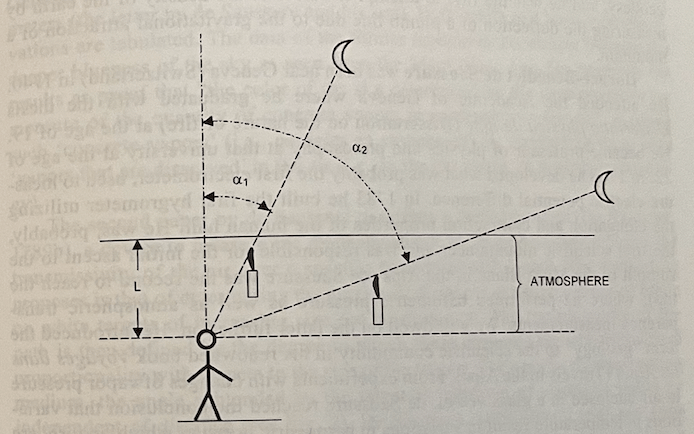
Fig. 1. Bouguer’s (1760) photometric ratio method to determine atmospheric turbidity.
Bouguer also treated the related subject of horizontal visibility. As Middleton (1960) describes, the French academician realized that the apparent brightness of an object at a distance is given by the sum of the light reflected from that object and attenuated by the air path, and the sunlight scattered by the air into the eye of the observer. Bouguer then set up the following equation that models that behavior:
B (L) = a e-βL + b(1 – eβL)
where B is the target brightness, and a and b are empirical coefficients to be determined by observation. He thus effectively stated the relationship that we now know as Koschmieder’s law (Koschmieder, 1924) (see The Era of Instrumentation and Measurement, further on).
Bouguer went on to make significant contributions to other areas of science and technology. He distinguished himself, among other fields he pursued, in being the principal contributor to the determination of the spheroidal shape of the earth for which he spent eight years as a participant in a mission, sponsored by the French Académie Royale des Sciences, to what is now Ecuador (northwest South America). He made major contributions to naval engineering, hydrography and geodesy. and he was the first to attempt to calculate the density of the earth by measuring the deflection of a plumb line due to the gravitational attraction of a
mountain.
Horace-Bénédict de Saussure was born near Geneva (Switzerland) in 1740. He attended the Académie of Geneva where he graduated with the thesis Dissertatio physica de igne (Dissertation on the nature of fire) at the age of 19. He became professor of physics and philosophy at that university at the age of 22. In 1766 he developed what was probably the first electrometer, used to measure electric potential difference. In 1783 he built the first hygrometer utilizing the elongation and contraction properties of the human hair. He was, probably, the first scientific mountaineer and was responsible for the initial ascent to the summit of the Mont Blanc in the Alps (de Saussure was the second to reach the top), where he performed barometric pressure as well as atmospheric transparency measurements. We will dwell on the latter further on. He introduced the term “geology” to the scientific community in his renowned book Voyages dans les Alpes (Travels in the Alps). From experiments with changes of vapor pressure in air enclosed in a glass vessel, de Saussure reached the conclusion that variations in temperature result in variations in barometric pressure which, in turn, are the cause of the motion of air masses in the atmosphere. De Saussure is credited with building the first solar energy collector, consisting of a water tank with a black colored bottom with which he was able to raise the temperature of the water to 88°C. Finally, De Saussure is also recognized for his significant contributions to the modernization of children’s education in Geneva and for his work on reforming the public institutions of that city (Lachavanne, 1997).
De Saussure was the author of two papers published in 1789 (the year of the French Revolution) that have seminal relevance to aerosol photometry (De Saussure, 1789a and 1789b). The first of these describes a cyanometer, i.e., an apparatus to quantify the degree of blueness of the sky (De Saussure, 1789a).
This device consists of an annulus with 53 radial sectors each of which has a slightly different depth of blueness progressing from pure white, representing the absence of blue, to deep blue (Prussian blue) and proceeding with mixtures of this intense blue with gradually increasing amounts of India ink black. This overall range of color gradations was intended to simulate the gamut from a milky (perhaps polluted) sky to the appearance of the sky above the atmosphere.
The steps of increasing blueness were based on a visual threshold determination normalized against a visibility contrast referenced against a black on white target. De Saussure defined these minimum color discrimination steps as “nuances“. He then reports simultaneous “measurements” (by visual matching of the sky’s blueness with one of the wheel’s sectors) at three different sites: Geneva, Chamonix, and on the slope of Mont Blanc at an altitude of 3,436 meters (the latter by de Saussure and his son). Both zenith and horizontal observations are tabulated. The data of the former measurements clearly indicate the deeper blueness of the sky as seen from the Mont Blane site. He interprets his results as proof that “the color of the sky determined by the cyanometer is the measure of the quantity of concrete vapors in suspension in the air”, defining such ‘concrete vapors’ (i.e., particles in suspension) by contrasting them with ‘vapors that are dissolved’ in the air (i.e., in the gas phase, in modern terminology).
The second paper by de Saussure describes a diaphanometer (De Saussure, 1789b), a device to measure the diaphanousness, or in modern terminology, the transmissivity of the air over a specific horizontal path length. The method he proposes is that of determining the maximum distances at which a series of black on white targets of increasing size can be discerned. The transmissivity of the path is then defined by the degree to which these distances deviate from direct proportionality with respect to the size of the targets. For a perfectly transmitting medium, the angle subtended by the target at threshold of visibility would be independent of distance (see Fig. 2). De Saussure, after several trial and error iterations, converged on two targets consisting of a black circle surrounded by a white annulus whose width equaled the diameter of the central circle, and a large dark background surrounding the white annulus. As shown in Fig. 2, one of these targets had a central black circle of two feet (0.61 m) in diameter, whereas the other had a black circle of 2 inches (5.08 cm), i.e., the size ratio of the two targets was 12. De Saussure reports a measurement set where the limit of visual resolution for the smaller target was observed at a distance of 314 ft (95.8 m) and at 3,588 ft (1,094 m) for the larger one. For perfect transmissivity this latter distance would have been 314 ft x 12 = 3,768 ft (1,149 m). De Saussure then applies
the following equation:
T = exp [(In L2/nL1)/n]
where T is the transmissivity over the longer path length L2 (3.588 ft. in this case), L1, is the shorter path length (314 ft, in this case), and n is the ratio between the longer and shorter target distances (12, here). From the above indicated observations, T = 0.9959 which corresponds (for the path length of 1,094 m), in modern terminology, to an extinction coefficient of 3.755 x 10⁻⁶ m-1. Although this represents only about one-third of the extinction coefficient for pure air at sea level we must still recognize that de Saussure’s method was a valiant early attempt at a quantification impaired by the ambiguities of visual judgment.
It is interesting to note that de Saussure came very close to the conception of visual range on the basis of threshold contrast as presently defined.
Again. as in the case of Bouguer’s measurements, the basic concept of applying the visual sense as a ratio detector characterizes both methods described by de Saussure.
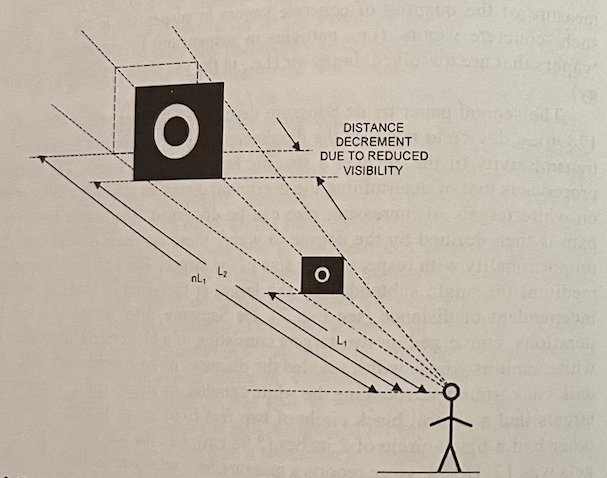
Fig. 2. De Saussure’s (1789b) diaphanometer to measure horizontal transmissivity
THE NINETEENTH CENTURY: EXPERIMENTATION AND THEORY
One of the significant photometric advances of the early nineteenth century was the discovery by Arago in 1809 of the polarization of the daytime skylight at 90° to the direction of the sun (Hey, 1983a). The complete elucidation of that polarization effect, however, had to await Lord Rayleigh’s molecular scattering theory of 1899. Dominique François Arago (French, 1786 – 1853) (O’Connor and Robertson, 2002) made major contributions to various branches of physics, among which was his postulation of the definitive test to decide between the corpuscular and undulatory theories of light which was eventually performed by Foucault in 1850, proving its wave nature. The presently accepted wave-particle duality concept was to be derived through quantum mechanical analysis in the 1920s (de Broglie, 1930).
Fig. 3. Frontispiece of the volume of the Mémoires de l’Académie Royale de Turin containing the two papers on atmospheric photometry by de Saussure (1789).
Another optical process that was eventually to become pertinent to aerosol characterization, namely fluorescence, was studied intensively during the 1800s. Although the phenomenon of fluorescence had been discovered as early as 1602 by V. Cascariola in Bologna (Italy), Robert Boyle (Irish, 1627 – 1691) (O’Connor and Robertson, 2002) was the first to perform careful observations of that optical process in liquid solutions (Hey, 1983a). Further notable contributors to the experimental study of fluorescence were Sir David Brewster (Scottish, 1781 – 1868) (Parker, 1989), best known for his postulation of the law relating polarization angle and index of refraction (the basis for the reflection-less window used on many active cavity laser-based particle counters), and Sir John Herschel (English, 1792 – 1871) (O’Connor and Robertson, 2002) a well-known mathematician and astronomer. Neither Brewster nor Herschel, however, was able to elucidate the nature of fluorescence. In fact, Brewster in 1848 proposed the following convoluted explanation, as cited by Hey (1983): “…we are driven to the conclusion…that it is produced by an infinite number of doubly refracting crystals. having their axes of double refraction lying in every possible direction, and therefore reflecting from their posterior surfaces a pencil of light with quaquaversus” (randomly oriented) “polarization” (Brewster, 1848).
Although the fundamental nature of fluorescence could only be explained by quantum theory in the 20th century, Sir George Gabriel Stokes (Irish, 1819 – 1903) (O’Connor and Robertson, 2002) was able to arrive at a working hypothesis of that phenomenon within the constraints of mid-nineteenth century scientific knowledge. He correctly concluded that fluorescence was not associated with refraction and scattering (elastic), and that the exciting radiation needed to be of shorter wavelength than the elicited light. Stokes further realized that this process involved “vibratory movements among the ultimate molecules of sensitive substances, and that the molecules, in turn, swinging on their own account, produce vibrations in the luminiferous ether, and cause the sensation of light”, and then with almost prophetic insightfulness he states: “The periodic times of these vibrations depend upon periods in which the molecules are disposed to swing, not upon the periodic times of the incident vibrations” (Stokes, 1852). Of course, the reference to ‘luminiferous ether’ reminds us of the then prevailing pre-Michelson-Morley-Einstein canonical belief in the existence of that elusive light-transmitting medium.
As related to aerosol photometry, the other major contribution of Stokes is the postulation of the set of four parameters that are named after him and that fully characterize the state of polarization of a beam of light. These parameters or vectors describe the incident radiation on, and the scattered light by a particle of arbitrary shape, and are linked by what is known as the 16-element Mueller matrix, also called scattering matrix. Stokes’ involvement in aerosol physics, however, transcends even his significant contributions to particle optics. He figures preeminently in the context of his work in fluid dynamics. Thus, Stokes flow, law, and number, as well as the Navier-Stokes equations are all more than familiar terms to aerosol physicists. Stokes’ talents received early recognition by his contemporaries: in 1849, at the age of 30, he was appointed Lucasian Professor of Mathematics, the chair once occupied by Newton at Cambridge University.
Other noteworthy mid-19th century contributors to the field of particle optics are Andrews and Forbes. Thomas Andrews (Irish, 1813 – 1885) distinguished himself in this field for his work on critical opalescence, the enhancement of light scattering that arises from the so-called critical fluetuations in density and temperature that occur in the vicinity of the critical point of a gas (Hey, 1983).
James David Forbes (Scottish, d. 1868) was a notable scientist, Principal of the University of St. Andrews, and inventor of the seismometer. As Middleton (1960) describes. Forbes made the observation that when the sun was viewed through a certain section of the steam plume of a locomotive, it appeared red. He then repeated the experiment in the laboratory using a small steam boiler. He found that white light shining through the detached part (just-condensing) of the visible steam plume underwent a similar reddening. He concluded that this observation recreated the optical process underlying crimson sunsets. wherein the blue components have been preferentially scattered out of the primary beam.
We now arrive at an outstanding contributor to 19th century progress towards the understanding of aerosol light scattering: John Tyndall (Irish, 1820 – 1893) (O Connor and Robertson, 2002). Tyndall, however, is also remembered for his remarkable work in several other fields. His invention of the light pipe which has led to the development of fiber optics, and his pioneering work on the trapping of infrared radiation by various atmospheric gases, i.e., the “greenhouse” effect, are some of Tyndall’s achievements of major relevance to 21st century science and technology.
Tyndall became one of the great scientists of his century very much against all odds. Of humble origin (as contrasted with all the other dramatis persona mentioned herein) he had to struggle amidst the depression and famine of mid-nineteenth century Ireland in order to secure an education. He went to work as a surveyor and as a railway engineer in England for several years but became unemployed in 1847. His single-minded perseverance and dedication finally led him to Germany where he was able to attend the University of Marburg under the tutelage of Robert Bunsen, Adolf Kolbe, Richard Stegman and others who recognized the outstanding potential of the highly motivated young Irishman.
Through persistent hard work, Tyndall was able to obtain his doctoral degree in merely two years, in 1850. During this period, he visited the Swiss Alps to which he was to return many times in later years. It is worthy of note that, similarly to da Vinci and de Saussure, these alpine excursions stimulated in Tyndall an interest in atmospheric optical phenomena which he was to pursue in the context of his work on particle light scattering.
His early work on diamagnetism was published in the prestigious Annalen der Physik and on this subject he addressed the German Physical Society to which he was admitted in 1851 Nevertheless, shortly thereafter he returned to England in “impecunious circumstances”, as Hey (1983a) describes in his exhaustive review of Tyndall’s career. After further struggles for recognition and acceptance he was elected a Fellow of the Royal Society (1852) and became Professor of Natural Philosophy at the Royal Institution (1853). He distinguished himself throughout his career for the clarity of his scientific presentations to both experts and lay-people. Tundall’s interests and contributions transcended physics: he was an outspoken early supporter of Darwinian evolution and a convincing advocate of the work of Pasteur, he investigated accidents in coal mines and the causes of boiler explosions in steam engines, and worked on improving the safety of navigation around Great Britain. Tyndall was also what we would call a social activist; he fought obscurantism and anti-intellectualism, and assiduously promoted the advancement and dissemination of science.
It is in the area of light scattering by small particles in suspension where he did the work for which he is most remembered today. Terms such as Tyndall cone, Tyndall blue, Tyndall effect, Tyndall higher order spectra and Tyndallometer are, if not in every day use, reasonably familiar to the aerosol scientist of the 21st century. His most notable contributions to this field are the first truly careful and detailed observations of scattering phenomena by particles smaller than the wavelength of the incident light as well as those whose size approaches that wavelength. These observations were described in several reports to the Royal Society of London and published in their Proceedings. In this context, Tyndall confirmed the 90° polarization of the scattered light for very small particles and, more importantly, was the first to observe the shift in that angle as particle size is increased. He is also known for the first determination of the dependence of the scattering irradiance on particle size (Tyndall effect) in what was later to be called the Rayleigh regime. The first systematic observations of the effects of particle size on the color and angle of scattered white light are also credited to him (Tyndall blue and Tyndall higher order spectra) and were to become the basis for particle sizing instrumentation almost a century later (i.e., the Owl, to be discussed further on).
Foremost, in the context of aerosol photometry, we must credit Tyndall with the invention of nephelometry. The Tyndall scholar N. D. McMillan (2001) has identified two most pertinent and revealing quotes from one of Tyndall’s writings (Tyndall, 1882):
For fifteen years it had been my habit to make use of floating dust to reveal the paths of luminous beams through the air; but until 1868 I did not intentionally reverse the process, and employ a luminous beam to reveal and examine the dust.
And then, most insightfully, Tyndall (1882) states (referring to an ensemble of particles scattering light from an illuminating beam):
The concentrated beam reveals them collectively, long after the microscope has ceased to distinguish them individually.
As McMillan (2001) points out: “the limit of resolution of the optical microscope at the time was about 300 nm”, which corresponds very nearly to the lower limit of detection of presently used optical particle counters. Thus, it is notewor thy that Tyndall realized (prophetically) the superiority of nephelometry over single particle counting when applied to the quantification of aerosols whose size is near or below the limit of single particle detection, a fact whose realization seems to elude many twenty-first century workers in this field.
As Hey (1983a) comments, however, Tyndall was unable to resolve the big question with which his predecessors and contemporaries wrestled without success: the true nature of the scattering medium that gives the sky its blue color. Influenced by Leonardo and Newton, he continued to attribute that appearance to scattering by minute water droplets in the high atmosphere. Based on laboratory experiments he concluded that “When the air was so sifted as to entirely remove the visible floating matter, it no longer exerted any sensible action upon the light, but behaved like a vacuum” (Tyndall’s italics) (Tyndall, 1869). This sentence suggests that he did not realize the extent to which the integrating effect of a long atmospheric path (of the order of tens of kilometers) is required to yield a visibly blue scatter. The solution of this problem had to await Rayleigh’s rigorous mathematical treatment, a few decades later, as will be discussed further on. Tyndall’s unsuccessful search for the source of the blue color of the daytime sky can be attributed to his and that of many of his contemporaries reliance on elegant and heuristic conjecture as a means to explain natural phenomena, rather than on mathematically rigorous analysis. Nevertheless, credit is due to Tyndall in that his detailed and insightful experiments and observations provided the foundation for the next generation of scientists to achieve the necessary breakthroughs by applying that heretofore-insufficient methodological rigor.
The next quantum advance required the mathematical solution of the scattering of light by small particles; those with dimensions smaller than and comparable to the incident wavelength. The primacy of attribution of these solutions will immerse us into a veritable mine field. It involves a cast of characters of both well known and lesser-known scientists working during the second half of the 19th century and the turn into the next: Clebsch, Lorenz, Maxwell, Rayleigh, Mie, Debye and others. The controversial aspects of deciding who predated whom in developing workable theories on the scattering of light by small spheres will not be addressed herein. The reader interested in delving deeper into these questions should refer to the pertinent references provided in this section.
To set the stage for these developments and the ensuing controversy we will cite part of the introduction of Logan’s (1965) magisterial paper on this subject:
On October 30, 1861, A. Clebsch… completed a 68-page memoir in which he developed the mathematical theory required to solve (by the method of separation of variables) the class of boundary-value problems in which a wave propagating in an elastic medium impinges upon a spherical surface. This paper could have become the cornerstone upon which future generations of scientists could base their theoretical studies…. However, the mathematical ingenuity of this master craftsman was doomed to lie buried within the pages of one of the leading mathematical journals of the middle of the nineteenth century while later writers rediscovered the results to be found in Clebsch’s paper. The same fate was to befall the equally great memoir upon the reflection and refraction of light by a transparent sphere, which was published in 1890 by L. Lorenz (1829 – 1891).
Rudolph Friedrich Alfred Clebsch (German, 1833 – 1872) (O’Connor and Robertson, 2002) is known to today’s mathematics community principally for his contributions to the theory of invariants and algebraic geometry, and his name is usually mentioned in hyphenation with another mathematician of that period (Clebsch-Gordan coefficients). In what concerns us, Clebsch was interested in solving the wave equations with respect to light incident on spherical surfaces, principally in the geometric domain. Although he was unable to provide a generalized solution to this problem, he succeeded for the (unintended) case of a very small sphere (with respect to the wavelength), apparently predating Rayleigh’s early work on this subject by nearly a decade. The reasons for the obscurity to which this memoir (Clebsch, 1863) was to be relegated, as Logan (1965) speculates, may have been that Clebsch was communicating with physicists who were not interested in the reflection from convex surfaces, and that his theory was not based on Maxwell’s equations of electromagnetic wave propagation that were sweeping the scientific community after Clebsch’s death in 1872. As Logan (1965) informs us, “The only writer who was influenced by Clebsch’s memoir was the Danish physicist Ludwig Lorenz”.
As to the second of these recently revindicated early theoreticians of particle light scattering, Ludwig Valentine Lorenz (Danish, 1829 – 1891), his contributions have received due recognition, since the 1980s, in citing his name in conjunction with that of Mie for the generalized theory of electromagnetic scattering (i.e., Lorenz-Mie scattering). Lorenz was born in Elsinore, Denmark and studied at the Technical University of Copenhagen. He became professor at the Military Academy in that city in 1876. He investigated the mathematical description for light propagation through homogeneous media as well as the effects on the propagation across differing media. He is best known to today’s physicists for the Lorentz-Lorenz equation that relates the refractive index and the dielectric constant of a medium (Hendrick Lorentz developed that equation independently and nearly concurrently in 1870). The reader interested in additional details about the life and work of Lorenz should consult H. Kragh’s (1991) insightful paper on that subject.
The principal contribution of Lorenz to the optics of aerosols resides in his 1890 memoir in which he solves the problem of the scattering of light by a dielectric sphere (Lorenz, 1890). For molecular sized spheres he derived the inverse fourth power wavelength relationship that agreed with Rayleigh’s derivation of 1871. Lorenz’s contributions, however, were largely ignored presumably because he chose to publish his memoir in Danish, “showed little interest in communicating his results in optics to foreign physicists” (Kragh, 1991), and because. as in the case of Clebsch, he did not base his work on Maxwell’s electromagnetic propagation theory. Another of Lorenz’s idiosyncrasies was his phenomenological view of physics “in that he wanted to keep ontological hypotheses and physical assumptions out of physical theory”, in the words of H. Kragh (1991). This may account for the fact that Lorenz, as opposed to Rayleigh, did not seem to have related his mathematical conclusions about light scattering by very small particles (i.e., whose size is negligible with respect to the wavelength) to real atmospheric phenomena such as the blue color of the sky.
We have now arrived at one of the most remarkable players in the field of light scattering, that of John William Strutt, Third Baron Rayleigh (English, 1842 – 1919), known to us more commonly as Lord Rayleigh (O’Connor and Robertson, 2002). As J. D. Hey (1983b) observes, we have here one of those rare cases where a peer by inheritance devotes himself entirely to science. Perhaps the only other physicist of comparable stature with aristocratic lineage in modern times may be Louis Victor de Broglie. Rayleigh demonstrated an early aptitude for mathematics and a keen interest in physics which led him to Cambridge University where he enrolled (perhaps facilitated by his titled origin) in 1861. His academic performance was marked by brilliance culminating, after his graduation in 1865, with his election to a fellowship at Trinity College, the following year. His decision to embark in a scientific career, however, did not meet with the approval of all members of his family.
The span of Lord Rayleigh’s scientific work was to be exceedingly wide. He has been labeled the last of the great Victorian polymaths. His researches ranged over almost the entire field of physics of the late 19th century: sound, wave theory, color vision, electrodynamics, electromagnetism, light scattering, fluid flow, hydrodynamics, density of gases, viscosity, capillarity, elasticity, photography, electrical standards (ohm, ampere, volt), etc. Among many other honors, he was awarded the 1904 Nobel Prize for Physics for his contribution to the discovery and isolation of the gas argon. In 1905 he was elected president of the Royal Society. Rayleigh wrote some 450 papers and retained his mental powers until the end, working on scientific writings up to his death in 1919 (Humphrey, 1992). In 1871 Rayleigh published his first paper on the subject that concerns us: “On the light from the sky, its polarization and colour” (Strutt, 1871a), followed immediately by another entitled “On the scattering of light by small particles” (Strutt. 1871b). This early work was based upon elastic-wave equations wherein, as expected for that period, ether is the oscillating medium. This was a natural extension of Rayleigh’s interest in the behavior of sound. Within the former of these two papers, Rayleigh develops for the first time his now famous equation:
Ι/Ι0 = 9 π2 / 2 [(ε – 1 / ε + 2)2 (1 + cos2 θ) (n V2 / λ4 r2 )]
where I0 and I are the incident (unpolarized) and scattered irradiances, ε is the dielectric permittivity of the particle relative to the surrounding medium, θ is the scattering angle, n is the number of scattering particles, V is the particle volume, λ is the wavelength of the incident light, and r is the distance between the scattering particles and the observer (or detector). This equation explains the entire scattering behavior of particles whose size is negligible with respect to the wave-length: the extreme size dependence (the 6th power of diameter), the angular symmetry and polarization, and most importantly, the inverse 4th power dependence on wavelength. The latter was to lead Rayleigh, 18 years later, to the definitive explanation of the blue color of the sky, as we will see in what follows.
Although Clebsch had developed the basic theoretical path to this equation, Rayleigh was most probably unaware of that precedent. Similarly, and perhaps more surprisingly, Lorenz seems to have been equally uninformed about Rayleigh’s paper (Kragh, 1991). Although there existed a measure of international scientific intercourse during the latter half of the 19th century, the flow of information was far from systematic and thorough, especially when viewed from our early 21st century perspective.
A decade later, Rayleigh had incorporated Maxwell’s electromagnetic theory of light in his own writings (Rayleigh, 1881), and subsequently he published his perhaps most famous paper that settled once and for all the persistent and until then unresolved puzzle of the medium that causes the blue color of the sky (Rayleigh, 1899). It appears, from Rayleigh’s own assertion, that he may have been led to the solution as a result of a letter that he received from Maxwell in 1873, which, in turn, had been instigated by Rayleigh’s 1871 paper. It is worth citing Rayleigh’s introductory remarks to his 1899 paper:
This subject has been treated in papers published many years ago.
I resume it in order to examine more closely than hitherto the attenuation undergone by the primary light on its passage through a medium containing small particles, as dependent upon the number and size of the particles. Closely connected with this is the interesting question whether the light from the sky can be explained by diffraction (Rayleigh’s “diffraction” in this context is most probably equivalent to our concept of scattering) from the molecules of air themselves, or whether it is necessary to appeal to, suspended particles composed of foreign matter, solid or liquid. It will appear, I think, that even in the absence of foreign particles we should still have a blue sky.
How true, at last! It is of interest to note that today we have come to the full complementary realization that the presence of such “foreign particles” degrades the very blueness of the sky to whose cause they had been attributed.
Rayleigh then proceeds to derive the equation for the scattering coefficient of Bouguer’s exponential atmospheric transmission law: Ι/Ι0 = exp (-βL), and obtains:
β = 32 π3 (m – 1)2 / 3 n λ4
where m is the refractive index of air, n is the number concentration of air molecules, and λ is the wavelength. It is noteworthy that under the above equation Rayleigh added the following footnote in December of 1902: “A formula equivalent to this was given by Lorenz in 1890”. He was obviously referring to the famous Danish memoir which by then had been translated into French and had thus been brought to the attention of Rayleigh.
As the 1899 paper proceeds, once more it is of interest to cite Rayleigh’s words (Rayleigh, 1899):
The completion of the calculation requires the value of n. Unfortunately this number -according to Avogadro’s law the same for all gases – can hardly be regarded as known. Maxwell estimates the number of molecules under standard conditions as 19 x 1018 per cub. centim.
Rayleigh further assumes the refractive index of air to be 1.0003 at a wavelength of 600 nm, and therefore concludes from the preceding equation that the horizontal path, which results in an attenuation of 1/e, is equal to 83 km. This corresponds to what we call today a Rayleigh scattering coefficient of 1.2 x 10⁻⁵ m-1. This value should be compared with the presently known one of 0.82 x 10⁻⁵ m-1 (at 600 nm).
Considering the inchoate definition of the parameters used by Rayleigh in these calculations, it is remarkable how close he came to the correct value. In the context of this discussion we discover that he must have visited northern India as he makes the following observation
(Rayleigh, (1899):
Although Mount Everest appears fairly bright at 100 miles distance as seen from the neighbourhood of Darjeeling, we cannot suppose that the atmosphere is as transparent as is implied in the above numbers and of course this is not to be expected, since there is certainly suspended matter to be reckoned with.
Finally. he reaches a very important and insightful qualitative conclusion fully supported by modern theoretical analysis:
If the view, suggested in the present paper, that a large part of the light diffracted from the molecules themselves, be correct, the observed incomplete polarization at 90° from the Sun may be partly due to the molecules behaving rather as elongated bodies with indifferent orientation than as spheres of homogeneous material.
Although Rayleigh continued to treat the subject of particle light scattering in his later writings, he did not attain the general solution for particles of arbitrary size and complex refractive index. This was to be achieved by Mie whose work seems to have gone unnoticed by Rayleigh (Logan, 1965).
Gustav Adolf Feodor Wilhelm Ludwig Mie (German, 1868 – 1957) (Lilienfeld, 1991) studied at the University of Heidelberg and then taught at the Technical University of Karlsruhe. In 1902 he assumed a professorship at the University of Greifswald. It was during his tenure at this latter institution that he published his famous paper, “Contributions to the Optics of Turbid Media, Especially Colloidal Metal Suspensions” that was to enshrine him in the pantheon of theoreticians of particle optics (Mie, 1908).
Mie’s accomplishment was to generalize the work of his predecessors extending the theory of spherical particle light scattering to those whose diameter is comparable as well as larger than the wavelength, and for a complex refractive index both for the scattering particle as well as for the surrounding medium.
In addition, as Logan (1965) points out “What Mie did that was different from the work of previous writers was to set out on an ambitious computing program”. It is worth mentioning that in his paper Mie acknowledges the contributions of his predecessors Lorenz and Rayleigh. The principal motivation for Mie’s involvement with light scattering appears to have been the elucidation of experimental of experimental observations on colloidal suspensions of gold particles performed by Walter Stubing, a doctoral student at the University of Greifswald (Lilienfeld, 1991). Mie’s calculations, for the first time, showed the marked angular asymmetry of the scattering pattern of particles whose size approaches that of the wavelength, i.e., the increasingly predominant scattering in the forward direction as particle size is increased. Mie contrasts this with the properties of a perfectly conducting sphere of negligible size (compared to the wavelength) which exhibits the opposite behavior: a marked predominance of back scattering.
The three polar diagrams of Fig. 4 are from Mie’s (1908) paper and present, for the first time, the characteristic angular scattering pattern of a spherical particle with complex refractive index (at λ = 0.55 um), in this case gold particles of three different sizes. Fig. 17 (as numbered in Mie’s paper) shows the pattern for an infinitely small sphere (i.e., Rayleigh regime) whereas his Figs. 18 and 19 are for particles with diameters of 0.16 and 0.18 um, respectively. The incident light is unpolarized in this case, and the inside patterns represent the polarization component whose electric vector is parallel to the scattering plane whereas the outside curves are for the total scattered light intensity.
Mie mentioned at the conclusion of his paper that for the sake of completeness the theory on particle scattering required the treatment of ellipsoidally shaped particles (Mie, 1908). Mie, however, did not seem to have pursued any further light scattering related investigations during the nearly half century of his remaining life. It is rather remarkable that he did not even mention in his autobiographical notes the work for which he eventually became famous. Mie went on to pursue more transcendental themes of physics such as a comprehensive theory of matter inspired by Einstein’s theory of relativity, as well as the writing of several editions of his Handbook of Electricity and Magnetism. Throughout his life he remained deeply religious and he strove to attain a synthesis between his Protestant beliefs and the natural sciences (Lilienfeld, 1991).
Though Mie published his light scattering paper in 1908, we consider his celebrated opus as still belonging to the 19th century in that it was thoroughly rooted in Maxwell’s theoretical framework, as well as in the work of Rayleigh, Lorenz and others of that period.
THE ERA OF INSTRUMENTATION AND MEASUREMENT
Those interested in further developments in this field during the early twentieth century should consult the classic review by Logan (1965) on the history of theoretical work on light scattering by spheres. In addition to the major scientists discussed above, Logan (1965) mentions the contributions of Debye, Nicholson, Watson, Bromwich, White, van der Pol, and Bremmer.
It is also of interest to note that as late as 1908, Rayleigh’s definitive identification of the medium that causes the sky’s blueness was still being questioned, and alternative explanations such as ozone fluorescence were still being postulated (Nichols, 1908). The variability of the sky’s blue hue remained to be explained.
The actual experimental confirmation that air molecules do scatter light was apparently achieved for the first time by J. Cabannes (1915) in 1913. In 1919, R. J. Strutt, the Fourth Baron Rayleigh (son of the famous J. W. Strutt, Third Baron Rayleigh) reported for the first time about the incomplete polarization of sky light at 90°, an observation that was confirmed independently by Cabannes and R. Gans in 1921 (Rayleigh, 1919). Based on these observations, L. V. King (1923) correctly attributed that partial depolarization to molecular anisotropy.
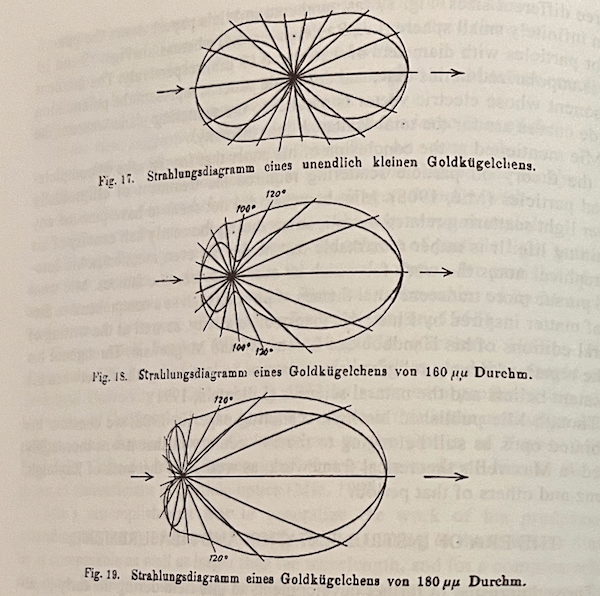
Fig 4. G. Mie’s polar scattering diagrams for gold particles. Mie’s Fig. 17 is for a Rayleigh scatterer, Fig. 18 for a 0.16 um diameter sphere, and Fig. 19 for a 0.18
um sphere (2 = 550 nm). The latter two diagrams show the scattering angles of
maximum polarization, 100° and 120°, respectively, following the old convention (corresponding to 80° and 60° in the presently accepted convention). (From Mie, 1908).
Notwithstanding the principal theme of this review, i.e., elastic scattering of light and its applications, mention was made of the early studies of fluorescence, an inelastic scattering phenomenon. It is in this context that the discovery of Raman scattering more than merits inclusion. Stimulated by Rayleigh’s work on light scattering by molecules, Chandrasekhara Venkata Raman (Indian 1888-1970), in the course of meticulous investigations of the optical properties of numerous liquids (organic and inorganic), discovered in 1928 the effect that bears his name (Raman and Krishnan. 1928). Raman scattering can be considered as the modulation of the elastic scattering process by the motion of the nuclei and electrons of the irradiated molecules. Consequently, in the case of Raman scattering, the incident photons are not absorbed, and the resulting emission occurs at wavelengths that are both shorter and longer than the wavelength of the incident (monochromatic) light. These emission bands occur at wavelengths that are characteristic of the composition of the illuminated material. The widespread application of this analytical technique, however, had to await the development of the laser, more than three decades later. C.V. Raman was awarded the 1930 Nobel Prize in Physics for this discovery, although he made major contributions to other fields such as acoustics, spectroscopy of crystals, x-ray diffraction and scattering. He published about 450 papers and guided numerous research students, many of whom achieved scientific eminence in their own right (Miller and Kauffman, 1989).
After the basic theoretical edifice describing the optical properties of spherical particles had been erected during the latter half of the 19th and first decade of the 20th century, scientific work in this field expanded towards studies of atmospheric aerosol properties, extinction, visibility and visual contrast, thus spurring the development of instrumental and measurement techniques. These developments paralleled work in other photometry and spectrometry related fields.
As M. Kerker (1997) suggests, the earliest nephelometer designed specifically for laboratory studies of aerosols is the Tyndallmeter described by R.C. Tolman and E.B. Vliet (1919). This is a visual photometer whose essential elements are depicted in Fig. 5. It consists of an aerosol chamber illuminated by an incandescent light bulb, and a Macbeth illuminator as a photometer. The latter consists of a reference light bulb whose illuminance is visually balanced against that of the light scattered at 90° by the aerosol, by means of a Lummer-Brodhun (see subsequent description of the Koschmieder and Rühle telephotometer) cube viewed through an eyepiece. The null balance condition is reached by moving the reference lamp along its graduated tube. It is noteworthy that Tolman and Vliet’s paper is accompanied by another one by Tolman, et al., (1919), that describes the results of tests comparing the Tyndallmeter readings with mass concentration determinations of ammonium chloride smoke, showing excellent response linearity over the range of 5 mg/m3 to 1.2 g/m3. The data for concentrations above 60 mg/m3 are shown in Fig. 6. The smoke was generated, and the concentration quantified, by mixing known flow rates of hydrogen chloride and ammonia gases. The smoke concentration was varied by dry air dilution. These experiments may well have constituted the first rigorous mass concentration calibration of a nephelometer.
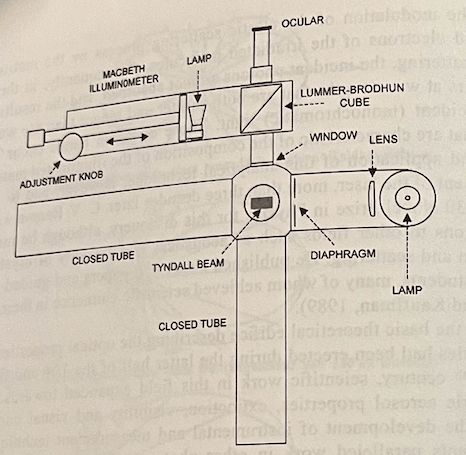
Fig. 5. Basic optical configuration of Tolman and Vliet’s (1919) Tyndallmeter.
One of the first instruments capable of providing reliable measurements of atmospheric extinction and its wavelength dependence was the spectrobolometer, a device used to measure the intensity of solar energy as a function of wavelength. The spectrobolometer consists of a bolometer which senses the incoming radiation as a result of the heating of a thin resistance element in a bridge-type circuit, and a spectroscope (either of grating or prism type) for wavelength discrimination. Spectrobolometric measurements of solar radiation led Anders Angström (not to be confused with the more famous 19th century physicist and astronomer Anders Jonas Angström for whom the 10-10 meter unit of length has been named) to develop his well-known relationship between atmospheric optical extinction and wavelength under turbid conditions (Angström, 1929 and 1930).
He showed that Rayleigh’s λ-4 dependence due to molecular scattering is modified to a more general λ-a relationship where the exponent a (generally called the Angström coefficient or exponent) varies between the limiting values of 4, for pure molecular scattering, to 0 for a turbid atmosphere with a predominance of coarse particles (of the order of >3 μm). Typically, a varies over the range of 1.5 to 2.5 when, as most commonly, the fine fraction (i.e.. the accumulation mode) of the atmospheric aerosol contributes predominantly to the scattering of sun light.
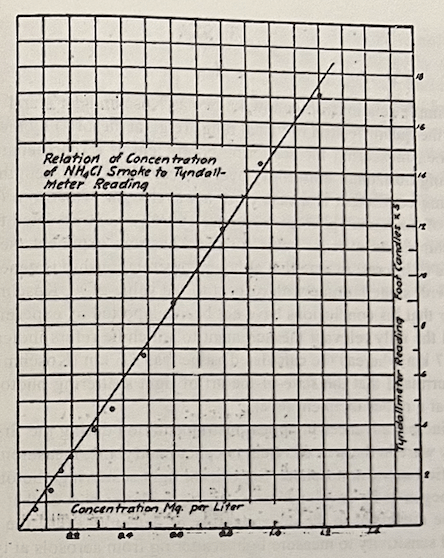
Fig. 6. Comparison between Tyndallmeter readings and gravimetric determinations of the concentration of ammonium chloride smoke (Tollman et al, 1919)
Harald Koschmieder set out to develop a relationship between atmospheric scattering coefficient and the maximum distance that a black target could be discerned against the daytime horizon. The relevant theory was incorporated in his doctoral thesis published the same year as a scientific paper (Koschmieder, 1924). Koschmieder’s equation is as follows (using his format):
Ss = 1/a0 ln [(1 + ε)/ε]
where Ss is the visual range of a black target against the horizon, a0 is the scattering coefficient and ε is the visual contrast threshold. Koschmieder assumes that this latter parameter has the value of 0.02, and thus the above equation can be written as:
Ss = 3.192/a0
This simple relationship is now known as Koschmieder’s and is frequently applied to the quantification of visual range (e.g., at airports) by means of nephelometry, i.e., measuring the scattering coefficient at a representative location and assuming horizontal uniformity over the calculated path length. In general, the scattering coefficient is measured at a wavelength of 550 nm (the approximate peak of the human photopic response curve), or extrapolated to that wave-length, assuming an average value for the Angström exponent (see discussion above). It is of interest to note that although this relationship is generally accepted today (with some latitude with respect to the value of ε), Koschmieder states in his paper that his conclusions have not been supported by experimental observation, and the only relevant measurement to which he refers indicated a visual range of 4.7 km whereas the calculated value was 3.3 km (Koschmieder, 1924).
It can be surmised that the state-of-the-art of light scattering photometry in the 1920s was at a rather incipient level.
The principal advances in optical instrumentation during the first half of the 20th century were in the area of visual telephotometry, i.e., measurements of long path extinction in the atmosphere. Significant light scattering photometry instrumentation began to be developed only during the latter part of that period. That delay can be attributed to the unavailability of detectors (until the 1940s) with the required sensitivity to measure light scattering from aerosols at typical ambient concentrations. In fact, all relevant instruments of that epoch relied on a plethora of ingenious visual sensing configurations that were, in essence, derivatives of the ratio or comparison methods originally applied by Bouguer and de Saussure in the 1700s (see section on Photometry in the Age of Enlightenment, above).
We will not cover here all the design variations and permutations of early 20th century visual telephotometers, but only the most representative of that class. The reader interested in delving deeper into that subject should consult the extensive review of such devices provided by Middleton in his classic treatise on Vision Through the Atmosphere (Middleton, 1952).
One of the visual telephotometers that epitomizes that class of instruments, developed during the 1920s and 1930s, is the one described by Koschmieder and Rühle (1930) and shown diagrammatically in Fig. 7. This device illustrates the general methodology underlying these photometers: the luminance of an extended distant source (natural or artificial) is compared visually with that of a reference source within the instrument. This brings us back once more to the age-old technique of using the human eye as a null detector which had been applied for at least two centuries, as mentioned before.
In Koschmieder and Rühle’s instrument (see Fig. 7) the reference beam was generated by an incandescent lamp whose output was collimated by a lens, illuminating a frosted glass disc. This was followed by an aperture and a combination of three Nicol polarizing prisms of which the middle one could be rotated to provide adjustable attenuation of the reference beam. After further collimation, this beam is reflected within a Lummer-Brodhun cube, a device similar to a beam splitter wherein two concentric light paths can be generated: the transmitted beam and the reflected one, thus providing concentric fields at the ocular. The remote source beam enters through the objective lens after which it is transmitted through the Lummer-Brodhun cube. The observer then rotates the graduated central Nicol prism until the luminance of the reference field matches that of the remote source, and thus determines the relative luminance of that source (Koschmieder and Rühle, 1930).
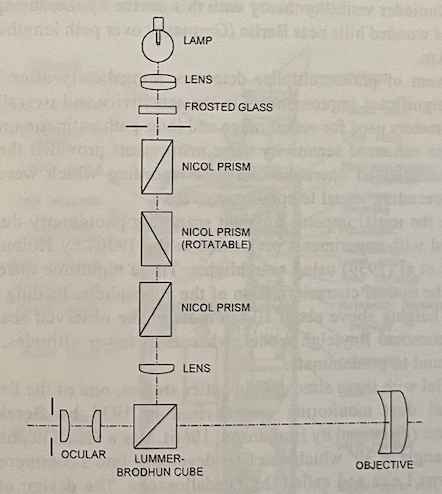
Fig. 7. Visual telephotometer of Koschmieder and Rühle (1930).
As indicated above, many variations on the theme of the Koschmieder-Rühle telephotometer were developed and used before and during the Second World War. Typical examples of these as cited by Middleton (1952) are: Byram’s relative telephotometer, Gurewitsch and Kastrow’s, Löhle’s, etc.
Another version of this class of devices was the Koschmieder-Zeiss Sichtmesser wherein the internal light source was used both to generate the reference beam as well as to illuminate a distant mirror whose reflected beam was then compared visually with the internal reference (Foitzik, 1938). Matching of the to beams was achieved by adjustment of iris-type beam apertures. A somewhat more advanced variation was developed by Middleton himself, called an “artificial star” telephotometer (Middleton, 1931). The design of that device was optically more rigorous, using an adjustable optical wedge, spectral filters to achieve improved color matching, etc. Nevertheless, the precision of these instruments seems to have been at best of the order of +/- 12 to 14%.
F. Löhle probably developed the earliest photoelectric telephotometer in 1929. It consisted of a phototube at the focus of an objective lens, and an electrometer to measure the current of the phototube (Löhle, 1929). Löhle was able to test Koschmieder visibility theory with this device by measuring the apparent luminance of wooded hills near Berlin (Germany) over path lengths ranging from 0.6 to 23.3 km.
The advent of photomultiplier detectors immediately after World War II resulted in significant improvements in the sensitivity and overall performance of telephotometers used for visual range and long-path extinction measurements. In addition to enhanced sensitivity these instruments provided the capability of continuous unattended operation and data recording which were not possible during the preceding visual telephotometer era.
Perhaps the initial impetus for light scattering photometry during that period originated with experiments performed in the 1930s by Hulburt (1937), and by Johnson, et al ( 1939) using searchlights. These nighttime observations were directed at the optical characterization of the atmosphere, leading to the conclusion that at heights above about 10 km most of the observed scattering agreed with the theoretical Rayleigh model, whereas at lower altitudes, scattering by haze was found to predominate.
In parallel with these atmospheric optics studies, one of the first instruments for industrial dust monitoring was devised in 1936 by Berek, et al. This Tyndallometer (discussed by Hodkinson, 1966), was a visual nephelometer using a scattering angle of 30° which was later developed into a commercial instrument made by Emst Leitz and called the Tyndalloscope. The design of this portable instrument is illustrated in Fig. 8. Again, it uses the human eye as a null-detector, in this case for the comparison between the irradiance of the light scattered by the aerosol and that of a reference source of light, which could be varied by a rotatable polarizer/analyzer pair. This configuration was eventually replaced by a photoelectric version incorporating a photomultiplier detector.
The late 1940s and early 1950s saw a veritable explosion of aerosol instrumentation based on light scattering. They can be grouped into two principal classes: a) light scattering photometers or nephelometers, and b) single particle counters or OPCs (for optical particle counters) which in their more advanced incarnations have come to be known as particle size spectrometers. The rapid advances of both types of optical aerosol instruments had to await the availability of a highly sensitive and, for the OPC, also very fast responding light detector, the photomultiplier tube, mentioned above. Although the basic concept underlying this detector was patented in 1923 (Slepian, 1923), the actual development of the multistage phototube as we know it today did not occur until the late 1930s (Rachman and Snyder, 1940).
One of the first research light scattering photometers whose purpose was to study the phase function was the “polar nephelometer” described by J. M. Waldram in 1945 (as cited by Middleton, 1952) which permitted the determination of the scattering irradiance as a function of angle over the range of 20° and 148°. This instrument still relied on visual photometry.
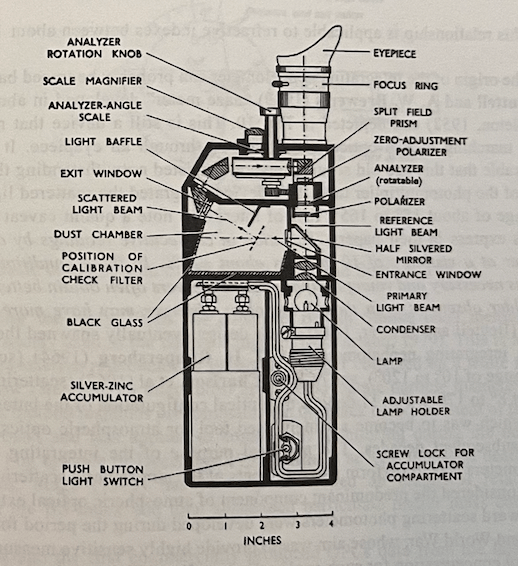
Fig. 8. Internal view of the Leitz Tyndalloscope (Hodkinson, 1966).
If white light illumination is used, it is possible to determine the particle size of a monodisperse (or, at least, narrowly disperse) aerosol by angular scanning of the scattered light. As Hodkinson (1966) indicates: “The maxima and minima in the scattering patterns of the different wavelengths produces a series of colored bands, known as the higher-order Tyndall spectra, as the telescope is swung. The sizing is usually based on the position and number of red bands…” An instrument based on this principle, called the “Owl”, was developed by V. K LaMer and D. Sinclair (1943a), and is depicted in Fig. 9. Sizing of particles in the range of about 0.3 to 2 μm is possible with this simple apparatus. The following approximate relationship between the scattering angle θ, in degrees of the first red band and the mean particle radius r in micrometers was developed by Kitani as cited by Green and Lane (1964):
log (θ/10) = 1.43 log (10 r) = 1.43
This relationship is applicable to refractive indexes between about 1.33 and 1.55.
The origin of the integrating nephelometer can probably be traced back to R. G. Buttell and A. W. Brewer’s (1949) “haze meter” developed in about 1943 (Middleton, 1952) and depicted in Fig. 10. This is still a device that relies on visual matching of two optical fields viewed through an eyepiece. It is truly remarkable that this age-old sensing method persisted notwithstanding the hegemony of the photomultiplier tube. This device integrated the scattered light over the range of about 15° to 165°. It is of interest to note a quaint caveat that the authors express in their paper:
“Variation in consecutive readings by a skilled observer at a visibility of 10 miles is about
+/- 20%. In these conditions acute vision is necessary and young inexperienced observers often obtain better results than older observers even though the older observer may have more experience.” (Beuell and Brewer, 1949). Their design eventually spawned the photoelectric integrating nephelometers of G. H. Ruppersberg (1964) (scattering angle range of 10° to 120°), and of R. J. Charlson, et al (1967) (scattering angle range of 8° to 170°). Fig. 11 depicts the optical configuration of the latter instrument, which was to become a widely used tool for atmospheric optics studies during subsequent decades. The principal purpose of the integrating type of nephelometers was to perform measurements of the atmospheric scattering coefficient considered the predominant component of atmospheric optical extinction.
Forward scattering photometers were developed during the period following the Second World War, whose aim was to provide highly sensitive measurements of aerosol concentration for such applications as filter efficiency determinations, air pollution monitoring, and aerosol research at large. These instruments, in general, used coaxial optical configurations with forward scattering dark-field illumination following the overall design first developed by LaMer and Sinclair (1943b) in 1941. The most notable of this class of nephelometers were those of Sinclair (1953), and F. T. Gucker, Jr. and A. H. Peterson (1955) whose design was further improved by Clarenburg and Princen (1963). Fig. 12 depicts the basic optical geometry underlying these forward scattering photometers, as summarized by J. R. Hodkinson (1966) whose promising contributions to the field of aerosol optics were cut short by his premature demise.
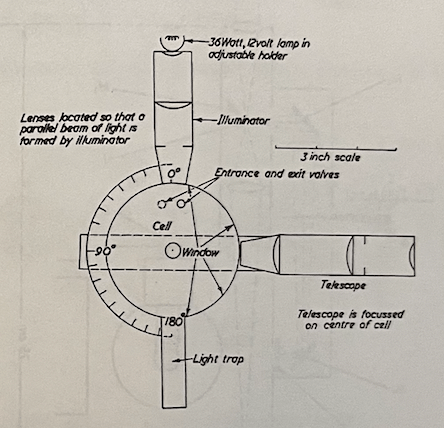
Fig. 9. Basic configuration of the Owl (LaMer and Sinclair, 1943a).
During the early 1950s the so-called British Smoke (BS) measurement became widely used in the United Kingdom (McFarland, 1979). This is a measure of the relative reflectance of particulate matter collected on a white filter at a low flow rate, with an inlet cutoff at an aerodynamic particle diameter of 4.5 μm. This method responds predominantly to the black carbon content of the sampled aerosol, and was applied to ambient air monitoring during the notorious London Fog episode of December 1952 to which several thousand deaths were attributed. Mage (1995) has recently developed an empirical relationship between the BS index and total suspended particulate matter mass concentrations.
Although the first commercially produced OPCs date from the late 1950s, the basic idea of counting individual particles in a suspension, by means of light scattering, is customarily traced back to the ultramicroscope and its application to counting and sizing colloidal gold particles. It may be surprising to note that one hundred years ago Sidentopf and Zsigmondy (1903) were apparently able to count such particles (in water) down to sizes of the order of 5 nanometers, using the sun as illumination source and the eye as detector.
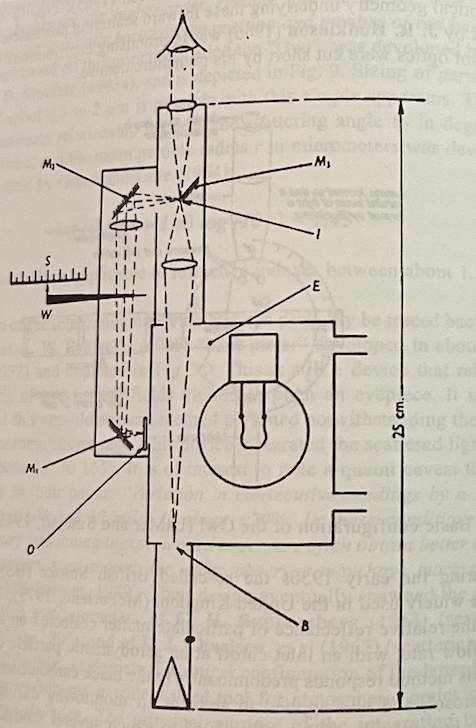
Fig. 10. Beutell and Brewer’s (1949) Haze Meter (visual integrating neph-elometer). Aerosol in chamber E scatters light which is observed by eye against the dark background B. The intensity of the scattered light is compared with the illuminating intensity by null-adjustment of the optical wedge W.
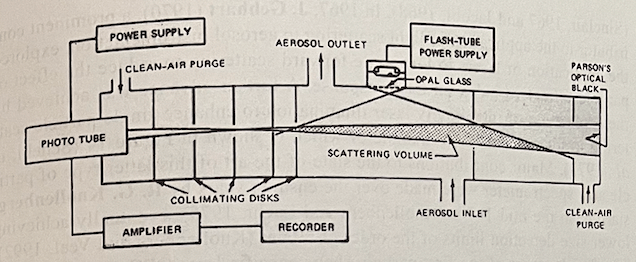
Fig. 11. Photoelectric integrating nephelometer (Charlson et al, 1961).
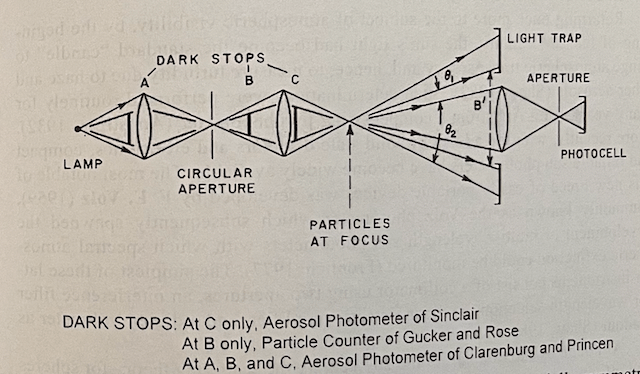
Fig. 12. Alternative optical configurations of forward scatter axially symmetric photometers (as summarized by Hodkinson, 1966).
The first description of the OPC concept is probably that by Gucker, et al (1947) followed within a few years by improved versions of their original configuration. This latter version (Gucker. et al.. 1954) provided a lower detection limit of 0.34 μm for particles with a real refractive index of 1.50.
The earliest commercial version of the OPC was introduced in the early 1960s using an incandescent lamp with focused illumination, and detection by photomultiplier tube, with minimum detectable particle diameters of about 0.3 μm (Zinky, 1962) (see Figure 13). Pulse height discrimination was used thereafter for particle size classification. Helium-neon gas lasers as light sources (632.8 nm wavelength) were incorporated in experimental OPCs shortly after (Sinclair, 1967 and Jacobi, 1968). In 1967, J. Gebhart (1970), a prominent contributor to the application of light scattering to aerosol instrumentation, explored the application of lasers to low-angle forward scattering to reduce the effect of particle refractive index on OPC response. A further advance was achieved by the application of intra-cavity laser illumination to enhance single particle scattering irradiance, an early example of which is shown in Figure 14 (Schehl, et al, 1973). Major contributions to the state-of-the-art of this latter type of particle size spectrometer were made over the ensuing years by R. G. Knollenberg, starting in the mid 1970s (Knollenberg and Luehr, 1975), eventually achieving lover size detection limits of the order of 60 nm (Knollenberg and Veal, 1992).
The development of the first particle shape-specific laser OPC, combined with electric field alignment and oscillation, for the detection of airborne fibers was initiated by P. Lilienfeld in 1976 (Lilienfeld, 1979).
Returning once more to the subject of atmospheric visibility, by the beginning of the 20th century, the sun’s light had become the standard “candle” to gauge atmospheric transparency and, hence, to measure turbidity due to haze and other aerosols (Shaw, 1983). Such determinations were performed routinely for many years using Angström’s compensating pyroheliometer (Angström, 1932). More recently, with the advent of solid state detectors and electronics, compact and reliable sun photometers have become widely available. The most notable of this new breed of easily portable devices was developed by F. E. Volz (1959), commonly known as the Volz photometer which subsequently spawned the development of multi-wavelength sun photometers with which spectral atmospheric extinction could be monitored (Fröhlich, 1977). The simplest of these latter instruments consist of a collimator using two apertures, an interference filter for wavelength selection, a silicon detector-amplifier, and a digital voltmeter as readout (Shaw, 1983).
Although by the first half of the 20th century the scattering theory for spheres and infinitely long cylinders of arbitrary refractive index had been worked out, a new impetus toward the solution of other particle light scattering problems as well as the development of advanced calculational methods had to await the inception of the computer era starting in the 1950s. Among the major contributors to this rapid expansion of modern light scattering theory we must cite H. C. van de Hulst (1957), M. Kerker (1969), and C. F. Bohren and D. R. Huffman
(1983), all of which authored valuable reference books, as well as many crucial papers on this subject too numerous to be mentioned herein. In addition, noteworthy work has been performed by G. Gouesbet and his collaborators at Rouen University in generalizing the Lorenz-Mie scattering theory to include the case of illumination by laser beams with Gaussian radial intensity distribution (e.g, Gréhan et al, 1985).
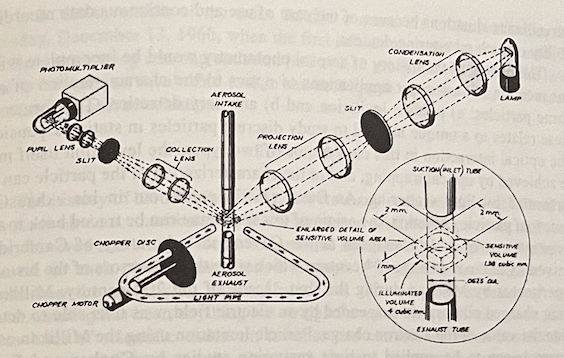
Fig. 13. Optical configuration of early commercial OPC (Royco model 200-A) based on right-angle scattering detection (Zinky, 1962).
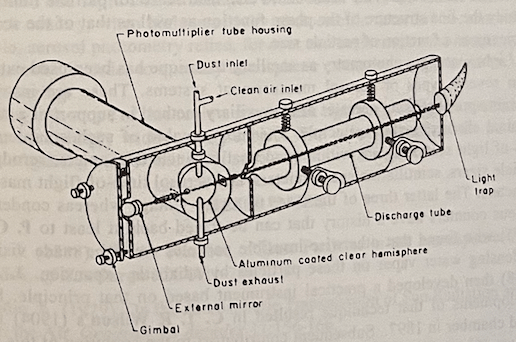
Fig. 14. Optical configuration of early version of an intra-laser cavity light scattering OPC (Schehl, et al., 1973).
The 1970s saw a proliferation of portable, battery operated, light scattering photometers designed principally for industrial hygiene, applied in industrial and mining environments. Their use continues at present in a variety of health risk surveillance situations because of the ease of use and continuous data recording ability of such monitoring devices.
The review of the history of aerosol photometry would be incomplete without mention of two major applications of optics to the characterization of airborne particles: a particle levitation and b) ancillary detection. The former of these relates to a unique method to study discrete particles in static suspension. The optical interaction in this case can be of two types: the levitation itself may be achieved by optical trapping, and/or the characterization of the particle can be performed by light scattering. As Davis (1997) points out in his exhaustive review of particle levitation, the origin of this technique can be traced back to the investigations of J. J. Thompson at the Cavendish Laboratory of Cambridge University at the end of the 19th century which were the precursors of the historic experiments by Millikan during the first decade of the 20th century. Millikan, using charged oil droplets suspended by an electric field, was thus able to determine the value of the electron charge. Particle levitation using the Millikan condenser began to be applied to light scattering studies by Gucker and Egan (1961). As described in Davis’ (1997) review, Ashkin (1970) was the first to demonstrate that individual aerosol particles could be levitated and trapped by means of a laser beam. This beam could then also serve for particle illumination to study the fine structure of the phase function as well as that of the scattering efficiency as a function of particle size.
Light scattering photometry as ancillary technique has been used extensively in several types of aerosol measurement systems. These are instruments wherein optical sensing operates as an auxiliary method in support of a different physical characterization principle. The most notable of such complementary uses of light scattering are within condensation nucleus counters, aerodynamic particle sizers, scintillation spectrometers, and aerosol time-of-flight mass spectrometers. The latter three of these are of recent vintage whereas condensation nucleus counters have a history that can be traced back at least to P. Coulier
(1875) who found that otherwise invisible particles could be made visible by condensing water vapor on these particles by adiabatic expansion. J. Aitken (1888) then developed a practical instrument based on that principle. Further developments of that technique resulted in C. T. R Wilson’s (1904) famous cloud chamber in 1897. Subsequent contributors to the evolution of this important aerosol sensing method (principally for particles in the size range of 1 to 100 nm) were J. Scholz (1932), and L. W. Pollak (1959). The presently preferred continuous flow condensation nuclei counter is based on the subsequent developments by J. Bricard, et al (1972), and by D. Sinclair and G. S. Hoopes (1975).
We would be remiss to not mention a recent milestone of paramount importance to the entire field of aerosol (both single and multiple particle) photometry. It is the invention of the laser. In this context, the critical date may be Tuesday, December 13, 1960, when the first helium-neon gas laser was made to oscillate generating a strong emission line at 1.15 μm (Bennett, 2000). The laser was to become an invaluable tool in the subsequent progress of aerosol measurement and characterization.
Summary
The history of aerosol photometry covers many centuries. Optical effects are the most obvious manifestation of the existence of airborne particles and were thus observed and studied for far longer time than any other property. The initial interest in such phenomena elicited attempts – frequently unsuccessful – at explaining the underlying physical processes. The progress in reaching such understanding has been anything but straightforward. This path was, as so many other lines of scientific endeavor, tortuous and convoluted, often burdened by preconceptions. Starting in the nineteenth century, however, the convergence of solid theoretical formalism and the availability of ever more advanced experimental techniques resulted in the development of powerful methods and tools for the detailed and rapid characterization of aerosols. Until the second half of the twentieth century, when high sensitivity photoelectric detectors became widely available, aerosol photometry relied, for over two centuries, on the human eye as a null detector in order to quantify atmospheric extinction, and later, to measure light scattering.
Lastly, the scope of this review precludes a rigorously thorough treatment of such an exceedingly wide-ranging subject. The writer recognizes the potential pitfalls of glaring omissions.
References
Aitken, J. (1888). On the Number of Dust Particles in the Atmosphere. Proc. Royal Soc. of Edinburgh XXXV:1-20.
Angström, A. (1929). On the Atmospheric Transmission of Sun Radiation and on Dust in the Air. Geografiska Annaler 11:156-166.
Angström, A. (1930). On the Atmospheric Transmission of Sun Radiation. II. Geografiska Annaler 12:130-159.
Angström, A. (1932). The Quantitative Determining of Radiant Light by the Method of Electrical Compensation Phys: Rer. 1:365-3157
Ashkin, A. (1970). Acceleration and Trapping of Particles by Radiation Pressure. phy. Rev. Lett. 24:156.
Bennett, W.R. Jr. (2000). Background of an Inversion: The First Gas Laser. IEEE J. Selec. Topics in Quantum Electron. 6:869-875.
Berek, M., K. Maennchen, and W. Schaefer (1936). Z. Instrum. Kde. 56:49.
Beutell, R.G., and A.W. Brewer (1949). Instruments for the Measurement of the Visual Range. J. Sci. Instrum. 26:357-359.
Bohren, C.F., and D.R. Huffman (1983). Absorption and Scattering of Light by Small Particles. John Wiley & Sons.
Bouguer, P. (1760). Traité d’optique sur la gradation de la lumière. H. L. Guerin and L. F. Delatour, Paris. See also, Middleton, W. E. K. (1961). Pierre Bouguer’s Optical Treatise on Gradation of Light, University of Toronto Press.
Brewster, D. (1848). On the Decomposition and Dispersion of Light Within Solid and Fluid Bodies. Phil. Mag. 32 (Ser. 3):401-412.
Bricard, J., G. Madeleine, P. Reiss, and P.-Y. Turpin (1972). Compteur de noyaux de condensation à flux continu. C. R. Acad. Sc. Paris, Série B 275:837-840.
Broglie, L. de (1930). Introduction a l’étude de la mécanique ondulatoire, Herman et Cie., Paris.
Cabannes, J. (1915). Sur la diffusion de la lumière par l’air. C.R. 160:62-63.
Charlson, R. J., H. Horvath, and R.F. Pueschel (1967). The Direct Measurement of Atmospheric Light Scattering Coefficient for Studies of Visibility and Pollution. Atmos. Environ. 1:469-478.
Clarenburg, L.A., and L.H. Princen (1963). Ein verbessertes Gerät zur Messung der gravimetrischen Aerosolkonzentration. Staub 23:234-236.
Clebsch, A. (1863). Über die Reflexion an einer Kugelfläche. J. für Math. 61:195-262.
Couler, P.J. (1875). Note sur une nouvelle propriété de l’air. J. de Pharmacie el de Chimie, Paris, Ser: 4, 22:165-173 and 254-255.
Davidson, M.W. (2002). Timeline in Optics, Florida State University.
(http://micro.magnet.fsu.edu/optics/timeline/1600-1699.html).
Davis, E.J. (1997). A History of Single Aerosol Partiela Levitation. Aerosol Sci. Technol. 26:212-254.
Foizik, L. (1938). Über die Lichtdurchlässigkeit der stark getrübten Atmosphäre im sichtbaren Spektralbereich. Wiss. Abh. Reichsamt f. Wetterdienst. Berlin 4: No. 5.
Fröhlich, C. (1977). WMO/PMOD Sunphotometer: Instructions for Manufacture. World Meteorological Organization Report, Geneva, Switzerland.
Gebhart, J. et al (1970). Ein Teilchengrössenspektrometer für Aerosole unter Ausnutzung der Kleinwinkelstreung in einem Laserstrahl. Staub-Reinhalt. Luft 30:238-245.
Green, H.L., and W.R. Lane (1964). Particulate Clouds: Dusts, Smokes and Mists. Chapter 4. D. Van Nostrand Co., Inc.
Gréhan, G., B. Maheu, and G. Gouesbet (1986). Scattering of Laser Beams by Mie Scatter Centers: Numerical Results Using a Localized Approximation. Appl. Opt. 25:3539-3548.
Gucker, F.T. et al., (1947). A Photoelectric Counter for Colloidal Particles. J. Am. Chem. Soc. 69:2422-2431.
Gucker, F.T. et al., (1954). A Photoelectric Instrument for Counting and Sizing Aerosol Particles. British J. of Appl. Phys. 5:Suppl. 3:S138-S143.
Gucker, F.T. Jr., and A.H. Peterson (1955). A Comparison Photometer to Measure Light Scattering of Aerosols and Gases, Using the Latter as Light-Scattering Standards. J. Colloid. Sci. 10:12-23.
Gucker, F.T., and J.J. Egan (1961). Measurement of the Angular Variation of Light Scattered from Single Aerosol Droplets. J. Colloid Sci 16:68-84.
Hey, J.D. (1983). From Leonardo to the Graser: Light Scattering in Historical Perspective. Part I, South African J. of Sci. 79:11-27.
Hey, J.D. (1983). From Leonardo to the Graser: Light Scattering in Historical Perspective. Part II. South African J. of Sci. 79:310-323.
Hodkinson, J.R. (1966). Aerosol Science, C. N. Davis, ed., Chapter X. Academic Press.
Hulburt, E.O. (1937). Observations of a Searchlight Beam to an Altitude of 28 Kilometers. JOSA 27:377-382.
Humphrey, A.T. (1992). Lord Rayleigh – the Last of the Great Victorian Polymaths. GEC Review 7(3):1-22.
Jacobi, W. et al., (1968). Particle Size Spectrometry of Aerosols by Light Scattering in a Laser Beam. Staub (English) 28:No.8:15.
Johnson, E.A., R.C. Meyer, R.E. Hokins, and W.H. Mock (1939). The Measurement of Light Scattered by the Upper Atmosphere from a Searchlight Beam. JOSA 29:512-517.
Kerker, M. (1969). The Scattering of Light and Other Electromagnetic Radiation. Academic Press.
Kerker. M. (1997). Licht Scattering Instrumentation for Aerosol Studies: A Historical Overview. Aerosol Sci. Technol. 27:522-540.
King, L.V. (1923). On the Complex Anisotropic Molecule in Relation to the Dispersion and Scattering of Light. Proc. Roy. Soc. Lond. A104:333-357.
Knollenberg, R.G., and R. Luehr (1975). Open Cavity Laser “Active” Scattering Particle Spectrometry. Proc. Symp. On Fine Particles, Minneapolis, MN. Liu, B. Y. H., editor, EPA-600/2-75-059, p.669.
Knollenberg, R.G., and D.L. Veal (1992). Optical Particle Monitors, Counters and Spectrometers. J. Inst. Env. Sci. March-April:64-80.
Koschmieder, H. (1924). Theorie der horizontalen Sichtweite. Beitr. Phys. freien Atm. 12:33-53; 171-181.
Koschmieder, H. 1930). Danziger Sichtmessungen I. Die scheinbare Flächenhelligkeit einer schwarzen Fläche in Abhängigkeit von Sonnenazimut bei kleinen Sichtweiten. Forschungsarbeiten staatl. Obs. Danzig no. 2.
Kragh, H. (1991). Ludvig Lorenz and Nineteenth Century Optical Theory: the Work of a Great Danish Scientist. App. Optics 30:4688-4695.
Lachavanne, F. et al. (1997). Horace-Bénédict de Saussure, College de Saussure, Geneva, Switzerland Chttp://hypo.ge-dip.etat-ge.ch/www/saussure/html/HBS/HBS.html).
LaMer, V.K., and D. Sinclair (1943a). Measurement of Particle Size in Smoke, the Owl. OSRD Report 1668.
LaMer, V.K., and D. Sinclair (1943b). OSRD Report 1857.
Lilienfeld, P. et al (1979). Development of a Prototype Fibrous Aerosol Monitor. Am. Ind. Hyg. Assoc. J. 40:270.
Lilienfeld, P. 1991). Gustav Mie: the Person. App. Optics, 30:4696-4698.
Logan, NA. (1965). Survey of Some Early Studies of the Scattering of Plane Waves by a Sphere. Proc. IEEE 53:773-785.
Löhle, F. (1929). Lichtzerstreuung und Sicht. MZ 46:49-59.
Lorenz, L.V. (1890). Lysvevægelsen i og uden for en af plane lysbolger belyst kugle. K. Dan Videsk. Selsk. Forh. 6:1-62. (Danish title translates to: “On the light reflected and refracted by a transparent sphere”).
Mage, D.T. (1995). The Relationship Between Total Suspended Particulate Matter (TSP) and British Smoke Measurements in London: Development of a Simple Model. J. AWMA 45:737-739.
McFarland, A.R. (1979). Wind Tunnel Evaluation of British Smoke Shade Sampler: Test Report; Air Quality Laboratory Report, 3563/05/79/ARM, Texas A&M University.
McMillan, N.D. (2001). On the Origin of New Sciences and the Tyndall Effect. Personal communication.
Middleton, W.E.K. (1931). The Measurement of Visibility at Night. Part I. Trans. Roy. Soc. Canada, Sec. III 25:39-48.
Middleton, W.E.K. (1952). Vision Through the Atmosphere. University of Toronto Press.
Middleton, W.E.K. (1960). Random Reflections on the History of Atmospheric Optics. J. Opt. Soc. Am. 50:97-100.
Mie, G.A.F.W.L. (1908). Beiträge zur Optik trüber Medien, speziell kolloidaler Metallösungen. Ann. Phys. (Leipzig), 25:376-445.
Miller, F.A., and G.B. Kauffman (1989). C. V. Raman and the Discovery of the Raman Effect. J. Chem. Educ. 66:795-801.
Newton, Sir I. (1730). Opticks or a Treatise of the Reflections, Refractions, Inflections & Colours of Light. Book Two, Part III, Prop. VII, 255-262.
Nichols, E.L. (1908). Theories of the Color of the Sky. Proc. Am. Phys. Soc. 26:497-511.
O’Connor, J.J., and E.F. Robertson (2002). The MacTutor History of Mathematics Archive. University of St. Andrews, Scotland (http://www.history.mcs.st andrews.ac.uk/history/index.html)
Parker, S.P., ed. (1989). McGraw-Hill Dictionary of Scientific and Technical Terms, Fourth Edition, McGraw-Hill Book Company.
Pollak, L.W. (1959). Counting of Aitken Nuclei and Applications of the Counting Results, Air Pollut. 1:293-306.
Rachman, J.A., and R.L. Snyder (1940). An Electrostatically Focused Multiplier Phototube. Electronics 13:20.
Raman, C.V., and K.S. Krishnan 1928). A New Type of Secondary Radiation. Nature 121:619.
Rayleigh, Lord J.W. Strutt (1881). On the Electromagnetic Theory of Light. Phil Mag., Ser. 5, 12:81-101.
Rayleigh, Lord J.W. Strutt (1899). On the Transmission of Light Through an Atmosphere Containing Small Particles in Suspension, and on the Origin of the Blue of the Sky. Phil. Mag. Ser. 5, 47:375-384.
Rayleigh. Lord J.W. Strutt (1919). The Light Scattered by Gases: its Polarization and Intensity. Proc. Roy. Soc. Lond., Ser. A, 95:155-176.
Richter, J.P. (1970). The Literary Works of Leonardo da Vinci, edited by J. P. Richter, 3rd ed. Vols. I and II. Phaidon, London.
Ruppersberg, G.H. (1964). Registrierung der Sichtweite mit dem Streulichtschreiber. Beitr: z. Phys. d. Atmos. 37:252-263.
Saussure, H.B. de (1789a). Description d’un cyanomètre ou d’un appareil destiné à mesurer l’intensité de la couleur bleu du ciel. Mem. de l’Acad. de Turin 4:409-424.
Saussure, H.B.de (1789b). Description d’un diaphanomètre ou d’un appareil propre á mesurer la transparence de l’air. Mem. de l’Acad. de Turin 4:425-440.
Schehl, R., et al (1973). Size Spectrometry of Aerosols Using Light Scattering from the Cavity of a Gas Laser. Rev. Sci. Instrum. 44:1193-1196.
Scholz, J. (1932). Vereinfachter Bau eines Kernzählers. Meteor. Z. 49:381-388.
Shaw, G.E. (1983). Sun Photometry. Bull. Am. Meteo. Soc. 64:4-10.
Sinclair, D. (1953). A New Aerosol Photometer. Air. Repair. 3:51.
Sinclair, D. 1967). A New Photometer for Aerosol Particle Size Analysis. J. APCA 17:105-108.
Sinclair, D., and G.S. Hoopes (1975). A Continuous Flow Condensation Nucleus Counter. J. Aerosol Sci. 6:1-7.
Slepian, J. 1923), U.S. Patent 1,450,265, April 3, (filed 1919).
Stokes, G.G. (1852), On the Change of Refrangibility of Light. Phil Trans. Roy. Soc. London (Part I):463-562.
Strutt, J.W. (1871). On the Light from the Sky, its Polarization and Colour. Phil. Mag., Ser. 4, 41:107-120, 274-279.
Strutt, J.W. (1871). On the Scattering of Light by Small particles. Phil. Mag., Ser. 4, 41:447-454.
Tolman, K.C., and B.B. Viet (1919). Tyndallmeter for the Examination of Disperse Systems. J. Am. Chem. Soc. 41:291-300.
Tolman, R.C., L.H. Reyerson, E.B. Vliet, R.H. Gerke, and A.P. Brooks (1919). Relation Between the Intensity of Tyndall Beam and Concentration of Suspensions and Smokes. J. Am. Chem. Soc. 41:300-303.
Tyndall, J. (1869). On the Blue Colour of the Sky, the Polarization of Sky-light. and on the Polarization of Light by Cloudy Matter Generally, Proc. Roy. Soc. London 17:223-233.
Tyndall, J. (1882). Essays on Floating-Matter of the Air in Relation to Putrefaction and Infection. D. Appleton & Co.
Van de Hulst, H.C. (1957). Light Scattering by Small Particles. John Wiley & Sons, Inc.
Volz, F.E. (1959). Photometer mit Selen-photoelement zur spektralen Messung der Sonnenstrahlung und zur Bestimmung der Wellenlängenabhängigkeit der
Dunsttrübung. Arch. Meteorol. Geophys. Bioklim. 10:100-131.
Wallace, W.A. (1959). The Scientific Methodology of Theodoric of Freiberg. A Case Study of the Relationship Between Science and Philosophy. Studia Friburgensia, N.S. 26, Fribourg: The University Press, pp. xviii + 395.
Wilson, C.T.R. (1904). The Condensation Method of Demonstrating the Ionization of Air under Normal Conditions. Philos. Mag. 4:681-690.
Zinky, W.R. (1962). A New Tool for Air Pollution Control: The Aerosol Particle Counter. J. APCA 12:578.
 Pedro Lilienfeld