AND OTHER TIDBITS
2020
The Early Years in Quito
My professional career followed unforeseen paths that to some extent mirror my family’s peripatetic wanderings. Although, initially, it appeared as if I were to proceed along a predictable direction, perhaps following my father’s electrical engineering footsteps, my inclination towards more scientific pursuits deviated me from that path.
Notwithstanding my academic engineering education my true calling was to be science and, more specifically, physics. Engineering eventually became for me a means to an end but not an objective per se. I could, at times, be quite ingenious in solving engineering challenges, but my curiosity for the truly original and innovative was directed principally towards more fundamental scientific principles and the pursuit of knowledge and understanding of nature. Nevertheless, my most fruitful endeavors were to straddle the fields of engineering and physics.
I believe that I inherited – either genetically or by example (or both) – from my father an ability to solve practical problems, although he was definitely the better engineer whereas I tended to explore farther afield, starting with my early and then persistent interest in astronomy and astrophysics. My initial scientific interests, however, were not restricted to such lofty directions. The behavior of yellow poppy flowers in our garden in Quito arose my curiosity. They were wide open during sunny days and closed in tight little rolls in bad weather and at night. I decided to perform a simple experiment to elucidate whether the poppies responded to changes in air temperature or to ambient light. I covered the plant with a cardboard box when the sun was shining and the flowers were wide open. If light was the driving cause, covering the flowers would elicit their closure. After several tests I came to conclusion that neither temperature nor light were sole causes, but a combination of the two stimuli.
Similarly, as I have described in the joint – Erich’s and mine – autobiographical notes[1], I needed to understand the striking discrepancy between apparent and actual size of planets when viewed through a telescope. I also learned about psycho-acoustics through experimentation with recording and re-recording sound in enclosed environments. This need to comprehend the world and its phenomena was to accompany me for the rest of my life, and has been an effective shield against any inroads by irrational or metaphysical explanations while providing me, repeatedly, with the true exhilaration and pleasure in finding rational and scientifically robust causes for observed phenomena. This rational approach has also led me to more transcendental conclusions that, I found to great personal satisfaction, later have become increasingly part of the accepted scientific discourse. Case in point, is the presently growing acceptance of the possibility of the multiverse about which I thought some 15 years before I came across any mention of this concept. I developed this idea based on my conviction that our view of the universe – both in the realm of the ultra-small as well as the ultra-large – has tended to be hopelessly provincial, i.e., pre-Copernican. As is well known, we tend to place ourselves in the geometric mean of the dimensions of the known universe thus restricting its extent in both realms. Historically, this constriction has been relaxed gradually as knowledge has extended boundaries in both directions. But, I believed and continue to do so that there are no limits in either realm and that the “total universe” is one of infinite hierarchies, although it is quite conceivable that there may be insurmountable barriers for an unbounded discovery of such meta-hierarchies. But, I am jumping ahead. I shall revisit these lofty lucubrations in due course.
My professional career has followed two parallel paths: That of device inventor – the “gadgeteer” – and that of writer and explainer. The two facets often converged and complemented each other. Another aspect worthy of mention is that I frequently succeeded in being perceived by my peers as a pacesetter and expert in whatever area I pursued. This latter tendency was probably enhanced by my – sometimes reckless – self-assuredness, my ability for articulate synthesizing of technical and scientific concepts, and a keen sense of observation. I always relished the challenge of technical problem solving to which I brought the mind of a generalist aware of far flung possibilities.
More than once, however, I started a project with a rather meager knowledge of the fundamentals of the problem at hand, but managed very often to rapidly fill in the gaps of my understanding to the point where I felt to be in a position superior to that of my peers.
But let me return to the main line of this quasi-narrative.
Perhaps the two most original techno-scientific pursuits of my early days in Quito were the construction of an adjustable star chart for latitude zero, and the pioneering measurement of electromagnetic crustal conductivity in the region around Quito.
My family in Paris – the Fourestiers – had sent me, in addition to a nice brass telescope, an adjustable star chart – for the latitude of Paris – that was not too useful in Quito, 15 miles from the Equator. I found in an old astronomy book large fold out charts of the stars of the northern and southern hemispheres. I pasted those two circular charts on the two sides of a cardboard disk (about 24 in. in diameter) with a central shaft mounted on a wooden pedestal that also covered the lower half of each of the sides of the disk. It was thus possible to view the two halves of the hemisphere visible in Quito at any given date and time by rotating the disk. It worked beautifully. I should have patented the device which I eventually abandoned when finally leaving Quito for the U.S. in 1959.
The determination of the electromagnetic soil conductivity was performed as part of my engineering thesis work at the Escuela Politécnica. I have described that work in my autobiographical notes. I believe that the execution of this project was rather ingenious in that I built an electromagnetic field strength meter by reverse engineering an existing commercial instrument which I was able to borrow for a short time, then combining it with the car radio to measure the relative field strength of an existing AM broadcast station as a function of distance in various radial directions in order to arrive at the value of the average electromagnetic soil conductivity in the region around Quito, a parameter required for the design of the national radio broadcast station for Ecuador. This was the subject of my thesis with which I graduated with summa cum laude honors.
During my last years in Quito I actively assisted my father, Erich, in the repair of radios and sound reproduction equipment. It gave me the opportunity to become thoroughly familiar with such equipment and with methods of identifying the causes and remedies of most its failures. Although I found such investigative work quite rewarding, I would not have considered such endeavors as sufficiently fulfilling for a future career.
At DEL Electronics Corp.
Jumping ahead, after my less-than-glorious departure from Columbia University in New York, I gained employment at a small company – DEL Electronics in Mt. Vernon, N.Y. – through the friendship of Victor Landau, my father-in-law, with the president of that firm, Mr. Joseph Delcau, whose wife he had known from old Romania. Thus, my first full time job was obtained through convenient connections.
I started at DEL in June 1960, after returning from a seven-week honeymoon trip to Ecuador and Europe. I was assigned to work on the design of regulated high voltage power supplies under a boisterous Italo-American senior engineer. It was a somewhat less than thrilling job about which I have little or no recollection. After a few weeks on that assignment, however, I became aware of a very different activity that was taking place in an adjacent laboratory area, about which I became increasingly interested and curious.
After a few conversations with the leader of that next-door project, Sam Cravitt, who I impressed with my questions and observations, proposed that I join the project as a junior research engineer, since he was in need of an experimentalist at that time. I was thoroughly delighted to abandon the hum-drum electronic circuit design work and engage in applied research and development in – of all things – air sampling at stratospheric altitudes in order to capture microscopic debris particles resulting from atmospheric nuclear test explosions. This project was supported by a contract from the then named U.S. Atomic Energy Commission (AEC) (now Nuclear Regulatory Commission) to gain knowledge about the design of Soviet nuclear weapons. DEL Electronics had managed to obtain that contract because one of the company’s principals, Mr. Di Giovanni (DiGi), had been a researcher at the AEC and had proposed to develop a balloon-borne air sampling system based on electrostatic precipitation of particles, a method that incorporates the use of high voltage whose generation was to be the main business of the company.
I thus became – or rather fell into becoming – an aerosol physicist. I had never even heard of the technical term “aerosol” before starting on that project but became rapidly acquainted with that field in subsequent months, and eventually became a specialist in esoteric areas of that discipline in the years to follow.
My initial assignments were centered on ascertaining the particle collection characteristics of a coaxial (concentric) electrostatic precipitator consisting, in essence, of an axial fine wire and a metal cylinder surrounding it, applying a high voltage (several thousand volts) between the wire and the cylinder, and running rarefied air – to simulate high altitude conditions – with suspended microscopic particles through the wire-cylinder precipitator (see figure below). The particles were collected on the inside surface of the cylinder because they were being charged electrically by the ionized air molecules generated by the corona discharge surrounding the axial wire.

I needed to find out the collection efficiency of the system as a function of operating conditions (value of high voltage and induced corona current, air flow rate, simulated altitude), size of the particles, and precipitator dimensions. All this, in order to optimize the design and operation of the collection system.
I used membrane filters to collect the particles at the entrance and at the exit of the precipitator. The test particles were of a fluorescent material dissolved in purified water, and aerosolized (the technical term for “nebulized”) by means of a special fine spray generator. After each test run which lasted typically one hour, the filters were washed in distilled water and the fluorescence of this liquid was then measured in a fluorimeter in order to determine the amount of particles collected on these filters. The ratio between the amounts collected upstream and downstream of the precipitator provided a measure of its efficiency for each of the different operating and dimensional conditions that I used.
There was copious data gathering, and while the tests were running, I read assiduously about aerosol physics, and developed equations that would help in evaluating the experimental results that I was obtaining.
All the tests were performed inside a cylindrical Lucite chamber, about one foot in diameter, attached to a large vacuum pump that maintained the low pressure in the precipitator that simulated altitudes ranging from 100,000 to 150,000 feet, the height to which special very large research balloons could ascend.
This work involved many areas with which I had been previously unacquainted – or barely so: generation of aerosols (airborne particles) of variable size, electric charge neutralization of particles by means of bipolar corona discharge, sampling by means of membrane filters, particle impaction phenomena, unipolar electric charging of particles in a coaxial corona discharge in rarefied air (about which no previous work had ever been done), collection of these charged particles by precipitation in rarefied air (also previously largely unknown), reduced pressure corona discharge, rarefied air flow dynamics and measurement, fluorometry, etc., etc. This was largely a virgin field for me (as for almost anyone). I thus developed a unique expertise in certain fringe areas of aerosol physics and gaseous electrical discharges. Eventually, I extended this work to electron microscopy for which I developed special miniature electrostatic precipitators for direct particle collection on electron microscope grids, the little circular substrates on which samples need to be deposited for such microscopy. DEL Electronics acquired a Phillips electron microscope with AEC funding. This permitted us to determine exactly the size of the particles I was generating for the electrostatic precipitator tests.
§
Soon, I had to broaden the scope of the project. Two related challenges arose: one, was to be able to measure accurately (and inexpensively) the altitude of the balloon that was to carry the equipment to stratospheric heights. The other, how to measure the sampling air flow rate driven by a special coaxial fan through the precipitator. Aneroid altimeters (those based on pressure sensing) did not work reliably above about 90,000 feet, and there were no flow meters capable of measuring flows of the order of 100 cubic feet per minute under such rarefied air conditions. I had observed that the required high voltage and the resulting corona current in the precipitator were very much dependent on the air density, i.e., the altitude. I thus proceeded to develop a miniature version of the precipitator – a small wire-cylinder sensor – specifically designed such that the corona current through the device would be related to altitude and could be recorded and transmitted down to a ground station by radio telemetry. The device was eventually flown successfully on several high altitude balloon flights which I will describe further on.
My solution to the second challenge, the measurement of rarified air flow, was to develop an ion tracer anemometer (air velocity sensor). The idea was to produce a brief electric discharge within the air stream to be measured and picking up the resulting ion burst downstream at a fixed distance. The time between discharge and downstream detection provides a measure of the air velocity between the discharge and detection points.
The story of the development of this ion tracer anemometer is an instructive cautionary tale worthy of detailed description.
I proceeded to assemble an experimental test system of this device consisting, in essence, of a small spark gap to be inserted in the stream, a pulsed high voltage power supply to be connected to that spark gap, a short length of wire placed a few inches from the spark gap along the direction of air flow and connected to an electronic signal amplifier which, in turn, was connected to an oscilloscope. The idea was that ions injected into the air stream by the electric discharge would then be detected somehow by the wire (which was expected to act as an antenna) and displayed on the oscilloscope screen a short time later (milliseconds after the discharge) due to the air motion. I completed the set up within the simulated altitude test chamber and, Eureka! I was able to see the signal (a Gaussian shaped pulse) whose delay (time-of-flight in technical discourse – see figure below) was, indeed dependent on the air velocity. After a few days of further testing with what was a hastily assembled test system, we contacted the contract monitoring official in Washington to give him the good news about this successful development upon which he decided to pay us an immediate visit to witness a demonstration of this novel rarified air flow sensor.
In preparation of the official’s visit the next day, I instructed my technician to clean up the experimental set up which was a bit of a rat’s nest with twisted wire connections and bits of tape. He did so late in the afternoon on the day preceding the scheduled demonstration. The next morning, prior to the arrival of the contract monitor official, we turned on the system to have it in full readiness. To our surprise and shock, it did not work. No signal could be detected by the usual appearance of the pulse on the oscilloscope screen. Frantically, we checked all connections, the spark generator, the electronic signal amplifier, etc. Everything seemed in perfect working order but no detection signal could be discerned.
The official arrived and I had to spend the next couple of hours trying to explain away our utter failure to demonstrate the – to him now questionable – breakthrough in high altitude flow sensing. I was thoroughly mortified and puzzled, and could not wait to see the disappointed contract monitor out the door to proceed to attack the problem and solve the mystery of the dysfunctional ion tracer anemometer.
I eventually found the answer by not asking myself why the experimental system did not function but by posing the reverse question: Why had it worked before we “cleaned it up”? I needed to go back to basics. I sat down at my desk and pondered about the ion cloud detection process. The signal observed with the original set up was a bell-shaped unipolar pulse, as shown on the left side of the figure below (view a). If the signal were produced by induction by the passing cloud of ions, I reasoned, the signal should appear as a double pulse, one half going up and the other going in the opposite polarity, as depicted on the right side of the figure below (view b). I tested this by rubbing an acrylic rod (thus charging it with ions of one polarity) and waving it past the small detection wire of the ion anemometer and the resulting signal indeed conformed with my prediction. On further thought I concluded that the spark discharge produced a bipolar ion cloud which would fail to induce any net signal as it passed by the detection wire. The observed signal – when the device worked – had to be produced by collection of ions of one polarity by the detection wire. This, in turn could only occur if that wire was at some potential (voltage) with respect to the surrounding metal tube. Using a battery of a few volts in series with the detection wire I tested the system and…Eureka! It worked, giving me the nice signal (view a) that I had obtained originally before we “cleaned up” the experimental set up.
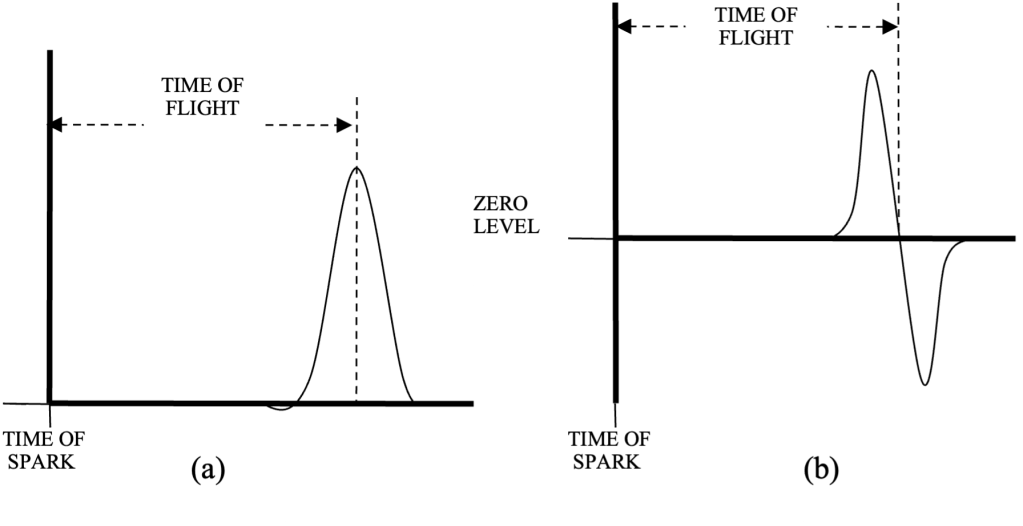
So, Why had the sloppy test set up worked and not the “cleaned up” one? I came to the conclusion that the “imperfect” connections with dissimilar metals (copper, brass, etc.) produced sufficient contact potential to ensure the observed collection of ions of a single polarity. Once all connections were soldered (tinned) those contact potentials disappeared and we were unable to demonstrate the device to the disappointed official.
I derived a crucial lesson from this experience. If an experiment, a device, a system under development works and you don’t know exactly why, do not proceed without elucidating the mechanism, the process that makes it work. Otherwise you can expect unpleasant surprises and unforeseen problems, if not total failure at some stage of the effort.
Eventually, we designed a successful compact instrument which was incorporated in the particle collection system and flown and operated at stratospheric heights tele-metering the information down to the ground. This final version of the ion tracer anemometer operated as a closed loop device wherein each detection pulse triggered the next spark discharge thus producing a continuous sequence of signals whose frequency was directly proportional to the air velocity through the particle collection system.
♣
More and more, Sam Cravitt, the man in charge of this overall project disengaged himself from it as he saw that he could rely on me to carry on with the development work. He got involved with another project related to his prior experience in infrared detection for which he frequently called on me to provide him with support and to act as a sounding board whenever he ran into difficulties. As the high altitude particle collection project progressed I was given additional support by a rather eclectic and varied cast of characters, engineers and physicists hired by DEL Electronics who either worked for or with me. I recall, among others, Andrew Foldes, an affable Hungarian émigré with a degree in mechanical engineering, various laboratory technicians, and Joe Pignataro, an able junior electronics engineer. Two individuals stand out because of their idiosyncratic behavior. One of these was the physicist Klaus Weber, a German import who was, to best describe him, a cross between Casanova and a storm-trooper. He was grating, opinionated, and thoroughly obsessed about his purported exploits as a lover of innumerable women. In keeping with this obsession he attended every performance of Mozart’s Don Giovanni that he possibly could and identified with that character to a ridiculous degree. He was militantly anti-Catholic and during a flight to Minnesota as part of a project field trip he nearly went berserk when witnessing a woman passenger who found it necessary to allay her fear of flying by constantly fondling her rosary beads.
And then there was Bill Harris, a respected senior aerosol specialist, who had been hired to provide his expertise to the stratospheric particle project. He must have been in his early sixties and promptly wanted to impose his opinions on the work I was performing. Very quickly I found that these opinions were of questionable scientific solidity and I resisted him with tooth and nail. It became a very tense situation. His desk was adjacent to mine and on one occasion, as we worked side-by-side, he chose to place his feet on my desk – the soles of his shoes were a mere inches from my face. Finally, I took a deep breath and peremptorily requested that he remove himself from my desk. He did so but only after chastising me with an exhortation about the “American way” which I obviously was ignorant of and needed to learn about. His behavior became more and more belligerent towards me in the days to follow and made me quite uncomfortable to the point that I decided to take my grievance to the company management. I simply said that they had to choose between Bill Harris and me. It was a gamble, since he was a senior researcher, respected in his field and I was still a junior engineer/scientist. Two days later, he was dismissed, and I felt victorious and vindicated. Six months later Bill Harris died of a particularly virulent form of a neurological disorder making me feel quite contrite about my combative attitude towards him and my lack of recognition of any pathology in his behavior. This, I could, of course, attribute to the fact that I had no baseline reference of his “normal” past against which to compare his later peculiarities.
There were the three principals and founders of the company: Joseph Delcau the president (my father-in-law’s friend from Rumania), Hugo Di Giovanni (“DiGi”, the ex-Atomic Energy Commission researcher), and Dr. Raymond Kaufman. The former two were engineers and the latter a physicist. The only one who took any interest in the stratospheric particle work was DiGi. Delcau once made an appearance at the laboratory and his only comment pertained to the color of the wall paint. Dr. Kaufman had, in all appearance, lost any interest in physics and had become the financial officer of the company.
There not being any eating establishments in the vicinity of the DEL, we all brought our lunches to work. I usually had a sandwich prepared by Evelyn. We placed our respective brown bags in a communal refrigerator until consumption time. One day, as usual, I took the bag at lunchtime, ate the egg salad sandwich in it, and sat down to read. Soon after, one of the young electronic engineers approached me and timidly inquired whether I had eaten his egg-salad sandwich. He then informed me that he could not eat the remaining ham sandwich I had brought. His was kosher. He fasted that day until his return home in the evening. I was mortified and thereafter clearly marked my brown bag to preclude further infringements on the dietary constraints of some of my fellow engineers.
On the matter of other engineers at DEL, I discovered, to my surprise, that most of them were remarkably conservative, if not truly reactionary, in their social and political views including wholehearted support of the ongoing U.S. military involvement in Vietnam. I somehow expected that the engineering education would have resulted in a broader outlook and a more intellectual attitude, but that was obviously not the case at least within the cohort that surrounded me. I had frequent verbal jousts with several of these professionals with whom I thoroughly disagreed on the subject of Vietnam about which I had rather strong opinions. Also, surprisingly, there were two electronics engineers who lived in New Jersey and were willing to motor for 2½ hours each way to and from work every day, a full 5 hours on the road 5 times a week!
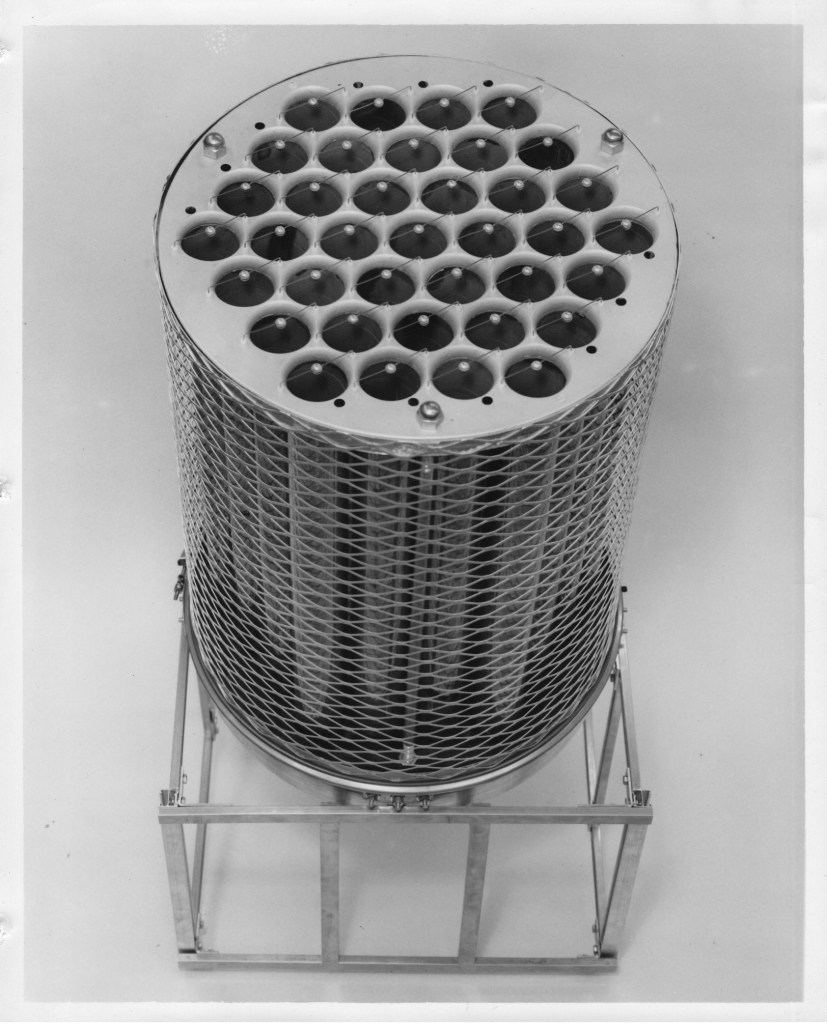
Two years after I started at DEL, in 1962, I was joined by Mort Lippmann. He had, at the time, a Masters degree from Harvard and was bright, imaginative and astute as well as a highly practical researcher with substantial knowledge about aerosols. He had concentrated his interest in the respiratory effects of airborne particulate matter and was to acquire in later years a worldwide renown in that field. We worked very well together – Mort had a good background in chemical engineering and in aerosol sampling which combined well with my experience in electrical gas discharges and physics at large. He stayed at DEL for about two years during which we collaborated in the design and development of a large second generation stratospheric electrostatic precipitator consisting of 37 parallel cylinders and the development of a portable industrial hygiene sampler based on electrostatic precipitation (see descriptions further on). Mort and I became good friends and we continued to be so ever since with the inclusion of our respective families. Evelyn and I attended Mort’s and Janet’s 50th wedding anniversary in November of 2006, 44 years later. After Mort left DEL in 1964 he went to get a PhD in biophysics at New York University where he was to remain for the rest of his professional life. Two years later, when I was considering to leave DEL, Mort arranged for me to be interviewed for a similar biophysics internship at NYU’s Sterling Forrest facility in northern Westchester where he worked. I will revisit this matter later on.
Before Mort left DEL, Sam Cravitt departed and rejoined the company at which he had worked previously, Farrand Optical. His replacement as project director was Dr. Leonard Solon[2] who came from the New York office of the Atomic Energy Commission. He was a radiation physicist, intelligent and of very pleasant demeanor. He was better at theory than practice, but we got along very well as we complemented each other.
♣
The first version of the stratospheric electrostatic precipitator, consisting of one 6-ft long tube (6-in diameter) was designed and fabricated with all its ancillary components (high voltage power supply, control box, etc.). It was transported to Minnesota and I traveled there to participate in its balloon launching. The balloon was fabricated by General Mills, the cereal company. They had a special group involved in these projects for the AEC. Later on that group was taken over by Litton. Now, whenever I happen to pour a bowl of Cherrios cereal I have to think back to that unlikely General Mills connection.
The balloon launching took place from a deserted airport west of Minneapolis. The electrostatic precipitator was suspended with springs within a protective aluminum frame to which the rest of the equipment was attached. This entire package was suspended from the Mylar balloon filled with helium just prior to its release. The balloon was inflated only to a small fraction of its final stratospheric volume. On the ground, it resembled a long, floppy sock. Gradual expansion, as it ascended through the thinning atmosphere, then resulted in its near-spherical shape with a diameter of about 250 feet, once it reached its “float” altitude somewhere between 110,000 and 120,000 feet, about three times higher than the cruising altitude of a typical jet airliner.
The launch procedure required critical timing. The payload was mounted to a flat-bed truck, and upon release of the balloon from the ground, the truck had to move rapidly under the rising balloon and release the payload – by an explosive bolt – at the moment the balloon was directly overhead. If the release occurred before the balloon was vertical, the payload could bounce around the ground or on the truck. If too late, the tethers could rip. Launches were performed usually before sunrise, a time of minimal winds.
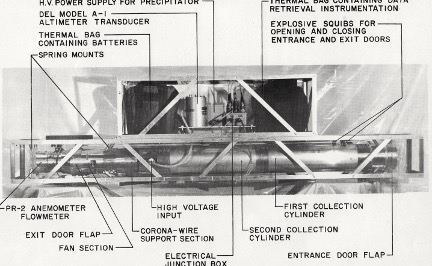
The typical sampling flight sequence was as follows. It took about two to three hours for the balloon to reach its “float” altitude, the altitude at which the overall weight of the system (including all components) equals the weight of the displaced air (with due thanks to Archimedes). At lower altitudes, the weight of the displaced air is higher than that of the balloon plus payload and thus the system continues to rise. Once the float altitude is reached, the air sampling operation is initiated by a combination of aneroid switch and timer. The sampling period was programmed to be between 3 and 4 hours, after which the balloon is cut off (by telemetry signal) from the payload by an explosive bolt (squib) and the payload descends by parachute. The descent took typically about 30 minutes.
Depending on the winds aloft, especially at altitudes above 100,000 feet, the system was likely to drift a considerable distance from the launch point to the impact location, in some cases hundreds of miles. The usual procedure was to follow the balloon visually and by telemetry on ground vehicles with the aim of reaching the package at its impact location as soon as possible to prevent tampering by “locals” and contamination of the internal sampling surfaces.
During that first flight in which I participated, we followed the balloon driving furiously in a generally westerly direction along which the prevailing wind carried it. As we crossed from Minnesota into North Dakota we stopped at a small town where we were accosted by the locals who had sighted the small dot in the blue sky and wanted to know whether we were government agents trying to track down this UFO. We had a difficult time convincing them about the true and innocuous nature of the observed “phenomenon”.
It was during this field expedition in pursuit of the balloon that I had my first – and last – exposure to root beer. During one of our stops, we went into a gas station to get a cold drink. The other members of the recovery crew – a highly experienced bunch – invited me to a “root beer”. I acquiesced gladly thinking – as a good greenhorn – that a “beer” is a beer. I took a long swig and…almost chocked on the unexpected and despicable taste of that most American concoction which has as much resemblance to beer as to orange juice. My collaborators were thoroughly mystified by my reaction.
More than one of the stratospheric sampling flights ended in disaster. At least two plunged into either Lake Superior or Michigan and were lost. At least one came crashing down shortly after launch when the balloon developed a massive rip. I witnessed the latter failure when the launch took place from Goodfellow Air Force base in San Angelo, Texas, the site of all later flights in which I participated. The recovery of the severely mangled payload took all day – a Friday. A follow up flight had been scheduled for the next Monday morning. I had the weekend to try to repair the mess. All components were transported to the main hangar of the base and I set myself to work, alone. I was provided with a tool box and no further support.
I managed to effect a fairly acceptable repair of the distorted protective frame of the electrostatic precipitator but, on Sunday, I discovered that the electrically insulating acrylic plate on which the high voltage power supply feeding the electrostatic precipitator was mounted was severely cracked and needed to be replaced. I ran around the entire hangar looking for a piece of insulating plate that I could adapt to my needs. There was absolutely nothing. I was beginning to feel that I would not be able to ready the system for the morning launch. I sat down and visually scanned the large hangar and suddenly my eyes landed on a wooden “No Smoking” sign attached above one of the entrance doors. I found a ladder, a hack saw, and proceeded to cut off half of the sign, an area that approximated the size of the shattered acrylic base. I drilled the appropriate holes and secured the power supply onto the wooden board and the latter to the payload frame. I ran an electrical test and everything seemed to be in working order. The next day we had a successful flight. I did not tell anyone about my act of sabotage of the No Smoking sign. I still smile when imagining the military employee who would first spot the mysterious dismemberment of the sign.
On one of the flights from San Angelo, the balloon was carried eastward at more than 100 miles/hour for most of the flight duration. We, the recovery crew, had to drive at breakneck speed all across Texas to the Louisiana border, and then back. I had the final driving night shift while the rest of the group was snoring away in the car.
It was during one of these field trips to Texas that I had an odd incident related to my native Spanish language ability. One evening after work, the balloon launching personnel and I, a group of eight, or so, decided to drive south towards the border to dine at a genuine Mexican restaurant. My companions were all acquainted with my knowledge of Spanish and decided that I ought to order the food by speaking to the Latino waitress in her own tongue. She was a young woman who, as soon as I started to speak to her in Spanish turned around and quickly walked to the back of the restaurant and proceeded to speak in hushed tones to a gathering of ominous burly mustachioed Mexicans. Shortly after, she disappeared behind a door not to be seen again. In her stead we were approached by one of those Pancho Villa types who, after eyeing us with an air of undisguised suspicion, took our order. Thereafter, for the duration of the meal, we felt an air of unrelieved tension in the establishment and were elated when leaving it. We all concurred that the Mexicans suspected that we were US government agents on a mission to smoke out illegal immigrants and that I was the Spanish-trained Anglo agent of the group. Henceforth I became much more parsimonious about flaunting my Spanish language abilities to Latinos in southwestern U.S.
♣
The laboratory work allowed me essentially free rein to solve many challenging measurement problems. Early on, when I was testing an axial fan designed to drive the air through the initial single tube electrostatic precipitator tube, I devised a method to determine the rotational speed of the fan. It consisted of using a variable frequency audio generator to which I connected one earphone, and placing my other ear on the test chamber within which the fan was running. I was then able to measure the fan speed by tuning the frequency of the audio generator until I heard the synchronous beat in my brain between the fan noise in one ear and the generator’s sound in the other.
One of my more original solutions was that of measuring the volumetric flow rate through the second generation 37-cylinder electrostatic precipitator sampler. This was a large flow rate system (1 m3/s) with a low pressure drop – basically an open flow configuration. No traditional flow meter could be used because of the inherently excessive flow resistance that such measuring device would create at the low air density that corresponded to the high operating altitude – a classic case of the measurement device influencing the measurement. We needed to be able to calibrate the ion tracer anemometer which measured air speed at one specific cross sectional location – not a true measure of the overall volumetric flow rate, but a measurement method that did not influence the process to be measured. My solution was to suspend the entire assembly as a pendulum, and measuring the deflection from the vertical position due to the thrust resulting from the net velocity gain between the larger inlet cross section and the narrower fan exhaust duct. I sensed the deflection by attaching a ferrite rod to the swinging assembly which moved into a coil of a resonant circuit. The degree of de-tuning was a measure of linear displacement. It worked like a charm, and I worked out the equation relating the deflection with respect to the weight of the system, air density and the flow dimensions of the assembly. As far as I know this flow rate measurement method had never been used before. But I was neither very patent-minded nor a promoter of my ideas and the technique remained unprotected and unused by others. I was to face the
effects of that detachment on more than one occasion over the years: I would think of a new approach, implement it and then forget about it only to find out that someone else patented the idea years later.
Another clever idea resulted in a portable electrostatic precipitator sampler for industrial hygiene applications that I developed together with Mort Lippmann. It incorporated a novel way to double the collection area without increasing the dimensions of the device by splitting the collection field as described in my first published paper. In that context I attended the annual conference and show of the American Industrial Hygiene Association in 1964 and because of my – by now recognized – expertise in electrostatic precipitation and the electrical behavior of airborne particles, I was called upon to critique a paper to be presented on that subject by Al Liebermann, a fairly well known technologist in that field. At that time, it was customary that the author and presenter of a paper at the conference would submit the manuscript to a reviewer several days ahead of the conference presentation. The reviewer then had the opportunity to present his critique following the podium presentation of the paper. Liebermann – contrary to the rules — provided me the manuscript late in the evening before his presentation, and I sat in my hotel room until past midnight until I finished the review. The paper was riddled with questionable statements and outright mistakes. In my typical brash manner, I unloaded my acerbic criticism at the allotted time to the shocked audience. It was not considered gentlemanly to express such an unmitigated negative assessment of a colleague’s work. I, however, could not care less. Scientific rigor needed to trump collegiality.
As I mentioned previously, the work at Del often left me some free time to devote to technical reading but also to the pursuit of some rather ‘extracurricular’ scientific activities. For
example, I wanted to find a simple method for timing events and/or measuring frequencies with great accuracy. I had a communications radio receiver at my disposal and used the timing clicks of the National Bureau of Standards WWV radio station to trigger a digital counter. While engaging in that pursuit, I found – by displaying those one-second ticks on an oscilloscope – that these clicks consisted of short sine wave bursts (i.e., a few cycles of 400 Hz) in the audible range, and yet these bursts did not sound like tones but like clicks. This led me to understand that, in order for us to perceive a sine wave as a tone, a certain minimum duration (or number of cycles) is required below which it sounds as a non-tonal click[3]. Another interesting psycho-acoustic phenomenon. These work unrelated pursuits satisfied my latent scientific curiosity without affecting significantly the timely performance

of my expected professional tasks. I was given a lot of freedom to pursue my own interests but I did not abuse that privilege.
♣
In the course of developing and testing the 37-tube stratospheric sampler, I made a serendipitous discovery of a previously unknown and – to my knowledge – unobserved
gaseous electrical discharge phenomenon. We started testing a single tube of the eventual cluster of 37 (this number arose from the compact hexagonal clustering symmetry of circles it provides, similarly to a cluster of 7 or 19 circles). We determined the corona current and
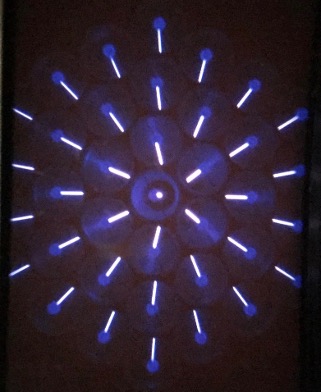
operating within altitude simulation chamber. View through a porthole.
voltage relationship, particle collection efficiency characteristics, flow resistance, etc. at air densities corresponding to altitudes between 100,000 and 150,000 feet. One of the critical parameters to be determined was the maximum voltage-current point at which the corona discharge remained stable without the possibility of localized spark breakdown which would obliterate the particle precipitation ability of the system. Once that maximum was established as a function of air density we would be able to design the high voltage power supply feeding the precipitator such that it limited the current-voltage to safe levels at any operating altitude. Logically, we expected that the maximum safe corona current of the 37 parallel tubes would be approximately 37 times that of the single tube. However, as soon as we assembled the first full 37-cylinder experimental system I found to my surprise and chagrin that the maximum achievable stable corona current was only about 22 times that of the individually running precipitator tube. That was potentially a serious setback since it would have resulted in a significant degradation of the particle collection efficiency of the overall system and would have forced us to reduce the sampling flow rate, an undesirable compromise.
I decided to try connecting a capacitor across the 37-cylinder precipitator to smooth out any unforeseen and unexplained electrical instabilities. This had a dramatic effect. Depending on the magnitude of the capacitance, the allowed (i.e., stable) precipitator corona current value rose to nearly 100% of the expected level (i.e., 37 times the current of a single tube). I then decided to connect an oscilloscope (with due precautions given the high voltage involved) across the precipitator to ascertain what instabilities there were in the absence of the smoothing capacitor. To my surprise, there was a large, essentially sinusoidal current-voltage component superimposed on the dc level, with a stable frequency of the order of several hundred thousand cycles per second (e.g., 450 kHz). My first reaction was that this oscillatory signal originated from some powerful neighboring radio station whose transmission somehow got into my high voltage wiring. I had a communications receiver available capable of tuning to the observed frequency but, again to my surprise, there was no detectable radio transmission at the observed frequency. The plot thickened. As I was pondering about the mysterious sine-wave signal displayed on the oscilloscope, I made a small adjustment to the control valve with which I changed the air pressure within the altitude chamber inside which the precipitator system was operating. Lo and behold, the frequency of the oscillation depicted on the oscilloscope changed with the air density! I was stunned. This was obviously not an externally generated signal – no radio transmitter in the vicinity – but an internal phenomenon associated with the corona discharge within the electrostatic precipitator. I confirmed that conclusion after replacing the high voltage power supply to eliminate the possibility of an unintended oscillation of that component.
Eventually, after careful review of the relevant literature – where no mention of this phenomenon under the observed conditions could be found – I concluded that the detected signal was due to coherent plasma oscillations of very large transiently formed ions (with molecular weights of several hundred) generated within the ionizing region or corona

(a) 0.02, (b) 0.012, and (c) 0.0046 atmospheres. Horizontal scale: 1 us/cm
sheath surrounding the axial wires. The creation of these large molecular weight ions apparently required the concurrent presence of nitrogen and oxygen at densities below about 1/50 of sea level values – I was unable to elicit such oscillations in corona discharges at sea level conditions. This was probably the reason why these stable oscillations had previously not been reported. Later on I also found that the frequency of the oscillations at a given air density and corona voltage-current point was influenced by the presence of gaseous trace contaminants, and I obtained a patent – my first one – for the sensitive detection of water vapor and other trace gases by this means[4]. Later on, while at GCA, I also found that these coherent oscillations failed to appear altogether when the corona was generated in the presence of a single gas species, e.g., CO2 or N2. This negated its possible use as a water vapor sensor for the first Mars lander. The atmospheric density at the surface of that planet was compatible with this sensing method but the absence of other gases than carbon dioxide precluded its application. Unfortunately I did not have the opportunity to further explore this interesting phenomenon to determine exactly what range of conditions were required to elicit it. I have also speculated on the possibility to perform trace gas detection by spectroscopic analysis of the electromagnetic emission from the visible corona discharge glow surrounding the axial wire. Maybe a future researcher could pick up this idea and explore it further. If I had discovered these ion plasma oscillations while researching within an academic setting they would probably have been made famous as the “Lilienfeld Oscillations”. Alas, I was in an industrial environment and it certainly was remarkable enough that I had the chance to identify a heretofore unknown gaseous electrical discharge phenomenon.
In the course of developing the ion tracer anemometer that I described above, I became acquainted with certain facets of flow dynamics which had been previously unfamiliar to me. The detection pulse shown on the oscilloscope provided clear information as to whether the flow was in the laminar or the turbulent regime. These observations led me read the scientific literature on related topics expanding my overall knowledge of this field.
I had the opportunity to experiment with what is called ion wind, the air motion generated by a corona discharge, for which I developed equations to predict the flow rate produced by such gaseous electrical discharges.
In my few relatively idle moments – when waiting for an experiment to run its course – I designed and made a slide rule to calculate pressure, density, temperature and other parameters as a function of altitude. I still have that manual calculator which I never took beyond that prototype level (see photo of slide rule in Photo Gallery at the end).
♣
Eventually, this whole project reached its conclusion. In 1966, the Atomic Energy Commission decided that stratospheric sampling related research was no longer justified because the test ban treaty between the US and the Soviets had terminated any further nuclear detonations in the atmosphere. Leonard Solon departed DEL and I was left to wind up the work. Eventually, Solon and I wrote an extensive paper about the project that was published in Europe. Since this had been the only activity at DEL related to research and development of airborne particle instrumentation, I was forced to return to my original assignment when I had joined the company six years earlier, namely power supply circuit design and development. This involved working for the chief engineer, a Jim Constable, a capable but notoriously obnoxious individual who treated his engineers as if he were running a fiefdom. I decided to bid my time at DEL while exploring more interesting job opportunities elsewhere.
My friend Dr. Mort Lippmann suggested I follow him to NYU’s Sterling Forrest research facility and that I apply for a PhD program there in biophysics. Although I was not too tempted by that suggestion, I felt obligated to contact Dr. Roy Albert, the head of that department for whom Mort was working at the time and to whom he had spoken about me. When Dr. Albert heard that I played tennis he suggested I bring my racket and sneakers to my visit to that Westchester campus. Thus it became a rather original interview carried out while exchanging fore- and backhands across the court with Dr. Albert. I did not hold back and he lost. Eventually, I received an offer from NYU which I declined. I decided that the biophysics career would take me too far afield from the area of expertise in aerosol instrumentation that I had fallen into over the preceding six years, or so. I was not inclined to be subjected to a plethora of courses in anatomy, physiology, toxicology, etc. that were prerequisites of the NYU degree.
At GCA/Technology Div.
One Sunday morning in late 1966, Evelyn, while perusing the jobs section of the New York Times, pointed out to me an advertisement for an “aerosol physicist” at a company in Bedford, Massachusetts called GCA/Technology Division. I looked on a map and could only find New Bedford on the southern coast of that state. I responded to the ad and they invited me for an interview in early December. Evelyn, Claudio and Armin accompanied me and we drove to Bedford which GCA had informed me was a suburb of Boston. The interview lasted a good part of one day as I was queried by five senior staff members. The next day I visited AVCO, an aerospace company, with which I had also arranged an interview. Both companies offered me a job but the fit with GCA was decidedly better and I accepted.
The starting salary at GCA was significantly higher than my extant pay at DEL – $15,600 vs. $12,500. When I informed Mr. Delcau, the president of DEL of my decision to leave his company he took that as a personal affront but my decision was irrevocable and we parted somewhat less than amicably. We moved to our newly rented home in Lexington on March 18, 1967, a Saturday, and I started work two days later at GCA.
At that time, GCA/Technology Division was a high powered contract research organization of some 250 employees, 90 of which sported PhDs. At first, but only for a very short time, I felt a bit intimidated by all that concentrated brainpower. This group was one of the divisions of GCA Corporation. The other divisions were various laboratory instrument manufacturers that had been acquired by GCA in recent years. GCA/Technology division had been the original core when the overall company – Geophysics Corporation of America – had been founded in the early 60s as a spin-off of the Cambridge Research Laboratories of the US Air Force at Hanscom Field in Lexington. GCA/Technology Division specialized in contract research for various government agencies in the general field of atmospheric and planetary physics and chemistry. The aerosol group into which I was integrated did most of its work under contract from the US Army in research related to the generation and dispersion of chemical agents. My immediate superior was Arnold Doyle, a very engaging and personable individual with whom it was a pleasure to work. Others in the group included David Lull, an explosives specialist and Paul Morgenstern[5], a meteorologist/mathematician.
I gradually interacted more and more with senior staff members from other groups, such as the chemical physicist Abe Berger, the physicists Earl Rosenblum and Jerome Pressman, the department head John Ehrenfeld, George Ohring, a senior planetary meteorologist, Henry Miranda[6], a physicist, Carl Accardo[7] and John Dulchinos[8], both electrical engineers, and several others. I soon discovered that I had been hired to replace an aerosol specialist called Bob Gussman who had left to form a small spin-off company. In later years I was to become well acquainted with my predecessor at GCA, who eventually went on to found BGI with Charles Billings, a respected aerosol physicist (Billings & Gussman, Inc.). Also, Shortly after I joined GCA, Arnold Doyle received a call from Richard (Dick) Dennis, a particle filtration specialist, who had been at GCA previously and had joined Bob Gussman. Dick wanted to return to GCA after that joint venture (with two other people) had split apart. He was thus rehired as a senior aerosol staff member. A few months later Charles Billings also joined the group. The latter contributed little or nothing to the work at hand as he concentrated almost exclusively to the writing of a book on industrial hygiene aerosol measurement methods. He eventually left GCA and proposed that I join him in forming a two man company. I refused (I found Billings to be too mercurial and unpredictable) and he then joined up with Bob Gussman as I mentioned above. That association was to be short-lived as well; Billings left and Gussman took over retaining the name BGI for his company as it is still known today.
I found, to my great relief, that most of the scientists at GCA shared my views about the Vietnam war, as opposed to the professionals at DEL. However, once more, some of the engineers seemed to be rather reactionary, like those at DEL.
♣
One of the major projects that engaged my attention within a month of joining GCA was to develop a real-time particulate matter mass sensor to be applied to large chamber- simulated chemical agent dispersion tests. Arnold Doyle and I converged on a combination of particle impaction and beta radiation attenuation mass sensing for which we were granted a joint patent[9]. It was to be a successful idea that first culminated in a prototype device used on the aforementioned tests at GCA, and later (as I will describe in some detail) in the first direct reading portable particle mass monitor ever developed, and the first commercially produced instrument at our division of GCA.
The motivation for the overall research program, under the sponsorship of the US Army, was of course rather distasteful to me, at the very least. Its main objectives were to investigate and optimize methods of dispersion of chemical agents, principally for riot control, but probably with more nefarious ultimate purposes. Most of the time we worked with harmless simulant materials, but not too infrequently, tests were performed with the real stuff inside a very large cylindrical cement chamber behind the company’s parking lot. Those tests were conducted by explosive dissemination of the agent substance, at which time an alarm would be sounded to alert everybody of the imminence of the test. The explosion itself was usually heard, in my office in the main building, as a dull thud.
I seldom participated in those tests, as most of the time I worked on the development of measurement, sampling and detection methods in the main laboratory. After each test with the actual agents, the test chamber had to be thoroughly decontaminated with high pressure water or solvent jets. Once, I needed to enter the chamber after one of those tests and somehow touched the internal wall and within seconds started to feel an unbearable itch that extended over all my exposed surfaces. I had to run to a shower station to wash off the irritant. I could only imagine the sensation of any victim of direct exposure to the undiluted agent!
Occasionally there were protest pickets by groups of “beatniks” who advocated the termination of these tests, and the local police had to be called in when they got too disruptive. The real agents tested were CS and VX. My personal extreme itch experience was with the former of these. Every Monday morning a medical team set up shop in an office at GCA and we all had to give a blood sample for analysis in case of accidental exposure.
Among other devices, I designed an automated air sampling system to rapidly and sequentially collect the particles, generated within those chamber tests, on a series of filters for subsequent analysis. In addition to the work for the Army, I got involved in several other projects where aerosol and gas detection expertise was required as well as in areas related to air flow, temperature, pressure, atmospheric visibility and other environmental measurements.
§
I had started at GCA/Technology Div. March 20, 1967. The next year, and especially in early 1969, Nixon’s accession to the presidency was accompanied by a severe cutback in government funds to support research – any research. A rather typical republican approach to government. The immediate result was a drastic elimination of jobs among the senior program managers and scientists of the organization. On a daily basis, there were goodbye parties and emptying offices. It became a thoroughly dispiriting and unsettling environment, and I began to feel somewhat insecure although the Army project on which I was working seemed to be unaffected by the widespread cutbacks affecting other projects. One evening, after I had just returned home from work, I received a phone call from the department head, Arnold Doyle. He wanted to know if he could come and visit me at home a few minutes later. With a thoroughly uneasy feeling I awaited his arrival. I could only imagine that he wanted to inform me in person about my dismissal. A very personal gesture, indeed. He arrived, I led him to our living room and he proceeded to tell me that he just wanted to set my mind at ease, that my job was assured for the time being, that my services were essential to the project, and that I had been doing exceptionally good work. I will never forget this uniquely empathetic gesture by a particularly humane and caring manager, an extreme rarity indeed.
Sometime later, the overall section director, Dr. John Ehrenfeld, threw a party at his home, purportedly to counterbalance the doom surrounding all those good-bye parties, inviting those members of his staff who remained at GCA. Two days later he himself was laid off. He summoned me into his office where he sat red-faced and angry. He proposed that I leave GCA and join him in a new technological venture that he was hatching. I demurred, claiming – legitimately – that I had been at GCA for only a short time and saw no reason to change my job at that point. As I mentioned before, Dr. Charles Billings was to make me a similar proposition a few months later. Dr. Leonard Solon, my erstwhile boss at DEL Electronics, had also wanted me to join him in some hypothetical venture. I seem to have had some appeal to all those technocratic venturers.
Very soon after the beginning of this upheaval, in 1968, I witnessed at GCA a very strange behavioral transformation affecting certain members of the staff who had not been included in the early round of layoffs. Almost overnight some individuals who were up to then inconspicuous, clean cut, all-American looking young men, became odd-looking mountain men with long hair, beards, mustaches and other facial shrubbery. Dr. Rosenblum, the somewhat elderly physicist, with whom I had been working on a contrast photometer development project for the government, left the company, abandoned his family, bought a camper vehicle and disappeared into the boondocks of Northern Canada. A young engineer prepared to live under extreme privation in the wilderness with his wife and toddler-age children by selling all the furniture in his house and sleeping in bags. Neither was ever heard of again. One senior German scientist committed suicide. The social fabric was being disrupted severely as part of the 1968 phenomenon.
Eventually, over the next year or two, the roster of the GCA/Technology Division staff plummeted from its peak of about 250 to merely 65, or so. Arnold Doyle and several of the people working for him departed and formed one of several spin off companies.
Finally, after a major administrative reorganization, a new general manager, Dr. Leonard Seale[10], took command and decided, wisely, to reorient the Division’s activities towards the newly evolving field of air pollution research, a natural field for scientists and engineers previously engaged in high atmosphere studies. As we got deeper into the 1970s, the federal government began to support programs in this emerging field, including industrial hygiene monitoring. I became exceedingly successful in winning competitive research and development projects throughout that period. I will endeavor to describe these activities in what follows.
As part of the reorientation of our division’s objectives, several new scientists with capabilities in the emerging environmental field joined the organization. I became quite friendly with several of them. Most notable among these were Paul Fennelly, Bob Bradway and John Driscoll. Shortly after, Steve Chansky was hired and with whom I worked quite closely as he eventually was placed in charge of marketing the particulate monitoring instruments that I was developing. As to John Driscoll, he left GCA a few years later and when eventually I met him again he had undergone one of those remarkable transformations I had mentioned before. His name had become Jack Driscoll and his appearance and demeanor had evolved from a soft spoken all-American clean cut nice boy to a broadened, boisterous, self important walrus-mustachioed individual. He was by then the president of a small company called HNu specializing in photoionization gas detectors. Sometime, in the 1980s he became interested in acquiring my particulate instrumentation group but he was unwilling to come to terms with GCA on this matter – fortunately, in retrospect.
In the meantime, I was working on the development of an advanced airborne particle counter incorporating a gas laser, a newly introduced device uniquely suited for that purpose. The work was performed under a contract with the Air Force. The instrument was designed to be mounted within a wing pod of a high altitude research aircraft and to be flown at about 65,000 feet. One of the facets of this project required the determination of the operating temperatures of some critical components of the system such as the high voltage power supply of the laser, the laser itself, etc. This was a matter of concern given the low air density to be encountered at altitude and the attendant diminished air cooling of these components. The Air Force decided to issue a secondary contract to the University of Dayton where a group had become specialized in computer modeling of thermal processes. We provided them with all the relevant information to carry out their calculations. Some months later I received in the mail from the U. of Dayton a 2-inch thick stack of computer printouts with tabulations of the predicted temperature rises of various critical system components as functions of operating time and altitude. I looked at a few of these tables which indicated that the components that were expected to heat up the most (e.g., the laser high voltage power supply) would, under the worst conditions, undergo a total temperature rise of about 1 °C in about 100 seconds, after which the temperature would remain essentially constant. I knew immediately – from my own experimental evidence gathered at DEL in the altitude chamber – that this was “garbage” information. I had run tests of similar equipment that showed typical temperature increments of about 50 °C over periods of the order of 2 hours. In my usual brash manner, I communicated my assessment to the head project scientist at Dayton. He was quite horrified by my dismissive characterization of their results but I stood firm and contacted the Air Force telling them, in so many words, that they had wasted their money. Eventually, they checked the results and came to accept my view. It was my first experience with the computer age dictum ‘Garbage in, garbage out’, that summarizes the pitfalls engendered by too much reliance on massive computational power and too little ‘back-of-the-envelope’ pre-calculation, if not actual experimental experience.
Since most of the original researchers who had worked on the Army project of aerosol dispersion characterization had left by early 1969, I was charged with winding up that project and called upon to write the final report. Another wind-up of a major project that was to fall on my shoulders similarly to the stratospheric sampling project for the AEC at DEL.
Beta attenuation instrumentation
Early in 1969, the National Institute of Occupational Safety and Health (NIOSH) issued a request for proposal for a direct reading particulate mass monitor to be used in coal mines. Based on the above mentioned work on combining beta radiation and particle impaction that I had performed within the Army project, I wrote a proposal for the development of such an instrument. This was my first proposal which I authored alone. Previously, I had only contributed to the preparation of proposals written jointly with other scientists. My proposal to NIOSH was successful and GCA received the contract. I was elated, and promptly dove into the design and development of that pioneering instrument, with the support of a most capable electronic design engineer – John Dulchinos – and a mechanical engineer of Dutch extraction whose name I have forgotten – perhaps for good reason. We built a prototype unit to be delivered to the government. Upon its completion, we decided to travel to Pittsburgh for a show-and-tell to two other agencies: the U.S. Bureau of Mines and the Mine Safety and Health Administration (MSHA) which were obviously interested in a device to measure coal mine dust. The general manager, Leonard Seale and I arrived in Pittsburgh during an ice storm and proceeded to make the presentation of the new instrument to a gathering of about a dozen government staff. Their reception, however, was as icy as the weather. We became aware that they considered this development as an interagency interference (NIOSH vs. the Bureau and MSHA) and we found ourselves innocently caught in between. On leaving the meeting, I decided to lighten the mood and expressed my disappointment about the weather upon which the principal researcher of MSHA – Murray Jacobson – retorted angrily that he had nothing to do with that. In years to come, however, he was to become quite friendly and tractable.
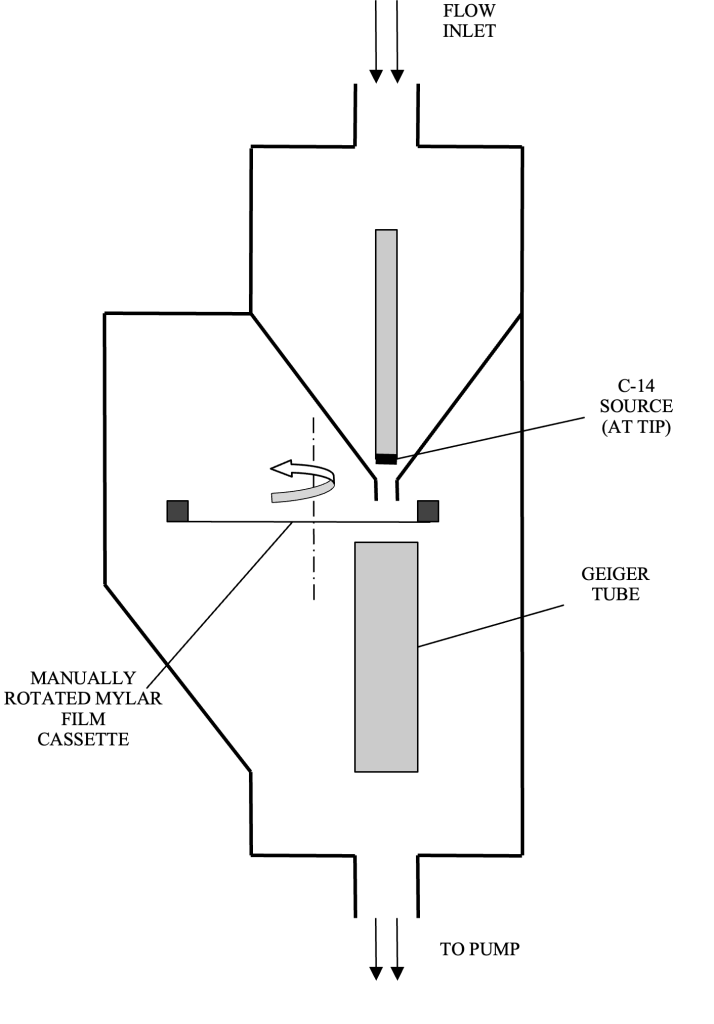
This portable instrument was to become the first commercial product of GCA/Technology Div. as the model RDM-101. Several hundred – perhaps more than one thousand – of these devices were sold, starting in 1971, but not before I had to learn that particle impaction has its idiosyncrasies that had to be overcome in order to ensure the appropriate performance of the instrument. The impaction surface needed to be coated with a thin layer of a mixture of Vaseline and oil, viscous enough to not flow but fluid enough to wick over the particle surfaces in order to continue presenting an adhesive surface to subsequently impacting particles. That special condition was achieved by mixing some fine dust into the Vaseline/oil mixture to make it into a “non-Newtonian” fluid. This was the early contribution to this project by a newly arrived very bright young physicist, Dr. Douglas Cooper, who was to collaborate with me on several subsequent projects.
The RDM-101 portable mass monitor became the first of several “variations of a theme”. Other related instruments followed such as the RDM-201 which used a small filter in lieu of the impactor, the RDM-301 which incorporated an automatically advancing mylar cassette instead of the manually indexed one of the RDM-101, and a large filter tape version named the APM-1. All of these devices sensed mass by the attenuation of carbon-14 beta rays as sensed by a Geiger-Müller detector tube.
In 1972, it was decided that I should take a trip to several European countries to demonstrate the newly developed RDM-101. Evelyn accompanied me and we traveled to France, Germany, Switzerland, and the UK. The trip almost started with a disaster. We arrived in Paris from the U.S. and took a taxi to my ancestral home in Boulogne-sur-Seine where my step grandfather Louis Fourestier lived with his wife Lucette Descaves.
After the taxi departed we discovered to our horror that we had left the instrument in that car. Fourestier tried, unsuccessfully, contacting various cab companies to trace the missing device. Suddenly, about an hour later, the house bell rang, and our Moroccan taxi
driver was standing at the door with the missing RDM-101 in its carrying case. We gave him a generous tip and breathed a sigh of utter relief. Our thoroughly jet-lag addled mind had nearly derailed the entire trip. So much for North African sly dishonesty!
The rest of my marketing sojourn was decidedly more uneventful. Two instances stand out. I made a presentation at a Swiss research agency in the presence of half a dozen
scientists. I had worked out a practical demonstration procedure producing a cloud of dust by blowing across a blackboard eraser. At that time there were still real blackboards on which one wrote with chalk sticks (sounds prehistoric now). The eraser was usually permeated with chalk particles. I did my chalk blowing in the vicinity of the instrument and got a reading of 4.3 milligrams per cubic meter, and I showed the display to the gathering. I then repeated the chalk blowing and got a reading of…..4.3 again. A third time, and the reading was…..4.3. The assembled group started to look at each other in skeptical and mocking disbelief – this instrument has just one reading: 4.3. My discomfort became palpable but I did not relent. I performed the test a fourth time and to my – and the gathering’s – utter relief the reading was 5.8.
The other idiosyncratic case was my visit to a French nuclear research facility in Provence where Evelyn was constrained to remain in the guard house for several hours – for reasons of security – while I was allowed inside the facility. She was engaged, however, to her surprise, in a long and learned dialogue with one of the guards about Gallo-Roman antiquities in the area. I, on the other hand, experienced the curious hierarchical stratification of the French professional establishment. The scientist who received me at the gate was supposed to introduce me to a more senior administrator. This process consisted of the scientist and I standing in the corridor next to the door to the chief’s office until he deigned to open his door which took at least one half hour.
In general the new instrument was well received in Europe although with a bit of the customary “not-invented-here” diffidence.
In 1975 I wrote a review paper on the use of beta attenuation as applied to the monitoring of airborne particulate mass concentration which I presented at an international aerosol meeting near Bonn, Germany, and which was published in the German journal Staub.
I had by then become the guru of beta radiation attenuation as applied to particulate mass determinations – my second major “guruness”.
The fiber monitor story
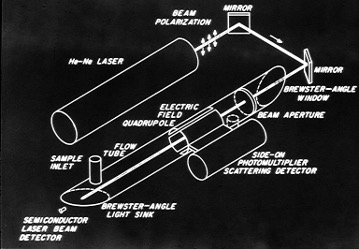
In late 1972, while at GCA, I contributed to the writing of a proposal – one of many – to the Environmental Protection Agency, related to asbestos research. As I was sitting in my office working on that subject, I had one of those inventive sparks. It was triggered by the awareness that the standard method of monitoring airborne asbestos fibers was by collecting an air sample on a filter, and then taking that filter to a laboratory for microscopy analysis which, in essence, consisted of laboriously sizing and counting the fibers visually one by one. The results were delayed, typically, by a week, or more. My invention insight was that these microscopic fibers, typically 5 to 10 micrometers in length, should align and swing their axes when subjected to a time-varying electric field, and if illuminated concurrently with a concentrated light beam – such as from a laser – should exhibit a modulation or fluctuation in their scattering of that light. This would provide a means to detect the presence of fibers in real time. After I had mulled over the idea for a few minutes, I marched into the office of the senior aerosol technologist, Richard Dennis, and described to him the concept that I had hatched. He seemed interested and exhibited at least a glimmer of understanding of my explanation. Dennis was an old timer who was decidedly better at dealing with mechanical systems such as filter bags. More about him in this context later on in this narrative.
I had to establish the feasibility of the method, and I helped Doug Cooper to set up and run the crucial experiment needed to prove whether my idea had any merit. I used a sine-wave generator whose output was boosted with a transformer to create the time-varying voltage across a couple of plates within a glass tube along which we shone a laser beam. The scattering of the laser light was detected by a photo-multiplier tube connected to a phase-sensitive amplifier, a device that measures the amount of detected signal that is synchronous with the time varying electric field. We generated an air stream containing asbestos fibers flowing through the glass test tube. Lo and behold! We immediately detected the expected signal which we observed only in the presence of the fibers and when the varying electric field was activated. Success and elation. After further confirming tests, the company decided that I should write a so-called ‘unsolicited’ proposal to the National Institute of Occupational Safety and Health (NIOSH), the same government agency that had supported the development of the portable coal mine dust mass monitor. Unsolicited proposals, however, were considered low probability attempts to secure government support. It implied that you knew better than the agency on what its funds should be spent, and even more importantly, the agency in question was unlikely to have budgeted for a project it did not know about beforehand.
Nevertheless I proceeded with the preparation of the proposal and GCA submitted it to NIOSH. For several months we heard nothing but suddenly we were informed that NIOSH had decided to fund the development of the fiber monitor based on the principle I had come up with. That was decidedly a feather in my cap and it seemed that this project would follow smooth sailing. Not so, however. As the final financial negotiations between GCA and the government were underway, we suddenly received notice from NIOSH that the procurement, and thus the project, had been cancelled. What had happened? Eventually, we were informed that a competing company in California had – through a state representative in Congress – issued an injunction to stop the contract with GCA, claiming that that firm had submitted a competing – also unsolicited – proposal for a related instrument development. The apparently frightened cancellation by NIOSH of our project was in the immediate aftermath of the infamous Watergate scandal, and any intimation of impropriety – even if unsupported – elicited a knee-jerk paralysis reaction in a vulnerable industrial safety agency. We were thoroughly disappointed, but were told by NIOSH officials that this situation would force the agency to follow the standard route of publishing a competitive proposal solicitation. After nearly a year that Request for Proposal (RFP) for a real-time fiber monitor was announced (through the Federal Register) and NIOSH went the extra step to call for a bidders meeting in Washington where all organizations interested in submitting a proposal could be instructed about the purpose of the procurement and to ask questions from the government in the presence of all the potential proposers. I attended the meeting but, to my surprise, the objecting California company that had blocked the original contract, was absent. Among those present was Dr. Knollenberg, a highly respected designer of advanced optical particle counters. To my quiet amusement – and that of the NIOSH officials already aware of my technique – he affirmed during the meeting that the real-time selective detection of fibers – in the presence of many particles of other shapes – was physically impossible. Even the most capable among us can be dead wrong.
I prepared a new proposal, incorporating the specific technical requirements that NIOSH had stipulated in its RFP and submitted it. Predictably, we were eventually informed that GCA obtained the contract. Dr. Paul Baron[11]was the NIOSH contract monitor. This time no injunction could be issued by any party as the procurement had followed the competitive route. We started the work immediately (early 1976) and, with crucial contributions of Dr. Paul Elterman, a physicist we hired for the project, we developed a prototype “fiber aerosol monitor” (FAM) which we delivered to NIOSH in 1977. It demonstrated the usefulness of the method but also showed some room for improvement before we could commercialize the instrument. In the prototype the fibers were induced into complete (360º) continuous rotation by the applied electric field. This was accomplished by using two pairs of electrodes at 90º with respect to each other, and
applying two sine-waves to these pairs, 90º out-of-phase. This generated a rotating electric field of constant intensity. Dr. Elterman came up with the approach eventually incorporated in the commercial versions of the FAM. It consisted of applying two different sets of superimposed potentials to the four electrodes, one constant and the other, a sine-wave at 90º. This resulted in an oscillating electric field that induced a similarly oscillating motion to the fibers passing through the sensing tube of the instrument. This approach increased the time during which the fiber-induced scattering signal could be detected.
In 1978 we designed the commercial version of the fiber monitor and called it model
FAM-1. Its most immediate and important application was to monitor asbestos removal operations that around that time were becoming quite frequent as the concern for the negative health effects of asbestos exposure were being identified. Our initial sales of the instrument were enhanced by the interest evinced by research organizations, universities, government agencies both here and abroad. In 1979 the FAM-1 was included in the IR-100 list of most notable industrial developments of the year and I attended a black-tie dinner ceremony at the Technology Museum in Chicago. Leonard Seale the general

manager of GCA/Technology Div. lent me his tuxedo (I did not and never have owned such a garment).
By about 1983, however, the sales of the FAM-1 started to dwindle as the research market became saturated. The asbestos abatement contractors, however, were not so eager to use this sophisticated tool and tended to rely on the traditional and tried method of filter sampling followed by laboratory analysis by means of microscopy. Thus, we made the decision to discontinue fabrication of the FAM-1. Oddly, shortly after, in the mid 1980s, we started to see a renewed interest in the instrument as more and more abatement contractors began to apply it, and instrument rental companies started to buy it and rent it out to those contractors.
In 1987 we were contacted by a Japanese government researcher, Mr. Konishi, whom I had met at an international aerosol meeting in Minneapolis in 1984 where he gave a
paper on the evaluation of another instrument I developed at GCA, the model RAM-1 portable light scattering photometer, about which I will have more to say later on. It had been a curious encounter quite revealing of the Japanese modus operandi. During an intermission between the delivery of podium papers, I was standing in a hall of the conference venue when a group of 7 or 8 black suited Japanese gentlemen converged on me. One of them, the English-speaking spokesman for the group, addressed me point blank with the question: “Mr. Konishi would like to know how much your company will contribute to his travel expenses in reward to his paper on your instrument?”. For a moment I remained speechless until I regained my composure and in response muttered something about the fact that we would not consider such payment as appropriate.
Once I responded to Mr. Konishi’s inquiry about the FAM-1 fiber monitor, he linked me up with an instrument company in Japan, called Sibata. This company was a competitor of GCA in the area of portable dust monitor devices, however, they had no product that competed with the FAM-1 and were interested in being the exclusive seller for that instrument in Japan, driven by Mr. Konishi’s desires to use the FAM-1 on asbestos related investigations. As a result of that association with Sibata, the sales of FAM-1s were further enhanced during the late 1980s. In 1989 I traveled to Japan at the invitation of Sibata where I gave talks, had technical discussions, visited Mr. Konishi’s laboratories.
During a Japanese banquet with about a dozen participants, and after several rounds of sake had loosened things up a bit, I was asked, to my utter surprise, by Mr. Konishi – through one of the English speaking presents – what my opinion was about the role of women in marriage. I responded with my ideas of matrimonial equality and mutual sharing. After my answer was translated back into Japanese, I saw Konishi shaking his head and the response came back to me: ‘Mr. Konishi thinks otherwise’. Oh well!
Another Japanese group idiosyncrasy managed to irritate me repeatedly: their penchant for abruptly — without warning or apologies – switching to their language in my presence thus shutting me out of the ongoing discussion, sometimes for several rather uncomfortable minutes. Again, without ever uttering an apology, I would be pulled back into the dialogue at their whim. This is in such sharp contrast with their – to our standards – often exaggerated courtesy in other social situations. I was also made aware of another fascinating facet of the Japanese psyche resulting from the superposition of modern technology on their substrate of old fashioned, anachronistic, compulsion to please and ensure comfort. During a technical discussion with one of the engineers of Sibata, I asked him how they had chosen to display the readings of their own beta attenuation mass monitor when the particle concentration was near zero, i.e., essentially clean air. Because of the statistical nature of the beta radioactive decay, the detected count rate fluctuates around an average value, and at low dust levels the computed concentration may actually be sometimes negative. In our GCA instruments of this type we either displayed the actual negative reading when it occurred or we indicated zero. The Japanese solution – explained to me with a slightly embarrassed smile – was as follows: ‘Japanese user does not like to see negative or zero indications. We have built in a random numbers generator, and when there is a negative measurement we actually display small positive (random) number. Japanese user prefers that’. Astonishing to say the least, but a reflection of the Japanese obsession with making a good impression and avoid embarrassment.
Back in the U.S., in the context of the application of the fiber monitor I needed to determine how well the instrument would detect and length classify fibers of one particular type of asbestos – in fact the most commonly occurring one – named chrysotile. This material – as opposed to most other – has fibers that are typically quite curly and twisted. My suspicion was that the force exerted by the electrical field within the sensing region of the fiber monitoring instrument would tend to straighten the fibers during their passage through that field. This needed to be proven experimentally, but how? I decided to carry out the following experiment: I built a small holder that could be placed on a microscope stage, consisting of a well flanked by two small parallel metallic plates. I placed a sample of chrysotile asbestos in an oil suspension within the well. The curly fibers were quite visible under the microscope. Then, while observing through the microscope, I applied a voltage to the two electrodes that would correspond to the field intensity in the fiber monitor. Alleluia! The fibers straightened out like parade soldiers. However, as soon as I shut off the field the fibers recovered their previous curly shape. This was perfect proof that the fiber monitor would be able to correctly measure chrysotile fibers. I was quite proud of this simple but illuminating experiment.
One day, after I had returned home from work, I received a call from Dick Dennis (remember the aerosol technologist to whom I first disclosed my idea about the fiber monitor). To my utter surprise and chagrin, he immediately launched into an accusatory diatribe affirming that I had stolen his idea about this new technique, and complaining bitterly that once more in his life, he had been cheated and robbed of his professional accomplishments. I was thoroughly flabbergasted, and tried to convince him that his recollection was erroneous, and it was I who had disclosed the idea to him. After some unintelligible mumbling he then hung up the phone. I was deeply mortified and could only attribute his outburst to incipient senility.
We provided several optional accessories with the fiber monitor, one of which was of rather original design. I designed a special so-called virtual impactor to be used at the sampling inlet of the monitor in order to screen out large dust particles that could overload the instrument interfering with the detection of the fibers. The unique feature of this virtual impactor (an inertial particle size separator wherein particles larger than a specific size are projected into a stagnation chamber) was that – contrary to existing impactors of this type – it did not require a separate pump and flow control system.
In view of the success of the FAM-1 fiber monitor, both here and abroad, in 1990, we decided to redesign the instrument incorporating more advanced up-to-date electronics that would permit computing and displaying much more information, as well as adding a built-in miniature printer (the optical/electrical detection configuration of the FAM-1, however, was preserved). This new version, the model FM-7400, also included a new signal processing algorithm that I had invented (and was subsequently patented[12]) and had been applied (manually) to the FAM-1 measurements. It provided to the user a probable upper limit of the fiber concentration when the detected count – over a significant air sampling time – was either zero or very low (up to a total of 3 fibers). This was a method of interpreting data that could be used on any counting device where very low levels were to be assessed. The development of this algorithm constituted my only foray into an instrumentation solution based on statistics theory – Poisson statistics. It was one of those intuitive approaches to the solution of a practical problem in a field with which I was not really familiar.
We completed the design in 1991 and immediately went into the production of the new version of the fiber monitor. Unfortunately, the interest and concern about asbestos in the U.S. had waned by then and the sales of the new instrument were quite disappointing. By the mid-1990s, however, we saw an unexpected surge of the market for the FM-7400 in France. A rather sudden outburst of concern about asbestos in public buildings, especially those of the University of Paris, resulted in multiple sales of the instrument through our able French representative at the time, Dr. Hansgerd Kramer, about whom I will have more to say later on. A paper was eventually – in the late 1990s — published by French researchers with a praiseful evaluation of the fiber monitor in its application to asbestos fibers measurements.
But, as at several instances before, the French ‘bubble’ subsided as well, and by about 2001 it was decided to discontinue the fabrication of the FM-7400, a decision that coincided with the dissolution of the MIE facility in Bedford and its eventual incorporation into the Thermo Fisher plant in Franklin, Massachusetts. More about all that later.
However, this was not to be the final episode of the fiber monitor saga. Like a phoenix, astonishingly the interest in this unique instrument was, once more, reawakened in 2004 as I was contacted by the Japanese. This latest drive was, once again, initiated by my old friend Mr. Konishi who had contacted a Japanese firm (Yotsubishi Corp.) to, in turn, induce it to convince Thermo Fisher Scientific to produce a new version of the FM-7400 that would satisfy more demanding performance specifications than that instrument. After intense negotiations with Thermo, however, no agreement could be reached mainly because Thermo felt unsure about the size of the Asian market and because of insufficient available engineering manpower. Subsequently, I contacted MSP Corp. in Minnesota with whose management I was well acquainted (Professors Ben Liu and Virgil Marple[13] of my U. of Minnesota connection, see more of that later), and an agreement was reached between MSP and Yotsubishi for the former to develop the new fiber monitor with my
consultation support, the model FM-7400AD.
The “other” asbestos fiber sensing invention
The FM-7400, its predecessor and its successor (see above), detected all fibers present in the sampled air stream regardless of their composition. It thus provided a worst case measurement under the assumption that all detected fibers were asbestos, in agreement with the reference NIOSH microscopy method which did not attempt to be asbestos specific, either.
This limitation bothered me and I searched for a detection method that would be essentially specific to asbestos, discriminating against other commonly found fibers such as those made of glass, carbon, textiles, plastics, etc. About 1990 I came across a British paper describing experiments wherein asbestos fibers suspended in water could be aligned by the application of a magnetic field. Aha! That suggested to me a detection technique specific to airborne asbestos fibers. The idea consisted, in essence, of a two-stage detection configuration: the sampled air stream would flow first through an electrical/light scattering stage such as used in the FM-7400, followed by time-varying magnetic field/light scattering stage. The first stage would identify the passage of a fiber – any fiber – whereas the second stage would determine whether that fiber is asbestos or not. I submitted the idea to the EPA and we got a contract to develop it. The laboratory work was performed by Dr. Richard Steg[14] whom we had hired shortly before (1988). It was to be a very interesting project, indeed. We studied – experimentally – the response of various types of asbestos fibers (serpentines and amphiboles) to magnetic fields, and discovered that fibers of amosite, crocidolite and others belonging to the amphibole family were detected unequivocally by the magnetic alignment method, whereas chrysotile fibers – belonging to the serpentine family could not. This was scientifically very interesting but contractually disappointing. Why? Because chrysotile is the most commonly used form of asbestos, and an inability to detect this type constituted a serious drawback to this sensing technique. The electric/magnetic/light scattering technique we developed within this project, however, was considered a significant contribution to the state of the art and I was invited to present a paper at a specialty conference at the University of Duisburg in Germany in 1991. The final configuration we had converged on combined within a single stage both electric and magnetic fields, the former being time-varying and the latter, constant. Fibers would swing in response to the electric field
when it was activated, and – if asbestos – swing back when the electric field was deactivated, in response to the constant magnetic field acting at a different angle. Obviously, the torque exerted by the electric field far exceeded that of the magnetic field.
How to explain why amphibole asbestos fibers responded to magnetic fields whereas serpentine asbestos fibers did not? I did a bit of research on this matter and found that amphiboles include iron in their chemical makeup whereas serpentines do not.
The last chapter in this interesting saga, however, remains to be written. Recently, my friend Mort Lippmann informed me that there is the growing suspicion that the truly dangerous asbestos fibers are those of the amphibole family, and there may be justification for an amphibole-specific method of detection that discriminates against chrysotile, precisely what my method –- unintentionally — achieves.
There was an additional project for which I obtained a contract from the Environmental Pollution Agency. It was a study to establish the feasibility to detect carbon fibers in the atmosphere. I designed, on paper, a system based on a combination of light scattering of oscillating fibers (my original fiber monitor invention) and thermal absorption/emission elicited by irradiation with a high intensity laser beam (intra-cavity illumination).
The University of Minnesota Short Course
Sometime during 1978 I was contacted by the Particle Laboratory of the Mechanical Engineering department of the U. of Minnesota inquiring whether I would consider contributing to the teaching of a short-course on aerosol measurements, in the field of mass measurements by beta radiation attenuation. This short-course was organized jointly by that laboratory and by TSI, an aerosol instrumentation company located in the Minneapolis area that was – to some extent – our competitor. The idea seemed to be to present a more balanced presentation without the excessive appearance of promotion of the TSI products, and enlisting another company would mitigate that impression. I agreed, and gave my first lecture before 4 or 5 dozen students from a variety of professional fields and countries, and the assembled rostrum of lecturers, most of them professors of the University, big guns such as Ken Whitby, Ben Liu, Virgil Marple, etc. With my characteristic daring I made my presentation which seemed to have impressed the august audience, and I was inducted in the inner circle of that rather powerful group, recognized as a premier aerosol science department in the world. My short-course duties were to be extended in subsequent years to the teaching of the optics of aerosols and optical instrumentation, as well as a laboratory presentation/experiment. This short-course has had a record longevity. I taught from 1978 to 2008, a total of 33 offerings (there were more than one for a few years).
As a result of my involvement in this course and the recommendation of Dr. Whitby, I was invited by Dr. Alex Trier to give an intensive one-week course at the University of
Santiago de Chile in 1983 where I traveled to with Evelyn. I lectured – in Spanish – about 6 hours a day for 5 consecutive days.
The connection with the U. of Minnesota was to serve me well many years hence as exemplified by my subsequent collaboration with MSP Corp. (mentioned previously) whose principals are Liu and Marple.
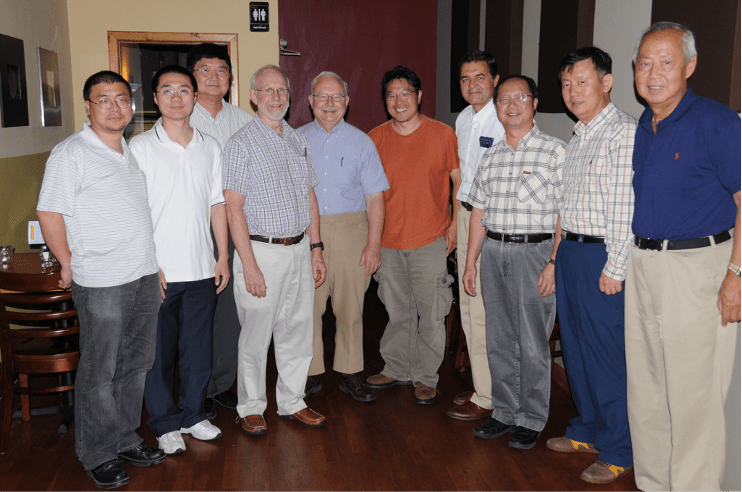
Others are support staff.
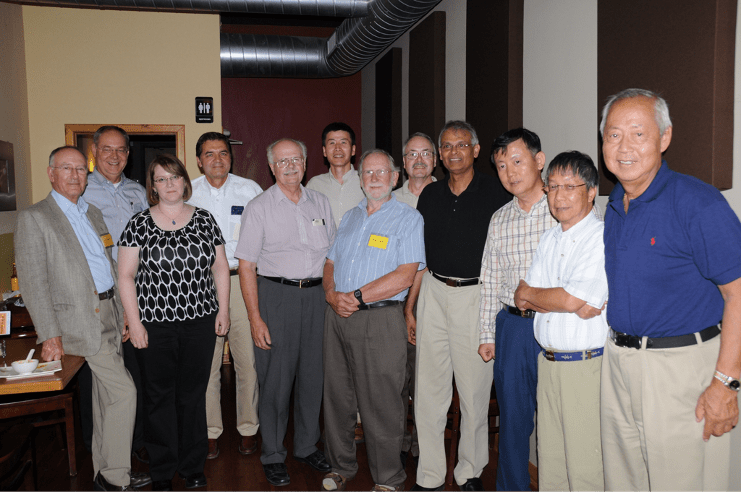
Others are support staff.
The Iranian dust storm monitor
In 1976, GCA/Technology Div. was approached by a large construction contracting firm in Chicago for a rather unusual project. This firm was involved in the design and construction of the large cooling towers of a new nuclear power generating station in Iran which, remember, at that time was still governed by the Shah, and was most friendly to the U.S. The requirement was for a dust storm monitoring station to be installed near the intended site for those cooling towers, in the desert of south-western Iran. Rather frequent dust storms were expected there and the design of the cooling towers required information about the concentration of the airborne dust and its particle size distribution, as well as the duration of these storms.
I was put in charge of the project of designing and building the monitoring system. I traveled to Chicago, to the headquarters of the contracting firm, and held discussions there presenting our proposed approach to the system. Our proposal was accepted.
The monitoring system consisted of two real-time sensors: a light scattering photometer (of German manufacture) and an anemometer. The signals of these two devices were combined such that when both exceeded a preset threshold level, i.e., corresponding to high levels of airborne dust and concurrently high wind speed, a relay would be triggered initiating the operation of an air sampler designed to collect and particle-size classify the dust. This sampler consisted of a wind vane-oriented sampling inlet, followed by a cyclone to collect the very large particles (bigger than 20 micrometers in diameter), in turn followed by what is called a “cascade virtual impactor” (of British manufacture), a device that collects particles on various sequential stages according to their size.
Two of these air samplers were made, one to be mounted at 3 meters above the ground and the other at 10 meters, in order to obtain information about the dust concentration gradient as a function of height above the ground.
One of the engineers working for me, Roger Stern, accompanied the equipment to Iran and assisted in its deployment there. It underwent initial testing but very soon (in 1979) all communications about the project were terminated abruptly as the Islamic revolution toppled the Shah’s regime. We never heard about the dust storm monitoring station again.
Light scattering instrumentation
The German light scattering photometer that I incorporated in the Iranian dust storm monitoring system suggested to me the development of similar instrumentation for general real-time detection and measurement of airborne particulate matter. The beta attenuation method had certainly proved itself but had one significant drawback: to measure low concentration ambient air aerosols (as opposed to coal mine dust) it required extended air sampling/particle collection periods (up to hours) to accumulate a sufficient mass of particles on a collecting medium or surface (filter or impaction surface) and was therefore not truly a real-time method. Light scattering photometry (also called nephelometry in English speaking countries and tyndallometry in German speaking ones) on the other hand senses the particles directly in air without need of collection and occurs in real-time. It is also very sensitive. Its disadvantage (every method is imperfect) resides in its dependence on particle properties that are not related to its mass, i.e., the amount of light scattered by a particle depends on its optical properties such as its size with respect to the wavelength of the light used to illuminate it, the refractive index, shape, while it is independent of mass density. However, it is possible to design an optical configuration that minimizes the effects of the optical properties and/or compensates for its lack of dependence on density. Furthermore, these nephelometers can be calibrated against a mass concentration reference for specific types of particles, e.g., coal mine dust.
During the development of the Iranian dust storm monitoring project we were informed about a request for proposal (RFP) from the U.S. Bureau of Mines for an “Improved Light Scattering Monitor”. Improved over what? Well, the Bureau had previously funded a project at the Stanford Research Institute (SRI) in California for the development of a portable light scattering monitor for use in coal mines. Several prototypes of this device were fabricated and delivered to the government agency for testing and evaluation. Based on these field tests the Bureau had then concluded that the technique appeared promising but that the performance of these instruments left to be desired (unstable and unreliable measurements attributed to electronic design shortcomings). The new procurement stipulated “improved” electronics but required that the optical sensing configuration of the SRI prototypes be used without alteration. My belief was that both the optics and the electronics needed thorough redesign and thus decided to submit a proposal reflecting such a radical approach. The risk was that our proposal would be rejected as “non-responsive” because we did not adhere to the stipulations of the RFP. To my pleasant surprise, a couple of months later, we were informed that the Bureau of Mines had decided to fund two parallel contracts, one with us and the other with a company called Donaldson in Minnesota which had submitted a competing proposal adhering to the Bureau’s stricture that the original SRI optical design was to be preserved in the new “modified” instrument. We were both to deliver a prototype and these would be evaluated to determine the best, i.e., the ”winner”.
We completed the prototype in about 9 months and submitted it to the Bureau. So did Donaldson, a large midwestern company specializing in mining equipment. A few month later we were informed of the results of the government’s comparative evaluation. Our prototype had exceeded the expected performance criteria whereas Donaldson’s device had fallen far short. That was to be another major feather in my cap and thereafter I was treated with special respect and deference by Leonard Seale, the general manager of our division. The very successful commercial version was to be the model RAM-1.
About Dr. Leonard Seale (he had PhD in psychology), he was an unusually intelligent manager, capable and very ambitious.. The latter characteristic would, eventually, cause his undoing as I will describe further on. He had worked for the US Navy and sported a genuine crewcut. He was a hard worker and expected the same from those who were under his command. He drove them hard and mercilessly. He expected that, especially department managers, would work late hours and weekends. More than one of them quit and others saw their family lives imperiled. Early on, Seale tried the same demands on me but without success. One Friday afternoon just before I was to go home he came into my office with a big file of documents which he wanted me to work on over the weekend. When I asked him what the deadline was for that work – a proposal of some sort – it became apparent that I had time to complete the work during normal working hours and I so informed him refusing to be burdened during my weekend. He bristled but retreated. I made it clear to him that I would always be ready to work extra hours – which were not compensated as I was not an hourly worker – in exceptional cases, i.e., when deadlines could not be satisfied otherwise. Seale never bothered me again with unnecessary weekend chores. He recognized that I was giving him the work performance he expected without the need to sacrifice my well-earned respite and my presence at home.
Leonard Seale also showed a sadistic facet which he often compelled me to witness. We had hired a production manager who, nominally, reported to me but de facto was under the direct command of Seale and became his whipping boy. He would summon this unfortunate individual, whose name was Elliot Cox, to his office and in my presence berate him mercilessly whenever his performance did not measure up to Seale’s objectives. It was often degrading and unpleasant – a power trip for the general manager.
By contrast, Seale always treated me with professional respect and rather frequently handed me hockey tickets for Bruins games, at the old Boston Garden, at choice seats for the four of our family.
Occasionally, however, I had to endure his continued possessiveness during my vacation absences. I recall a particularly grievous instance when the four of us had just arrived at our destination at an inn in Nantucket and Seale telephoned me there at 10:30 pm for some consultation which could well have waited at least until the next day.
The instrument we delivered to the Bureau then became our very successful model RAM-1 (for Real-Time Aerosol Monitor). For many years it was to be well recognized as a reliable, sturdy and versatile workhorse for industrial, mining and atmospheric measurements of aerosol concentration, and the precursor of several generations of portable and even personal size light scattering photometers that continue to this day. A few years later – again as a result of a government sponsored development project – we introduced the smallest ever such photometer, the MiniRAM, a device that could be clipped to a person’s belt. Later on we produced a more sophisticated version of the RAM-1, the DataRAM which, in turn was followed by the DataRAM 4 that used two-wavelength illumination from which median particle size could also be determined and for which I obtained another patent[15]. The MiniRAM was to be replaced by the much improved personalDataRAM[16] and the most recent incarnations of this entire line are the models pDR-1500 and ADR-1500 which – although I initiated their development – were carried to fruition by Kevin Goohs and his team at Thermo Fisher Scientific between 2007 and 2010, after my retirement.
The range of uses to which these light scattering photometers has been applied can be illustrated by two rather extreme cases. A few years after we introduced the miniature-sized MiniRAM I received a call from our representative in Denmark who inquired whether the device could be used to measure the concentration of pig dandruff in the air of swine raising environments. My response was that: a) I did not know that pigs had dandruff, b) was that dandruff fine enough to remain airborne and be treated as an aerosol?, and c) if so, there should be no impediment to the use of the instrument. The eventual result was that one of these monitoring devices was strapped to the back of a Danish pig providing the desired information. The other extreme of the range of applications was the installation of a MiniRAM within the astronaut’s cabin of a space shuttle to measure the concentration of airborne particles to which the crew was exposed during a typical space mission. The instrument was used on two missions indicating that the levels of particles were very low and of no concern.
In addition to the portable and hand-held light scattering photometers mentioned above, I also directed the development of an in-line version designed to operate at high air (or other gas) pressures. It was used to monitor the cleanliness of compressed gas flows at pressures of up to several hundred pounds per square inch (psi).
§
Another, somewhat unusual, project involving light scattering sensing was under another contract with the Air Force. The objective was to develop a compact sensor that would be dropped from an airplane and descend by parachute to measure two parameters: a) the turbidity of the air and b) the thickness of clouds. As the sensor would enter the top of a cloud, the light scattering level would inevitably increase by several orders of magnitude and, conversely, decrease as it exited the bottom of the cloud. These sensors were intended to be used near or at battle locations in order to characterize the optical environment that various methods of warfare were to operate in. I designed a cylindrical device with an axial flow-through configuration with a funnel-like inlet to ensure unhindered flow of atmospheric air through the sensing stage as the unit descended. We fabricated a few prototype units and delivered them to the Air Force which successfully tested them in a chamber and then, promptly and predictably, forgot about them. Another waste of taxpayer’s money. We, however, had fun designing the sensor.
§
In the late 1980s, after we had been acquired by TRC and had become MIE, Inc. (see details further on), I was approached by my old friend Mort Lippmann who was doing an epidemiological study of the effects of ozone on school children for which he wanted to use a lung function monitoring instrument based on aerosol bolus exhalation. This method consists of inhaling a short aerosol burst and then determining the time dependent concentration of particles during exhalation of the burst. This exhalation profile provides information on any impairment of lung function and is much more informative than the usual spirometry used in hospitals which measures only the air volume of an exhalation.
Mort required us to provide a special particle counter that could be coupled to a mouthpiece and that would operate with human breath-driven air flow. His lab would then add the aerosol burst generator using either saline fog or a harmless oil aerosol such as olive oil. The funds he disposed of for this project were quite limited and we built the instrument for a pittance on the expectation that we may develop the system for commercial clinical use. This promise, however, never materialized although an ex-researcher from NIOSH expressed interest in participating in such a development. This type of instrument would have required a major commitment of resources on our part to secure the support for the required clinical tests and the pursuit of licensing for use in hospitals with the attendant problems of quality control for aseptic delivery of the aerosol bolus and other stipulations for routine clinical application.
§
In 1988 we were contacted by a researcher at Ford Motors in Michigan. His group had been using our old light scattering workhorse, the RAM-1 for measurements of dust and smoke in vehicular environments: air filter efficiency, entry of particulate matter into the car cabin, etc. They were considering the development of a very cheap sensor, to be used on every automobile, which would monitor the level of particulates to which the people inside the car are exposed, and automatically activate air recirculation through a filter when the air contamination exceeds an acceptable level. I prepared a proposal for a collaborative project wherein the initial development cost for such a sensor would be shared between Ford and MIE. I flew to Lansing, Michigan, and made a formal presentation to half-a-dozen Ford staff members. It appeared that they were impressed and very interested. For us this could represent a major breakthrough in that a successful sensor could be produced and sold by the millions of units annually on condition that we could produce such a sensor at a very low price – a few dollars per unit, at most. Suddenly, however, the deal fell through. Our contact informed us that another group at Ford had felt that this project infringed on their own turf and decided to block it from further consideration. I was very, very disappointed. It was a typical case of big company corporate politics and shortsightedness. Years later, I tried – although unsuccessfully – to convince Thermo Fisher Scientific to embark on this project on the assumption that several luxury car manufacturers may be interested in incorporating that type of sensor and its attendant capabilities in their vehicles. This sensor would have had an even wider market: industrial and office building air quality surveillance.
A hybrid mass monitor
In the late 1980’s I submitted to the Environmental Protection Agency (EPA) an unsolicited proposal for the development of an ambient air monitoring instrument to measure in real-time the mass concentration of particulate matter, combining beta radiation attenuation and light scattering photometry. The beta attenuation sensor was to be used to automatically calibrate the light scattering sensor and the combination would yield a true measure of mass concentration in real time. The EPA decided against funding the project – claiming lack of funding resources – and I essentially shelved the idea for future revival under more favorable circumstances.
Around the year 2001, Dr. Hansgerd Kramer (who I had mentioned previously), a bright young man who had been our erstwhile representative in France within the Schaefer group of companies (founded by Klaus Schaefer[17]) and who, at my recommendation, had been hired by Thermo Fisher Scientific, suggested that we develop an instrument combining beta attenuation and light scattering photometry. Management decided to proceed with the development of such an instrument but actual work was not initiated until several years later when Dr. Kramer had left the company. In 2004 I initiated the filing of a patent with myself as inventor (based on my original EPA proposal concept) and Dr. Kramer as co-inventor for having revived the idea. The patent was issued in 2006[18]. This patent raised a peculiar issue. I, as principal inventor, was not entitled to any compensation either for the invention itself or for any profits that the company would derive from the sale of the resulting instruments. My co-inventor, Dr. Kramer, however was entitled to receive such compensation. Why? Because I am working in the United States and Hansgerd Kramer works in Germany; the patent laws in those two countries are rather different. In the interim, the development of the device was completed under the technical leadership of Kevin Goohs, and this unique and rather sophisticated hybrid instrument is now being produced commercially by Thermo as the model 5030i SHARP monitor. It has become a remarkably successful instrument with significant sales in Europe and Canada.
PM CEMS Project
For many years during my career there was an unfulfilled requirement for a continuous mass monitor of particulate emissions emanating from industrial stacks such as fossil-fuel power plants, a class of major contributors to airborne contamination.
The development of this type of particulate monitoring system poses unique challenges. These are, principally, the problem of transport losses of particles as the sample is extracted from the stack effluent stream, and the environmental rigors to which a mass sensor is exposed, i.e., high temperature and humidity, corrosiveness, etc.
In 2003, Thermo acquired a company named R & P operating near Albany, NY that had for many years produced an ambient particulates mass monitor based on the resonant oscillation of a specially shaped ceramic element, a quite successful method, whose acronym is TEOM.
After the incorporation of this group into the Franklin operation under Dr. Dieter Kita, the development of an emission monitoring system based on the TEOM principle was considered, however, a major obstacle to that objective was identified. Particle collection in the TEOM is performed by a small filter cartridge attached to the oscillating element and, at the relatively high mass concentrations that occur in the stack stream, this cartridge becomes saturated very rapidly, typically in a few hours, requiring frequent replacement, a manual operation that is inimical to the usefulness of a continuous emissions monitor.
This is where I stepped in. I proposed a hybrid system, similar in concept to that of the SHARP ambient monitor (see preceding section) combining light scattering with the TEOM mass sensor with an added twist: the light scattering or nephelometric stage would consist of a two-scattering angle sensing configuration wherein one angle would be predominantly in the forward direction while the other would be in the back direction. This arrangement would provide a measure of what is called scattering asymmetry which, in turn depends on the size and refractive index of the particles being monitored. Initially, both the TEOM and two-angle scattering sensors would be operating concurrently and the former would be calibrating the later, similarly to the SHARP process. Once that calibration has been completed, the flow through the TEOM stage would be stopped to prevent further particle collection on its cartridge thus preventing its saturation, and the primary sensing is then performed continuously by the light scattering stage. If the ratio between the scattering signals at the two angles changes significantly – indicating a change in the properties of the particle population – the TEOM stage collection is triggered to recalibrate the light scattering signal. This approach ensures that the TEOM operates only when necessary thus extending significantly the time between required replacements of its filter cartridge. The above described system is now a commercial product (PMCEMS) at this time (2014), for which a patent was granted in 2013 of which I am a co-inventor (see appended list of my patents).
Some Odd and Strange Projects
Let’s return once more to my early days at GCA/technology Div., i.e., late 1960s-early 1970s, and resume the narrative.
As part of the Army project on the development and characterization of methods of aerosol dispersion that I mentioned earlier, one of the researchers was working on a rifle-propelled cartridge and – considering me as the resident do-it-all – asked me to design a device to measure the speed of the bullet as it emerged from the muzzle. I used two light-emitting diode/light detector pairs looking across the path of the bullet. The passage of the bullet through the first light source/detector pair triggered the start of a digital timer, and the passage through the second pair stopped the timer. It seemed to work most of the time.
§
As the drastic and pervasive riff of key staff proceeded unabated – as part of the overall anti-research climate ushered in by the Nixon administration – I was called upon to take over a rather peculiar and distasteful project very far removed from my aerosol instrumentation field of expertise. GCA had somehow managed to obtain a contract to design a machine gun mount for the helicopter gun ships used in the Vietnam war. I was faced with having to perform the three-dimensional trigonometric calculations – incorporating helicopter and wind speed, and direction parameters – for the mechanical design of a rather complicated gun mount. It was a laborious and uninspiring task which I was compelled to engage in by the company management. My rationalization was based on the fact that I was convinced that this project would never reach fruition as the war was beginning to wind down and the design work underwent repeated delays. The dubious priority of the project was further illustrated by the more than casual U.S. Army’s contractual involvement. One day we were informed that the contract monitoring functionary would visit us to review the project status. He materialized as a twenty-year old who happened to be the son of the contracting officer in charge of the program who did not judge it incumbent to make an appearance himself. Regardless, we sat down in the conference room with various staff members of GCA and within 15 minutes of the start of our presentation, the youthful Army representative had fallen sound asleep in his seat. I believe the project was never completed relieving my conscience of any further responsibility.
§
One of idiosyncrasies of the modus operandi of GCA/Technology Div. was that it relied entirely on external funding for any R&D. All instruments we developed during my tenure at that organization originated with federal or private support. During the 1980s much of the earlier support by the U.S. government for private industry in the field of air pollution and industrial hygiene research and development had evaporated and GCA scrambled for alternative federal sources of R&D funding. We contacted the Army, the Air Force, the CIA, etc. and were able to obtain some contracts from these agencies. The Army supported the redesign of the MINIRAM personal particulates monitor mentioned above for field monitoring of the obscuration effectiveness of smokes deployed to cloak troop and armored vehicle movements under battle field conditions. The Air Force funded the development and construction of a stratospheric balloon borne sampler capable of particle size classification. This device used an ejector pump system (instead of a fan or blower) that I conceived and designed. The completed sampling system was delivered to the Air Force and shelved without ever to be launched. A true waste of taxpayer moneys.
§
The CIA gave us a contract for building a dozen, or so, field air samplers to collect air samples for radioactive and chemical agent detection and identification. This latter project required special secrecy procedures that were, at best risible, given the triviality of the equipment involved. I even attended a briefing meeting at one of CIA’s facilities in DC. One day in 1985, this activity was abruptly and stealthily terminated when, the financial survival of GCA Corp., the parent corporation of our division, became precarious. Several black limousine vehicles pulled up to our plant’s front door and a dozen, or so, dark-attired “spooks” marched in and promptly confiscated all equipment related to this field sampler project, without further explanation.
Several times I traveled to Edgewood Arsenal, an Army testing facility in Maryland, accompanied by the then marketing director of our division, Lane Kirkpatrick, in order to find projects related to our field of expertise. These endeavors were largely unsuccessful, however, but gave me a chance to get a feel of the inner works of our military research. We did succeed, however, in selling a number of our light scattering particle monitors to these laboratories.
§
Lane Kirkpatrick and I also visited a paper manufacturing plant in western Massachusetts to identify possible instrumentation development projects. As a result of that visit I came up with one of those “possible” inventions that, unfortunately, was never to be pursued beyond its preliminary experimental stages. Among other sensor desiderata for the automated production of paper we were informed that continuous on-line sensing of paper tear strength would be an important achievement. I was informed that paper tear strength depended on the degree of fiber orientation randomness, i.e., the more scrambled the paper fibers the higher the tear strength of the sheet. I immediately thought of light transmission polarization as a candidate technique. If the rotating polarization plane of a linearly polarized light beam were to impinge on the paper the transmitted light should exhibit a modulation (intensity fluctuation) whose amplitude would be related to the degree of fiber alignment. Completely random fiber orientation should cause essentially zero modulation of the light beam. The first step was to ascertain whether different types of paper would exhibit different responses to the rotating polarization light. In the lab, Dr. Paul Elterman (of fiber monitor fame) and I set up an experiment to that effect. We found very significant differences in the polarization properties between various types of paper (tissue paper, writing paper, wrapping paper, etc.) suggesting that the technique may be very promising. But at that point I hit the infamous funding wall. GCA was unwilling to provide the financial support for the continuation of this development project and the company lacked the marketing wherewithal to secure external support from the paper manufacturing industry. I was thoroughly frustrated. I still believe that this is a very promising technique worth pursuing.
§
Later on, under TRC (see later description), I also had an idea that we were never to pursue. Around 1986 I thought of an inexpensive method for the early sensing of approaching thunderstorms by means of the detection of broadcast-band radio noise. I had observed that lightning discharges were always accompanied by a distinctively explosive crackling noise when a radio set was tuned between stations on the AM band. I thought of a very simple “transistor radio” type of pocket-sized receiver that would provide an alarm for a threatening thunderstorm over a range of the up to about 20 or 30 miles. I proposed this concept to the TRC management who expressed no interest whatsoever in supporting a development effort. Years later, I saw an advertisement for a hand held device quite obviously based on the same principle that I had thought of. Oh well!
§
Another project largely unrelated to aerosol detection that I succeeded in obtaining from the U.S. Bureau of Mines was the development of a device to measure the fraction of coal in the dust deposited on surfaces within coal mines. It should be understood that as the mining machines drill into the coal-containing rock the dust thus generated is a mixture of siliceous and coal particles that settle on the mine surfaces. If the proportion of coal in that mixture exceeds a specific maximum the deposited dust becomes potentially explosive (e.g., when ignited by a spark). We proposed a hand-held device – to be placed in contact with the mine surface to be assessed – containing a gamma-radiation source and a detector. Such radiation elicits x-rays whose energy signature indicates the presence and fraction of coal in the irradiated sample. We developed and delivered a prototype of this device to the government but the interest in it seemed to have been limited and we never produced additional units.
I had another involvement with the field of dust explosiveness. GCA was contracted to study potential dangers associated with grain dust generated during loading and downloading of grain into ship holds. The clouds of such dust thus produced could be ignited by a spark and result in a dangerous conflagration. I designed a dust sampler to assess the concentration of grain dusts thus generated. From there, I involved myself in the mechanisms of dust explosions such as those occurring in grain elevators, sugar processing plants – those associated with very high concentrations of combustible dust. I had several ideas about designing a dust monitor capable of measuring potentially explosive concentrations – in the range of tens to hundreds of grams per cubic meter – many thousands of times higher than those encountered even in “dirty” industrial environments. We contacted major grain handling companies, such as Cargill in the midwest, to sound them out on their interest in such a device designed to alert grain elevator operators to dangerous levels of grain dust within their operations. Several explosions had occurred in the recent past within grain elevators with significant life loss.
After several attempts to elicit the attention of such organizations in a warning device we were finally told that they were not really interested since “they already knew that the dust levels were potentially dangerous”, and the only way to prevent explosions was to ensure that potential triggers, i.e., spark sources, were neutralized and that adequate venting was always provided to preclude pressure build up in case of a conflagration of the dust.
In the course of my involvement with dust explosiveness I performed an exhaustive literature review from which I gleaned that the critical dust concentration required to engender an explosion – called Lower Explosiveness Level (LEL) – is essentially independent of the type of combustible dust. Sugar, grain, coal, etc., all have an LEL in the range of about 40 to 50 grams per cubic meter.
Another dust explosiveness-related instrumentation project was supported by the U.S. Bureau of Mines. It was the development of a novel real-time dust mass monitor designed to measure extremely high — i.e., potentially explosive — coal mine dust concentrations. I designed a device based on sensing beta radiation attenuation directly within a sampled air stream, i.e., without attendant particle collection on a surface. To achieve the required measurement sensitivity I used a Ni-63 beta source which has the lowest beta energy of any of the isotopes that can be used in this type pf application. We fabricated two prototype instruments (High Concentration Mass Monitor), one of which we delivered to the Bureau. It was an original concept but with limited practical application potential.
Detection of Particles on Surfaces
By the late 1970s the principal business area GCA Corp., the “mother” entity of our division, became the production of equipment for the fabrication of semiconductor chips for the electronics industry. The central product of that line was the photolithography machine, a complicated and expensive system wherein chips were fabricated by micro-replication of the intricate pattern of a master glass plate (called photomask or reticle) on silicon wafers. One of the critically important conditions for a high yield in this production process was that all surfaces involved needed to be free of any contamination, especially by small particles. Silicon wafer inspection systems were already marketed by other companies but the unfulfilled need for a similar inspection system for photomask plates remained.
Based on our group’s experience with light scattering instrumentation, we were approached by GCA’s corporate brass to have us develop such a photomask inspection system for possible sale as either a stand-alone unit or as a adjunct to the photolithography systems. We decided that this would be a new promising direction to expand our work and proceeded with the design and development of such a system – a major project, for the first time funded by the company. This activity got me involved in other particle contamination facets of the semiconductor equipment division of GCA. I was called upon to identify internal sources of such contamination and work in clean-room environments donning the required “space suits”.
Eventually, a somewhat separate group was created within our instrumentation department dedicated to surface contamination detection equipment. This group would later on be spun out of GCA as the company underwent its final dismembering. More to that later.
In the context of surface detection of contamination of microscopic particles I thought of another – seemingly original – idea. As the semiconductor chip technology advanced – and continues to advance – the feature dimensions of the circuitry embedded in these chips became smaller and smaller allowing larger and larger number of circuits to be placed on these tiny silicon entities. This trend, however, imposes ever more stringent cleanliness requirements on the surfaces of these devices and on the master plates. Ever smaller particles need to be detected to ensure failure-free production. Light scattering, especially by surface deposited particles is limited to particles of a few tenths of one micrometer in size. How to extend that detection limit downwards? In the case of airborne particles – aerosols – such enhancement of sensitivity is achieved by growing the particles – otherwise undetectable – by exposing them to an environment saturated by a vapor which then condenses on the particles. It occurred to me that such a condensation method could be applied to particles deposited on surfaces, as well. To prove that concept, I mounted a microscope glass slide on a small thermoelectric cooling element, a device that cools one of its surfaces by running an electric current through it, and placed the slide and cooler under a microscope. First I observed the glass slide without applying power to the thermoelectric cooler and was able to see only very few small dust particles that had settled on the slide. Then I turned on the thermoelectric cooler and within about one minute I was able to see a myriad of small dust particles that had previously been undetectable. Water vapor in the room obviously condensed on these very small particles before condensation occurred on the glass slide at large as it continued to cool to an even lower temperature. Once I shut off the cooler these particles became invisible again. That was proof of concept beyond any doubt. I reported on this observation to management but, again, could not get any support to pursue this technique any further as it fell outside our immediate mission. By then, however, I was no longer disappointed when some of my original ideas were not always followed up. I had enough satisfaction in proving experimentally these ideas and then marching on to meet new challenges.
In the context of surface contamination by microscopic particles it is worth mentioning another incident of Japanese idiosyncrasy. I attended a conference on the subject of particle contamination in the fabrication of semiconductor chips, an important subject as it can affect the yield in the production of such devices. One of the podium presenters was a Japanese researcher considered the foremost guru in that field. His last name was
Ohmi. When he made his appearance, he strutted onto the podium and firmly planted himself there with spread bowlegs and a definitely defiant gaze. Below, seated at a small table was the overhead projector manned by a “lesser” Japanese acolyte. Whenever required, Ohmi would point imperiously at that helper to – instantly – change the transparency. Ohmi’s presentation style, speech and his gestures were a perfect caricature of a modern-day samurai. I had a hard time restraining myself from loud and uncontrolled laughter. As most Japanese lecturers at conferences I have attended, his English diction was barely intelligible.
Remote Measurement of Smoke Stack Plumes
Some of my most original ideas came to me while communing with nature, this time while walking my dogs on an open field near our house in Lexington.
I had acquired a pair of polarized sunglasses and was observing – by tilting my head from side to side – the well known and striking phenomenon of polarization of the blue sky, especially pronounced at an angle of 90 degrees to the direction of the sun. In doing so I noticed that the brightness of clouds appeared to be unaffected by the tilting of my head (which rotated the polarization plane of my sunglasses). I immediately had one my Eureka moments. This observation could have a very useful practical application: the remote measurement of the so-called opacity of smoke plumes emerging from smoke stacks. I was aware that there were federal regulations limiting that opacity – i.e., the degree of obscuration – of such plumes, and that the only heretofore accepted method of assessing that opacity was by visual estimation – by viewing the plume at a distance by a trained “inspector” – a notoriously unreliable procedure.
This time I was able to convince GCA to provide some modest funding to pursue the development of a field instrument. I was helped again by my trusted physicist Dr. Paul Elterman who – as described previously – had contributed crucially to the early development of the fiber monitor. We built an experimental prototype that we then subjected to practical field testing. The instrument, in essence, consisted of a telephoto lens – of the same type as that of a camera – at whose focal plane there were positioned two photo-detectors. In front of the photo-detectors there was a motor-driven rotating polarizer. The user viewed the distant plume – just above the top of the stack – through an eyepiece with a special reticle such that one detector would be centered on the plume and
the other at the sky directly adjacent to the plume (see figure above). The opacity measurement was then effected by electronic comparison of the degree of polarization of the sky light through and next to the plume. Further refinements were incorporated to
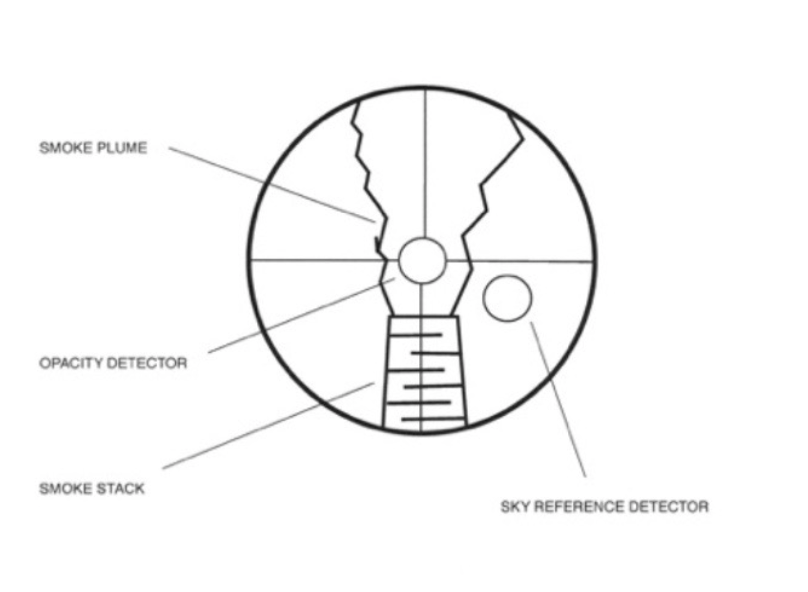
cancel out any effects resulting from polarization introduced by the plume itself which was the case for certain white colored smoke. We tested the tripod-mounted instrument on several smoke stack emissions and found that in most situations it worked like a charm. The applicability of the technique, however, required that the background sky in the direction of the plume not be overcast. This limitation proved to be a hindrance to the widespread acceptance of this new instrument. I believe that, nevertheless, it could have become more than a useful adjunct to the questionably subjective visual inspection method.
Company Life
I will now undertake a significant digression from the mainly technical facets of my
career and resume a narrative about the work conditions, the cast of characters, my own position within the company and the upheavals that lead to the ultimate demise of GCA Corp. and the acquisition of our division by TRC, an environmental consulting firm.
I had mentioned before that in the mid-1970s Dr. Leonard Seale became general manager of GCA/Technology Div. after having been marketing manager for a couple of years. I have also mentioned some of his character traits which made him a difficult boss to work under for others than me who, apparently, deserved a special measure of respect. We worked well together and I never had any major complaints during his tenure. Towards the late 1970s, however, he applied relentless pressure on me to become manager of the instrumentation department. I bristled at the idea of exchanging my technical/scientific work for a managerial position, largely alien to my interests. Seale was dogged, however, in his relentless pressure on me and finally, and very reluctantly, I gave in to his demands.
He made it clear that my professional advancement depended on my willingness to assume the responsibilities accompanying a management position. Very soon I discovered that I was able to continue my technical pursuits devoting a minimum of time and effort on administrative duties which I found to be largely distasteful, as I had expected. Leonard Seale, my boss, the general manager of the division, kept his hand in all important management decisions, thus relieving me from those responsibilities which I was happy to be disengaged from.
The corporation, of which we were a division, was headed by a Milton Greenberg[19] who had been a manager at the Air Force research facility before the whole group spun off to form Geophysics Corp. of America in the late 1950s, which then became GCA Corp. We seldom heard of our president but one day he saw fit to make an appearance in the
engineering laboratory where I was working at the time. Without much of an introduction to the group of engineers and technicians he launched into an emphatic exhortation about the overriding importance of marketing above all other company activities. It was a largely off-the-wall monologue that was punctuated by a veritable cascade of swear words at a rate and juiciness that left the improvised audience gasping. At the end of Greenberg’s foul-mouthed discourse he marched out leaving us in a state of stunned stupor. It was my first and, unfortunately, not last exposure to his autocratic filth. I remember when I made a presentation about our then current government sponsored instrument development project during which I mentioned the personal dust monitor we were designing for the Bureau of Mines. The glorious corporate president’s contribution to the discussion was to inquire when we would be developing a personal sex monitor, instead.
One day, shortly after I had become a department manager, Leonard Seale informed me that there would be a weekend gathering of managers throughout the corporation at a corporate retreat in the countryside and that I would be expected to participate. Although I was not keen to go I felt that refusal would have hurt Seale. The proceedings proved to be thoroughly boring. The day was spent listening to work performance specialists, management psychologists, and general company pep talk. I had a hard time staying awake. In the evening we were expected to participate in a cocktail mingling to foster collegiality between managers of the various GCA divisions. At one point, I was engaged by the rotund general manager of a laboratory instrumentation division headquartered in Chicago, Precision Scientific, whose curiosity had been aroused by my unusual name combination. He was very interested in hearing about my background and life experiences which I proceeded to summarize to him. He appeared rather astounded by my narration – well beyond his middle-American horizon, and at the end said, a bit breathlessly: “Surely you must have shared these experiences with the members of your church”. To which I breezily responded: “I do not go to church”. His reaction caught me by surprise. His substantial jaw dropped perceptively, he mumbled in obvious distress, turned and walked away. He studiously avoided me for the rest of the meeting. It was a revelation for me. I had heard about the intransigence and intolerance of religious extremists in middle America but I did not expect to face that disgusting trait in a member of the corporate elite of GCA.
To make things worse, that night I had to share a room with some middle manager of another division of the corporation. Collegiality was expected to extend to the bedroom, as well. The persistent snoring of my companion made for an unrestful night. After our return home, I made it clear to my boss, Leonard Seale, that he was to count me out of any future meetings of this ilk, regardless of the displeasure of the company president.
During the infamous corporate meeting, we were exposed to the newfangled organizational structure that GCA was to institute during the next few months. This new structure was called matrix management which was espoused at the time by a big professor of the Harvard business school (Levitt?) who was also on the board of directors of GCA. Its eventual implementation proved to be a disaster and very soon we reverted to the old traditional organization. I had refused to go along with the change, consistent with my rebellious approach to such matters. I was also totally intransigent in my disregard of a rule that Seale saw fit to implement at some point: signing in and out when leaving the building at lunchtime. In the early 1980s, I wrote a memo to Seale emphatically suggesting that smoking cigarettes during staff meetings should be forbidden. I argued that – our division being in the environmental business – smoking under those conditions was inconsistent with our mission. Seale, however, was loath to implement such prohibition given that three of the members of the staff were inveterate smokers. I retaliated by bringing one of my smoke monitoring instruments to the staff gatherings and by requesting that the smokers be seated as far away from me as possible. I further harassed one of the staff who smoked cigars as he walked along the corridors by telling him that I could trace his movements within the building by means of my hand held smoke monitor.
On the subject of tobacco smoke, during the 1970s and early 1980s, when intramural smoking was unhindered, I measured an average mass concentration of airborne particulate matter of about 50 micrograms per cubic meter, or more, during working hours throughout the building (much, much higher in a room with a smoker). Some years later, when smoking at the plant was no longer permitted, that distributed concentration had dropped to 5 to 10 micrograms per cubic meter. A truly dramatic improvement. In the early 70s I collected cigarette smoke particles on a Mylar film by high-speed impaction. The small tarry mound sample sat on my desk for at least 10 years. It retained its distinctively obnoxious smell and a persistent stickiness for all that time, a disgusting reminder of what those particles would do in the long run to one’s lung tissues.
In 1977 – after I had been with GCA for 10 years – I was approached by a company called Andersen located near Atlanta, Georgia. Andersen made particle sampling devices – mainly filtration and impaction samplers of little sophistication and was interested in acquiring more substantive R&D capabilities. I had become quite well known in the field as an innovator and so the president of Andersen, Tom Roth, proposed that we meet. We did so at a first class airline lounge at Logan airport in Boston. He was an obvious bon vivant, flashy, dapper and rather full of himself. To complement the picture, he was accompanied by an even flashier, high healed blond who sat at some distance manifesting obvious impatience with our – to her – boring dialog. We separated amicably after an hour, or so. My salary demands and my limited enthusiasm for a move to Atlanta, however, brought the negotiation to naught – fortunately, because Andersen was to go through multiple upheavals in the years to come, eventually being acquired by Thermo Electron concurrently with MIE. But more of that later.
GCA’s Disintegration and its Sequel
In about 1984, GCA Corp. had grown to be a nearly half-billion dollar company. The principal business area was the manufacture of capital equipment for the semiconductor industry, i.e., GCA was the maker of the equipment required to produce semiconductor chips. For a short time the company was a world player in that field with few if any competitors in the U.S. although Japanese companies like Canon were becoming significant rivals.
It was at that time that Milton Greenberg, the foul-mouthed and autocratic president of the corporation, orchestrated its demise. He was instrumental in creating a totally bloated corporate management housed in a newly minted building. The success of the enterprise had gone to his head and he must have believed that he was presiding over the next IBM.
The nail was driven into the coffin by a severe downturn of the semiconductor industry in 1985. GCA saw itself saddled with a huge inventory of unsellable equipment. At the end of that year it posted a loss of some $150 million and the day of reckoning approached.
In the meantime, our environmental division was flourishing. Early in 1986, we were poised to get a contract from the Environmental Protection Agency for well over $100 million and Leonard Seale was riding high and mighty. And then disaster struck him. Contrary to his much vaunted straight-arrow character his ambition made him careless. He was accused by the federal government of obtaining a proposal document from a competing company and of reviewing its contents. The story, as I was able to reconstruct was that Seale received the competitor’s document in the mail – most likely planted by someone bent on Seale’s undoing – and, instead of immediately notifying the government of that fact, he opened the envelop and read the competing proposal. He had fallen prey to his own ambition that overshadowed his puritan “boy scout” mentality. Within 24 hours of the revelation of that impropriety, Seale, at the request of the U.S. government was dismissed from GCA and the entire corporation was barred from doing business with the government until further notice. Two other department managers reporting to Seale were also dismissed. Our division was placed under the temporary management of Jim Gallager, a corporate vice-president. We were all rather demoralized by this turn of events which, fortunately, did not affect too seriously my instrumentation department. Leonard Seale was accused of malfeasance and it took several years until he was finally exonerated by the government. After his departure, Seale tried to obtain inside information from me about our division but I had to stop that interaction which was not in my interest to maintain under those conditions.
A few weeks later, GCA Corp., in the midst of its own struggles for survival, decided to sell our division – as well as several others – to help its faltering finances. Shortly after, we were visited by senior staff of several companies interested in acquiring our division. Our senior people – myself included – hosted these meetings trying to “sell” our capabilities and assets in the areas of environmental consulting and particulates monitoring instrumentation, the latter under my purview. Eventually, several offers were tended but the best match was deemed to be TRC Companies, and environmental consulting firm headquartered near Hartford, Connecticut. Its president, a genial, extroverted and articulate Italo-American called Vin Rocco, seduced us all with his presentation.
Acquisition by TRC and Creation of MIE Inc.
By early fall 1986 our division had been acquired by TRC whose management decided immediately to create a separate subsidiary division for instrumentation and to name me as its president. Thus was MIE, Inc. spawned. I came up with that name, a double entendre for those in the know: on one hand it was an acronym for Monitoring Instruments for the Environment and on the other it was the last name of the German physicist (Gustav Mie) who, early in the 20th century, developed the rigorous theory for the scattering of light by small particles, the principle on which most of the instruments that we made at that time were based. I was to report directly to the corporate management of TRC and a few months later MIE moved to separate facilities in Billerica, MA. I was now thoroughly trapped in a solitary managerial position with all the responsibilities for planning, marketing, production and most importantly, profitability of MIE. At the same time, I remained directly involved and in charge of new instrument development projects which continued to provide me with my professional raison d’être. In fact, I was able to resumemy erstwhile – so successful – pursuit of government instrument development contracts, as well as internally supported design of new versions of our existing instruments.
The senior electronics engineer who had worked in my GCA instrumentation department, George Quackenbos, split off forming an independent company, QC Optics dedicated to surface inspection systems for the semiconductor and other high technology industries. Quackenbos and I separated under less than amicable conditions as he had tried to
exclude me from his group to ensure his control. He was to die of a heart attack a few years later.
Another splinter group formed after our departure from GCA, constituted by two electronics engineers and a marketing person of my instrumentation group. They tried to develop a clone of one of our monitoring instruments but were stopped short in their endeavor after being summoned by TRC and threatened with legal action based on intellectual property infringement. They promptly desisted and the group scattered without further ado. Previously, one of them, Gary Tiani, had taken GCA to court because I had refused to lay him off on the grounds that there was no work to be performed. That was a lie. I had to fire him because he refused to do the work I had assigned to him. He had wanted to get unemployment benefits which he would have been entitled to had he been laid off. GCA lost the case; the judge viewed it – incorrectly in this case – as “poor underdog employee against unprincipled big corporation”.
MIE operated – under my direction – within TRC between 1986 and 1998. It was not an ideal fit. The main business of TRC was environmental consulting, and its management had little or no feel for the instrumentation business which was peripheral to their sphere of interest. Generally, I got along with Vin Rocco and his second in command, Bruce Cowen (of whom I remember mainly that he had a remarkably limp handshake). Only once did I have to confront Rocco’s uglier side. It was during a conference call to review MIE’s profits for the preceding quarter which he did not deem sufficient. He became abusive and menacing. I simply stopped him short by retorting that if he did not treat me with professional dignity I would simply hang up. This must have shocked Rocco because the tone of his voice underwent an immediate transformation and our telephone exchange proceeded amicably.
My staff included several hold-overs from the GCA era with the addition of new people. A few stand out among the former. Pamela Tomic was a young physicist who started as a experimental researcher and ended up as production manager. She was bright, capable, unusually cultured and the epitome of the super-woman: she managed to be a dedicated professional, mother, house-keeper, wife and do-it-all. Eventually she left us to work with her husband at home. Sandra Roy started as a technician, then as production supervisor under Tomic, and eventually as production manager. She was a serious, dedicated, striving and sensitive person. Wayne Harmon, first a senior technician, then junior electronics engineer and eventually research engineer was an intelligent, sensitive and original thinker, somewhat burdened by a troubled early family life, who needed occasional refocusing of his attention to the task at hand. Joe Stella had been our mechanical designer at GCA who, after the acquisition by TRC and the inception of MIE became a consultant. He continued to provide us his services for many years. An affable, portly, jovial and capable individual liked by all, was instrumental in the mechanical design of many of the experimental and commercial devices we developed. Larry Bordini was our machinist. He had been at GCA went I first joined in 1967 and he continued throughout until the final dissolution of MIE. A dedicated, extremely able hard worker originally from the Piedmont region of Italy. Among the new members of the MIE “family” it is worth mentioning the following: Dr. Rich Steg, a capable and original physicist with whom I worked on several novel instrumentation projects. He was a pleasant and intelligent person about whom I have only fond memories. Dennis Gaucher, was MIE’s marketing manager from 1987 to 1994. A basically capable individual, he was also, fundamentally, a deeply flawed human being. He did not get along with most of the other MIE personnel, and Bruce Cowen, the vice-president of TRC, informed me that Gaucher was maligning me behind my back. I was, eventually, compelled to dismiss him. Boris Blanter, a Russian electronics engineer designed several of the new instruments at MIE. He was capable but a bit chaotic. He was the second Russian with whom I had worked. The first one, Sergey Broude, a personable and engaging physicist, was at GCA and was involved with the surface detection projects. I travelled with him in Germany on a business trip, around 1980. It was a an interesting experience because he was a strictly kosher Jew. At every restaurant we ate, I had to identify those dishes on the German menu that he could eat – generally very few, if any.
The facility MIE occupied in Billerica was rather nice. I had a very elegant and ample corner office with and adjacent filing room. I remember with great fondness our sales administrator there, Kitty Maguire, a warm and caring Irish American matron who, unfortunately died of a heart attack during her tenure at MIE.
While at Billerica, I received the visit of Hans Grimm a boisterous, white-maned teutonic warrior, the president of Grimm, a German company that manufactures particle monitoring instruments. He wanted to explore a possible collaborative arrangement with MIE. I had reviewed their product literature and came to the conclusion that it omitted important information while also presenting obfuscating claims. My meeting with Herr Grimm started quite amicably but, as I started pointing out some of the inconsistencies of their publications and when I requested more relevant data, he blew up and with a crimson face stormed out of MIE’s facility screaming with a heavy German accent something about “I can not tolerate being subjected to an inquisition!”. Good riddance.
Resonant Membrane Mass Sensor
In the late 1980s, I had another of those Eureka moments. One of the basic tools in air pollution monitoring of particulate matter is the filter, usually a disc (or a quadrangle) of a porous weave or membrane, through which the air is made to flow (typically by means of a pump), and which retains the airborne particles. This deposit can be weighed (which requires that the filter be taken to a laboratory environment), or subjected to other analysis (e.g., microscopy, chemical, etc.). It occurred to me that if that filter disc were to be taut – like a miniature drum – and then acoustically excited, i.e., vibrated, at its natural resonant frequency, that frequency should change predictably as particles are collected on the tensioned filter disc. The basic principle of using natural mechanical resonance sensing of mass accretion was not an altogether original idea. There existed a commercial instrument developed by a company called R&P that used an small elongated ceramic bell to which a filter cartridge was attached, wherein the bell was oscillated and particles collected on the filter cartridge would shift the resonant frequency of the bell/filter cartridge assembly. Also, a German company had tried – albeit unsuccessfully – to market an instrument wherein an entire foot-long strip – like a string of a musical instrument – of a filter tape was oscillated. The advantages of my concept were simplicity and compactness of the system and ease of filter replacement. The challenge was going to be in finding a proper filter material that would have both the requisite elasticity as well as filtration characteristics.
We built a crude lab prototype – a breadboard, as it is called in the professional lingo – and it worked. At this point – and quite characteristically – I had to figure out the basic physics of the concept, i.e., the parameters involved and the equations relating the resonant frequency to the mass of the resonating filter. As usual, I had started with an instinctively identified principle without knowing the scientific details. I did a literature search which took me back to Lord Rayleigh of late 19th century fame with whom I was acquainted from his work in molecular light scattering. Even he had a mid-19th century French precursor, J. Bourget, who had done some remarkably ingenious experiments with drum discs using pipe organs as frequency references and was the first to observe the different modes of oscillation. Thus, I learned that the resonant oscillation of taut circular membranes was a much more complex phenomenon than I had suspected mainly because that resonance can occur in many different modes, i.e., at many different frequencies not harmonically related. This property was to work in my favor for this application, because operation at higher modes than the basic one – where the entire membrane moves in one direction at any instant in time – proved to be advantageous from several points of view.
In 1991 I wrote – once more – an unsolicited proposal to the U.S. Bureau of Mines for the development of an instrument to measure the mass concentration of coal mine dust based on the above described principle of an oscillating taut filter disc. In 1992 we obtained a contract and embarked in an intensive effort to find a filter medium that would be compatible with this special application. Once we found such a material we built several breadboards to perform dust collection tests. We found that the method worked quite well but were unable to complete an actual instrument as the U.S. government decided to eliminate the Bureau of Mines. We continued the work with in-house funding and Rich Steg, the physicist in charge of the project, was able to demonstrate that the method could produce remarkably accurate results – at least under laboratory conditions. We were, however, cut short, once more, in our endeavor to produce a practical field instrument as MIE was dissolved as a sequel to its acquisition by Thermo Electron in 1998. More to that further on. I was granted a patent on the resonant filter disc in 1994. See accompanying figure of various resonating filter disc mass sensor configurations.
Years later, while I was working at Thermo Electron – later renamed Thermo Fisher Scientific – I extended this mass sensing technique to a metallic taut membrane on which the particles would be collected either by electrostatic precipitation (e.g., point-to-plate corona discharge) or by jet-to-plate impaction (see figure of all these configurations on next page). I did some preliminary experimentation with the former of these just before I retired from Thermo in 2004. The impaction version was later pursued by MSP in Minnesota spearheaded by Dr. Virgil Marple of impactor fame. I had steered MSP to contact Thermo to negotiate a licensing agreement (I had obtained a second patent on the metal membrane version of this technique in 2007). MSP manufactures a line of particle impactors that would be enhanced by combining them with my resonant metal membrane method of mass sensing. This work was suspended in 2012. See the taut metal foil/impactor configuration in the accompanying figure. The version using a point-to-plane corona discharge precipitator to collect the particles on the taut foil is also shown. This latter version can be used without a pump by making use of the ion wind generated by the corona discharge. I tested successfully a breadboard using this method of air motion which produced a flow rate of about 10 liters per minute. This was to be my last project at Thermo where I worked at the lab bench setting up myself the entire experiment. It was a lot of fun to recreate the excitement of a successful and original bench set up. This combination of ion wind-driven electrostatic precipitation and mass sensing by
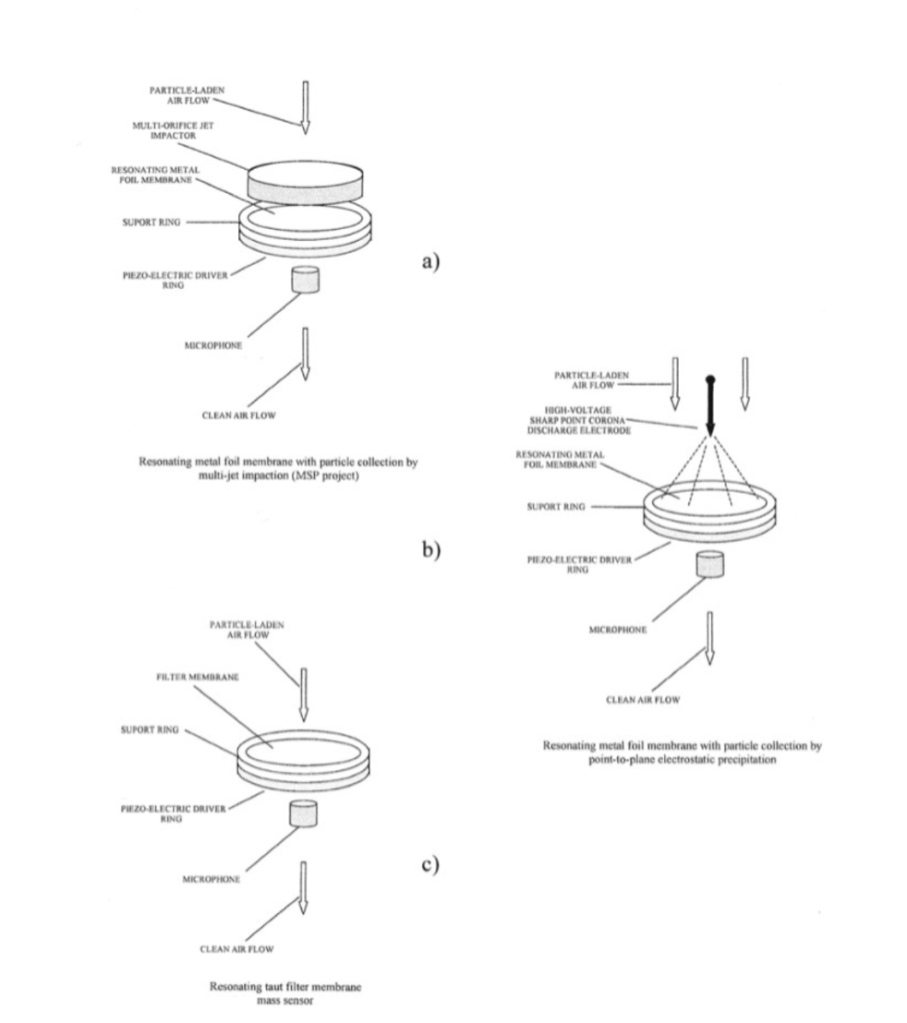
membrane resonance has the potential of constituting a highly compact and silent (no moving parts) mass concentration monitor.
Dissolution of MIE
In 1994 Thermo Electron approached the corporate management of TRC, our “mother” company, proposing to acquire MIE, my small company. We were visited by a vice-president of Thermo, an aggressive and self-important character whose name has conveniently slipped from my memory banks. He was accompanied by Denis Helm the
president of the environmental instruments company within the Thermo family. Helm was a soft-spoken, focused, and successful individual who saw the potential of MIE’s role in providing new ideas in the realm of particulate monitoring instrumentation. He was especially interested in the resonating filter mass sensor as well as some of our light scattering instruments. Negotiations between Thermo and TRC, however, foundered mainly due the intransigence of that infamous Thermo vice-president. I was irritated given all the effort we made to satisfy Thermo’s demands for documentation and the time spent in interminable discussions. I had hoped to see the deal consummated because I had reached the conclusion that TRC – being principally in the environmental consulting business – had really little or no interest in instrument development and sales. We were just a minor cash cow.
In 1997, a major scandal broke out at the very top of TRC’s corporate management. Vin Rocco, the extroverted president, and Bruce Cowen, his inseparable vice-presidential
sidekick were accused of large scale stock option manipulations and immediately the company’s board of directors ejected them ignominiously. Within a year, Vin Rocco died of a heart attack. A new president (Ellison) was found outside the company to replace Rocco. Shortly after, and recognizing the ill-fit of MIE within TRC, the new management decided to divest of MIE.
That same year, as I was at a trade show were we presented MIE’s line of instruments, while walking along one the aisles, I was approached by Denis Helm of Thermo Electron, who I almost did not recognize, at first. He – rather meekly – inquired whether I would still consider positively a proposition by Thermo for the acquisition of MIE. I responded with a cautious affirmative implying that we would not want to go through a similarly frustrating procedure as that endured last time. A few months later Thermo contacted the TRC management, and by early summer of 1998 MIE became a subsidiary company of that large entity. We now were Thermo MIE. By that time we had moved from Billerica to a slightly smaller facility in Oak Park, Bedford, because our previous building was being taken over by a larger company.
Shortly after we had been acquired by Thermo, they also acquired Andersen Instruments located near Atlanta, Georgia. Recall that back in 1977 I had been interviewed by its president for the position of Director of R&D.
In 2000, Thermo Electron underwent a major organizational upheaval. Until then, the company had been a rather loose agglomeration of companies, each of which operated with a large degree of independence. This business model had grown so unwieldy that,
finally, even the financial gurus of Wall Street became confused and unable to assess the company as a whole. The stock of Thermo plunged and a new management was put in place charged with revamping the company from top to bottom making it a unitary entity with the slogan One Thermo. As part of the reorganizational frenzy, many – if not all – facilities underwent physical integration, i.e., the number of subsidiary locations was drastically reduced. This reformist wave reached Thermo MIE in the summer of 2001. Denis Helm had decided, with questionable wisdom, and against my advice, that we would be integrated with Thermo Andersen in Atlanta and that I would report to Dr. Herbert Schlosser, a Teutonic hotshot import from a Thermo subsidiary in Erlangen, Germany. I knew that that decision spelled the end of MIE. Indeed, the employees of MIE were given the choice of relocating to Atlanta or be laid off with a small departing compensation. None was interested in moving south, myself the least.
The last few weeks of MIE’s existence were marked by a frantic and highly dedicated effort to produce and ready a record number of dust monitors to be deployed at the site of the 9/11 attack. Contractors came by car, van and truck to physically pick up the units and transport them to the chaotic area around the remnants of the twin towers in NYC. The unyielding dedication of all employees of MIE involved in that effort was remarkable considering that they faced joblessness at the end of that fateful month. I will never forget that unselfish loyalty and devotion which, in some measure, was directed at me. I had always been loyal to those working for me and this was their retribution.
Thermo did not want to loose me and, as a temporary arrangement, myself and three of my employees, considered crucial to the continuation of MIE’s capabilities to support the existing instrument base were transposed to a building in Lowell where another Thermo operation was located. The production of the MIE instrument line was transferred to Atlanta. In the ensuing disarray, sales of MIE instruments plunged by about 70%. I ceased to be president of the now defunct MIE and my new title became a resounding Principal Science Advisor.
A few months before MIE was to be dismantled, at the request of Denis Helm, I had interviewed Dr. Dieter Kita who previously had worked for Thermo under Helm as a senior R&D scientist until two years before when he left to work for another company. He had been unhappy in his new position and had applied to return to Thermo. Helm thought that I could mentor Dr. Kita to be my successor, under the assumption that, eventually, I would retire. I recommended re-hiring Dieter Kita and he rejoined Thermo shortly after. As fate would dictate, two years later I was to report to him with the above mentioned new title after he had been named director of engineering and R&D of the environmental division of Thermo. The curious paradox at that point was that my salary exceeded Dr. Kita’s by a significant margin reflecting my uninterrupted 36-year employment seniority – through succeeding company acquisitions ranging from GCA to Thermo.
After about one year at the Lowell temporary location where Dr. Kita had joined me and the other three ex-MIE employees, Thermo decided to reduce the Atlanta facility to marketing and sales, eject Dr. Schlosser, and consolidate all development, design and production of environmental instrumentation at a large facility in Franklin, MA. Dr. Kita, myself and two of the ex-MIEers (Wayne Harmon and Karen Lachapelle who are still there at this writing in 2014) were moved to Franklin, as well[20]. This was in early 2003. I decided – with the acquiescence of Thermo – to commute only about twice a-week to Franklin and work from home via computer the rest of the 40-hour week. It was, after all, a 90-mile round trip to be endured at rush hours, an onerous task that, after so many years of studious avoidance of such burden, had to be mitigated.
For about one and a half years I worked on the design of several new concepts such as the hybrid in-stack particulate emissions monitor. My title of Principal Science Advisor allowed me to pursue novel ideas and, among other concepts, I worked in the laboratory on the development and testing of a combination of ion wind air sampling and point-to-plane electrostatic precipitation onto a resonant taut metal foil mass sensor. It was a lot of fun, indeed (see figure on next page illustrating that experimental configuration).
My somewhat privileged position also reignited some of my old brashness. I recall a strategic planning meeting with the top people at the Franklin Thermo facility at which we discussed new instrumentation projects to be pursued. When my turn to speak arrived, I opined that we should forget about developing any new particulate monitoring instruments given the fact that since the Atlanta group had been charged with marketing, sales of the MIE products had fallen to about 20% of what they had been before, when
under my control. The audience was a bit shocked by my statement, but I had made my point, and shortly after, sales and marketing was integrated into the Franklin operation.
In July 2004, at the age of 70, I decided to retire from full-time work. The main reasons for my decision were that even the twice weekly commute to Franklin from Lexington was becoming objectionable but, perhaps, even more importantly, I felt that my position at Thermo could become a bit unstable. I had been given the resounding title of Principal Science Advisor to reflect both my contributions and my seniority but, I was now working for my erstwhile employee, Dr. Kita, who was named research director of
environmental instrumentation and, incidentally, again because of my 37-year seniority[21], my salary was significantly higher than his. For another four years I continued to work for Thermo – now called Thermo Fisher Scientific following the momentous acquisition
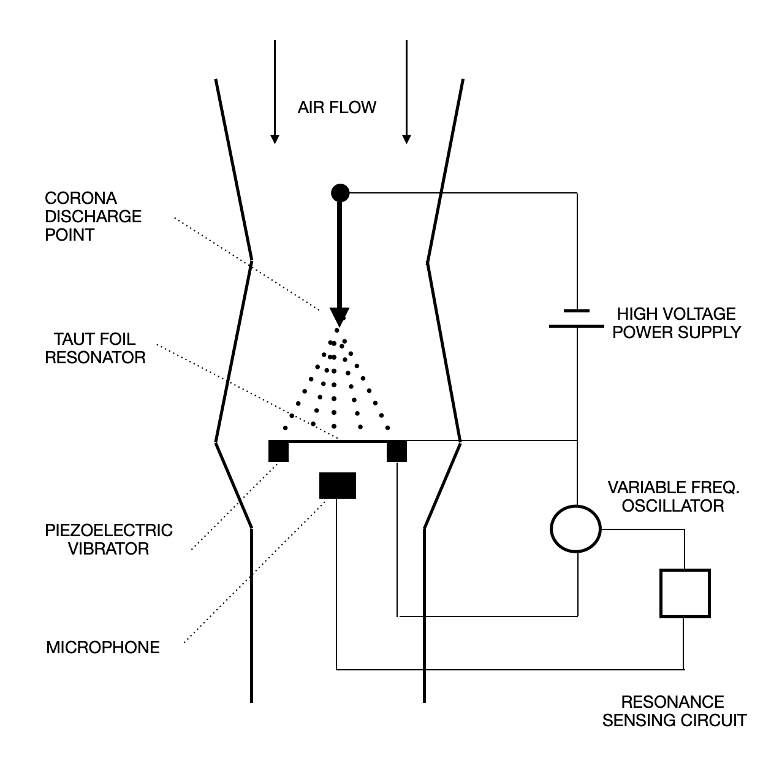
of Fisher Scientific – as a consultant in my area of expertise principally in support of projects that I had initiated previously and which were being carried to fruition by an able, bright and dynamic young researcher, Kevin Goohs, the only worthy carryover from Andersen in Atlanta. From 2007 on I also provided my consulting services to MSP Corp. in Minnesota, on two projects: the new version of the fiber monitor and the development of the taut metal foil mass sensor.
Writings
I very much enjoyed writing – and I still do – in contrast with most of my coworkers and many colleagues. This liking originated from my Politécnica years and from my love of literature, in general. Although I became fully immersed in the English language only after the age of 24, I soon acquired a facility in it that often exceeded that of those who surrounded me professionally. That helped significantly in my writing technical proposals and in my success in obtaining competitive contracts.
I also enjoyed writing papers. Some 40 of my papers were published, many of them in refereed journals, and soon I was called upon to review other researcher’s manuscripts for publication. Most of my papers were on instruments and methods that I developed. In addition, I wrote two chapters in technical/scientific books, one on the rather arcane application of so-called pellicles for the protection from particle contamination of the photomasks or reticles used in semiconductor chip manufacture by photolithography. The other was in a field that became very dear to me, i.e., history of science. I already had a foray into that area with a short paper published in Applied Optics on Gustav Mie, the German scientist who, at the start of the 20th century developed the full and rigorous theory about the scattering of electromagnetic radiation by small particles. The chapter I am referring to was on the history of aerosol optics, a very wide ranging topic which I covered from the 12th century to the present. In 2004, I wrote a paper on the history of the cause of the blue color of the daytime sky. This paper is being used by several universities in their courses of atmospheric optics and his referred to in Wikipedia entries.
Sometimes, in the 1990s, I decided – a bit foolishly, in retrospect – to write an entire handbook on optical methods of airborne particulate matter characterization and measurement. Such book had not been written and was sorely missing from the roster of instrumentation literature. I started its writing and continued whenever I could find time for it, at work and at home. I progressed rather well for a while and completed several chapters. Eventually, however, I ran out of steam, finding less and less time to advance on this ambitious project. I proposed to my colleague Dr. Vladek Szymanski of the U. of Vienna to share in the writing. He initially acquiesced but later on – before starting his actual writing – begged out because of health problems. At that point I decided to cancel the endeavor after having obtained an advance from a publisher, which I had to return.
My published corpus obviously pales in comparison with those of any worthy academic scientist but, it should not be forgotten that I was working for industry where publications tend to be far fewer and not a sine qua non requirement for professional advancement.
As mentioned above, as I became better known in my field, I was called upon rather frequently to review manuscripts submitted to various scientific and technical journals such as Applied Optics, The Review of Scientific Instruments, Journal of Aerosol Science, etc. some of which had published my papers. I tended to be a rather strict and uncompromising reviewer. It should be remembered that these are commonly blind reviews where the name of the reviewer is not revealed to the authors, but the reviewer does know their name. More than once I recommended outright rejection of a manuscript.
Two of such drastic instances come to mind. The first was a paper on a directional ion tracer anemometer submitted to a journal by two authors, and that had been assessed negatively by another reviewer. The authors then requested me specifically as an alternate reviewer – presumably because of my original work on ion tracer anemometry (see the section above about my work at Del Electronics in the 1960s). I proceeded to read the manuscript in question and immediately determined that the reason for rejection by the initial reviewer was spurious and utterly unjustified. I then reread the paper with great attention and suddenly I discovered to my surprise that the basic methodology described therein was unworkable – it could not function although the authors intimated that they had tried it. I wrote a very carefully reasoned review recommending rejection by the journal based on my analysis but not based on the initial reviewer’s views. The authors apparently accepted my judgement without further objections.
The second case was that of a manuscript submitted by a group of Taiwanese (or Korean – I don’t remember which) researchers who had developed what they claimed was a new type of beta attenuation particulate mass monitor, another of my areas of expertise. The authors had applied for, and possibly obtained, a patent in their country for that system. I immediately knew that their claim of originality was baseless. That type of instrument had been developed by one of our competitors almost 20 years earlier and was well known to me. I also had in my possession an official US government final report of that early development project. I cited this report in support of my rejection.
During the MIE years I also wrote all the instruction manuals for the instruments we were selling as well as application notes and other technical supporting literature.
Teaching at the Lexington Community Education
I should be remiss at not mentioning my late-in-life involvement in teaching various classes within the framework of the Lexington Community Education (LCE) framework. This very active and well organized adult education system issues a catalog of courses on a quarterly basis on wide ranging subjects.
My involvement was initiated through a rather odd incident. Sometime in 2011 I received the LCE course catalog for the first time. I perused it and, to my astonishment and outrage, I found the description of a class on Astrology, taught by an astrologer. The blurb extolled the role of Astrology in solving and alleviating modern problems and other such nonsense. My deep seated abhorrence of irrationality fired me up and I sent an irate e-mail to the director of the LCE, Craig Hall, stating that the inclusion of such a course for Lexington adults was unacceptable and an insult to their intelligence. He responded with a fairly lame set of excuses which I dismissed in a subsequent communication in which I suggested that rather than providing a class in a pseudoscience, the LCE should offer a course in, for example, Introductory Astronomy. Craig Hall responded asking me whether I would be interested in teaching such a class. After pondering on this offer for a few weeks I accepted and, eventually, started teaching at the Lexington High School, within the fall 2011 session of the LCE.
During laterpresentations of this course I added a section on the recent detection of gravitational waves achieved in 2015 by the incredibly sensitive LIGO system. The course seemed to be received with great enthusiasm by the attending students. One of them gave me a $100 gift certificate for Starbucks at the end of the course.
Over the years, in addition to the Introductory Astronomy course, I’ve taught about Global Warming, Are We Alone?, and lately a class entitled Our Universe, Where Are We? Where Are They? The course description, first published in the Fall 2017 LCE catalog, follows below:
This introductory course is intended to provide a basic understanding of our place in our universe in light of the latest scientific discoveries. Stunning graphics and photos illustrate the lectures. The course begins with our solar system and what we have learned from space probes and Mars rovers, followed by a review of solar and star dynamics and evolution, and the location of our solar system within the Milky Way galaxy, the formation of the elements, supernovas and pulsars and black holes. Our present knowledge about galaxies, quasars, and dark matter follows. Concepts such as the origin of our universe, the Big Bang, dark energy, the precise age, size, dynamics and composition of the universe will be introduced, and the latest thoughts about the multiverse. The principal methods and tools of today’s Astronomy are discussed. The prevalent thoughts about the probability of extraterrestrial life and intelligence are reviewed. Are we alone in our universe? Are there any advanced technological cultures in our Milky Way galaxy? What can we learn from Earth’s experience about life elsewhere? Have we detected any “intelligent” electromagnetic signals from outer space? Enrico Fermi, the notable Italian physicist, asked Where Are They? Can we answer his question? Particular attention will be given to the recent discovery of exoplanets, an exciting new field bearing directly on the existence of extraterrestrial life. Math familiarity is not expected.
In 2025, I started to teach another class: Science in Ancient Greece. The course description is as follows:
Most educated people have heard about Aristotle, Plato, Socrates, Homer, Alexander the Great, and (perhaps) Sophocles, Aeschylus and Euripides, as well as admired the Acropolis and the Venus of Milo. In the sciences, some will remember having learned about Archimedes and perhaps (vaguely), Pythagoras. However, how many will know Thales of Miletus, Euclid, Ptolemy, Hipparchus, Anaximander, Anaxagoras, Democritus, Epicurus, Apollonius of Perga, Philolaus, and about Aristarchus of Samos, the Greek Copernicus, and Eratosthenes who measured the size of the Earth with an accuracy of a few percent, and a host of others? Ever heard of the over 2000-year old Antikythera Mechanism, considered the first analog computer? This course will be aimed at filling this gap of knowledge and to present the remarkable achievements of Greek science and technology over the period of about 500 BCE to 200 AD in fields like astronomy, physics, mathematics, geometry, and medicine. We will cover the classical period of ancient Greece followed by the Hellenistic period and the Roman Greek period. We will also endeavor to navigate the sometimes meandering cultural path of the information about ancient Greek science that was required in order for this knowledge to reach us, and the unfortunate loss of many of the writings of that noteworthy culture. We will acknowledge the crucial role played by Islamic scholars and the translation schools of medieval Spain to help in the preservation of ancient Greek science. The course will be complemented by informative graphics to help in the understanding of Greek science and technology. Be prepared to be astounded at some of the accomplishments of that culture and their continued influence on our present day science.
In 2020, during the Covid-19 pandemic, I composed an essay, partly derived from my teaching within LCE, entitled Where Are They? Are We Alone? It was very well received by those who read it (now included in my blog).
Parting Thoughts
In my 44-year carrier – not counting the continuing consulting projects – I was directly involved in the development of more than 40 instruments many of which became successful commercial products, and some of which are still being produced at the time of this writing (2014). Several of them were based on totally original concepts for which I was granted 12 U.S. patents. Thermo Fisher Scientific still manufactures (now in China[22]) and sells the following instruments that were either developed under my tenure or are based on my inventions: pDR-1000AN, pDR-1500, ADR-1500, DR-4000, 5030i SHARP monitor, and PMCEMS source emission monitor. In addition, MSP Corp. manufactures and sells the model FM-7400AD fiber monitor that was developed with my technical consultation support.
As an aside to those accomplishments, during my career I faced some insurmountable obstacles in the acceptance of several instruments I invented and developed. These obstacles were associated with long-entrenched procedures and a culture of old fashioned backwardness. Two salient examples come to mind. The fiber monitor would have received far wider and persistent acceptance where it not that it was resisted by a whole community of microscopists whose livelihood depended, at least in part, on the established method of counting fibers, by visual microscopy, collected on filter membranes. The other example was the remote smoke plume opacity monitor whose acceptance was blocked by the so-called smoke inspectors whose function was to assess such opacity by mere visual observation.
In retrospect, most of the time I enjoyed myself. I loved to invent, conceive, find solutions, develop theoretical foundations, write and present papers, prepare proposals. I also enjoyed doing experimental work at the laboratory bench, setting up and testing breadboards, taking data and deriving conclusions from such empirical observations. I consider myself a good experimentalist. Although I did not mind working in collaboration with others, I much preferred solitary endeavors. Most of the time I disliked to manage, and I disliked most managers. In general, I learned to despise the typical American corporate establishment with its self-importance, old boy attitude, distrust of scientists, obsession with the “bottom line”, short-term profit myopia, i.e., reliance on quarterly performance as an end-of-it-all, and overall ruthlessness. Most of my expertise was developed on the job. My formal schooling left to be desired and I acquired most of my theoretical and practical knowledge during working hours, and not always in areas directly related to the projects at hand. I read books copiously and even more so, papers in and around my field of interest. I very much remained a generalist while, at the same time, managing to become a known specialist in selected areas.
More frequently than not, I had a good instinct for what was likely to work and what was not. Seldom did I pursue dead-end alleys. As I mentioned before, I was, at times, reckless in embarking in projects about which I knew too little, or applying solutions which I only intuited. Sometimes my originality rode on thin ice until I was able to shore it up doing the basic research that should, in some cases, have preceded the effort.
My abiding need to understand the world around me has served me well. It frequently provided me the impetus to develop new methods of detection and measurement but, perhaps even more importantly, it has given me intellectual stimulation and enjoyment. To date I continue to be guided by that curiosity. Here are some recent examples: a) Why do birds only alight on the neutral (ground) wire of a (very) high voltage transmission line? Obviously, because the electric field around the phase wires must have unpleasant effects on the birds. b) Why the blue sky appears to be beyond and behind the Moon (when the Moon is visible during the daylight) when we know that that blue color originates in our own atmosphere within a few dozen miles above us. After all, the Moon is about 240,000 miles away and has no atmosphere to speak about. I will provide the answer to this riddle to those interested in such matters. c) When stirring sugar in a cup of tea the ringing sound as the spoon hits the cup’s wall seems to gradually descend in pitch until all the sugar is dissolved. Why? I’m working on that one….
Original Ideas
Below is a summary list of some of the more original ideas, inventions (not all patented), and instrumentation configurations that I have conceived and realized. I am proud of these accomplishments and their inclusion here should not be construed as driven by self-flattery.
- Combination of reverse-engineered commercial field-strength meter and modified car radio to measure for the first time the crustal electromagnetic conductivity of the Quito, Ecuador, region.
- Invention and construction of adjustable circular star map (planisphere) for zero latitude.
- Construction of stereo sound reproduction system including electro-acoustic modification of war surplus loudspeaker. First-time introduction of stereo sound reproduction in Ecuador.
- Experiments with psycho-acoustics using recursive tape recording.
- Acoustic/auditory beat method to measure fan speed in rarefied air flow system.
- Development of a stratospheric altimeter based on a miniaturized positive coaxial corona configuration.
- Development of an ion tracer anemometer based on continual re-triggering of electric discharge resulting in an air velocity-to-frequency transducer.
- Discovery of ion plasma oscillations in coaxial positive corona in rarified nitrogen-oxygen mixtures. Theoretical model identifying transient generation of large molecular weight ion species within corona region.
- Development of high sensitivity water vapor sensor based on ion plasma oscillations.
- Work on development of miniature stratospheric sampler based on ion wind, and development of theoretical analysis of ion wind air flow.
- Invention, laboratory implementation and mathematical analysis of rarefied flow measurement by means of reaction effect.
- Design and development of a novel high flow rate portable electrostatic precipitator sampler using two-sided collection surface.
- Design and construction of a slide rule to calculate atmospheric pressure, density and temperature as functions of altitude, and electrical breakdown potential.
- Invention, design and development of first portable particulate mass monitor based on a combination of impaction and beta radiation attenuation.
- Invention, design and development of first particle shape-specific counter capable of measuring fiber length in real time based on electric field induced rotation and laser light scattering.
- Method to detect approaching thunder storms based on AM radio noise bursts.
- Conception and implementation of Poisson statistics-based method to calculate probable low-count particle concentration.
- Invention, design and development of internal flow feedback virtual impactor.
- Design and development of high sensitivity portable nephelometer.
- Design and development of a miniaturized wearable nephelometer.
- Design and development of sand storm sampling system with operation triggered by AND configuration of nephelometry and wind speed.
- Design and development of high concentration dust mass monitor based on direct airborne (non-collected) sensing by beta radiation attenuation.
- Invention of sonic flow controller with maximum pressure drop recovery.
- Invention of surface particle detection enhancement by water vapor condensation.
- Theoretical analysis and modeling of sampling pump efficiency.
- Invention of electro-magnetic real-time asbestos-specific detection of asbestos fibers.
- Invention of carbon fiber-specific detection system based of infrared emission.
- Invention, development and theoretical analysis of resonant taut membrane mass monitor.
- Invention, conceptualization, development and fabrication of first passive remote smoke plume opacity monitor based on sky light polarization.
- Invention, conceptualization and laboratory testing of a real-time paper manufacturing tear strength monitor based on light transmission polarization sensing.
- Invention, design and development of a real-time ambient particulate mass concentration monitor based on hybrid sensing by nephelometry and beta radiation attenuation.
- Invention and conceptualization of a real-time particulate mass stack emission monitor based on a hybrid combination of resonant sensing and light scattering asymmetry.
- Invention and conceptualization of second generation real-time fiber monitor designed to discriminate and classify amphibole and chrysotile asbestos, and non-asbestos fibers.
- Laboratory development of combination of ion wind air drive, point-to-plane particle collection by electrostatic precipitation and mass sensing by taut metal membrane resonance.
§
Photo Gallery of Instruments
In what follows, I have put together a gallery of photos of the most important instruments in whose development and design I have been involved. These photos show, predominantly instruments that were produced commercially. Some of these are still being produced at the time of this writing (2022). The photos show instruments from the earliest — those developed at DEL Electronics in the 1960s to those presently being marketed by Thermo Fisher Scientific. I have also included a few miscellaneous photos related to my professional life. Page numbers shown in the captions refer to those instruments mentioned and discussed in the body of the preceding text. Asterisks indicate that the instrument is presently being produced by Thermo Fisher Scientific.
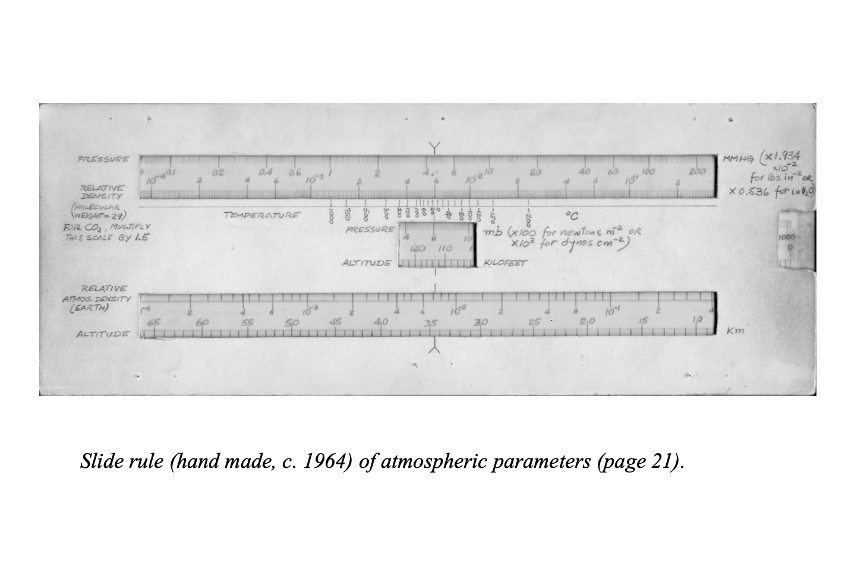
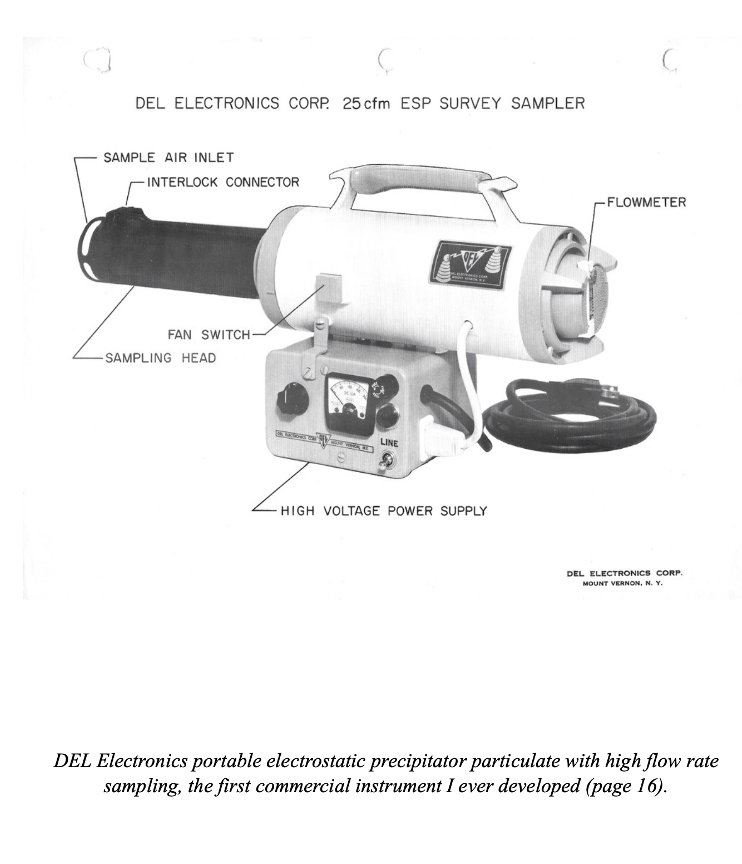

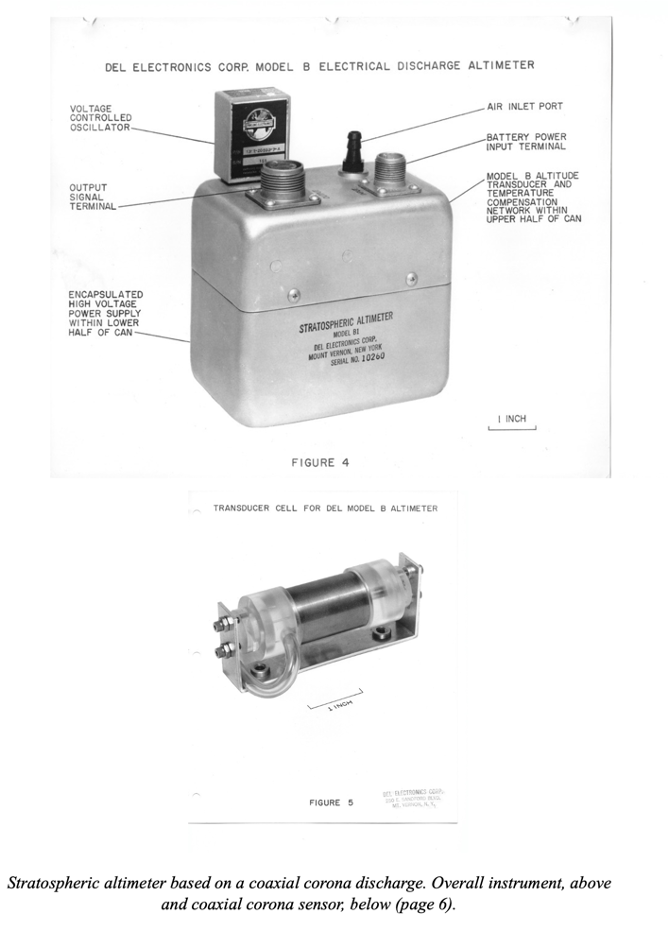
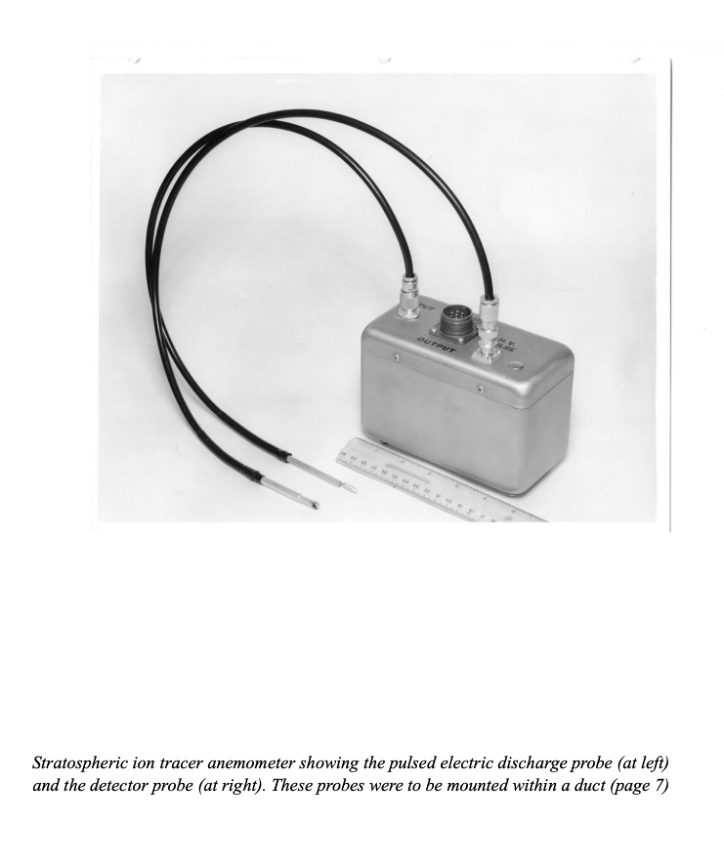
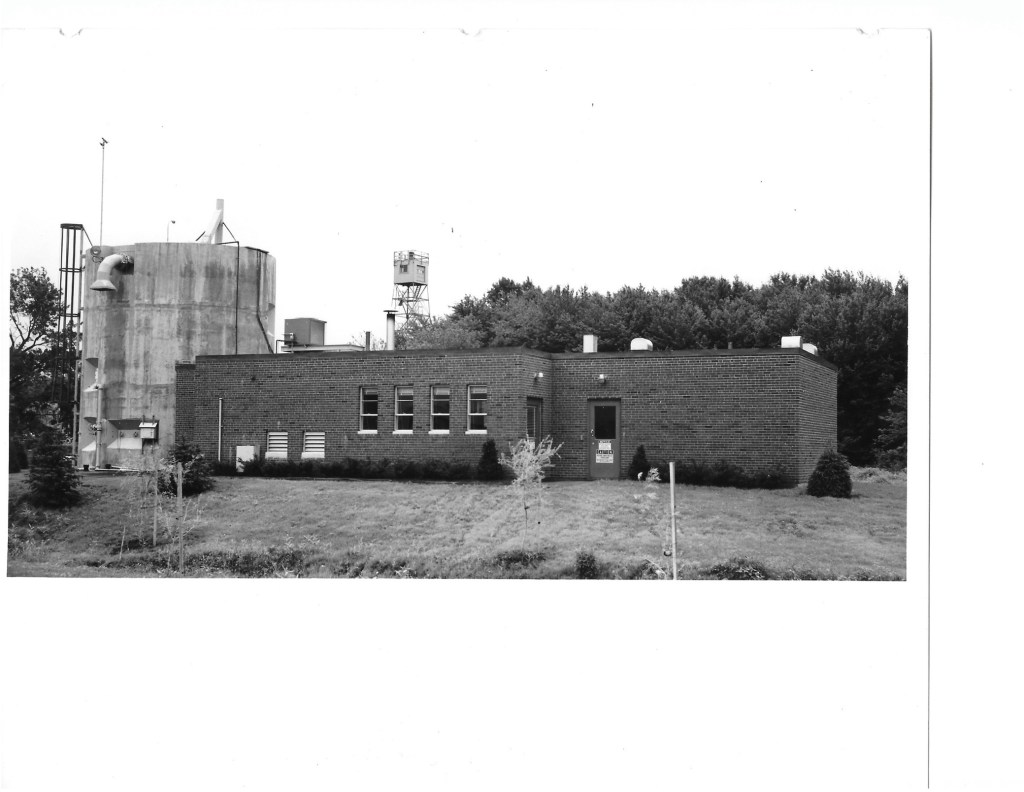
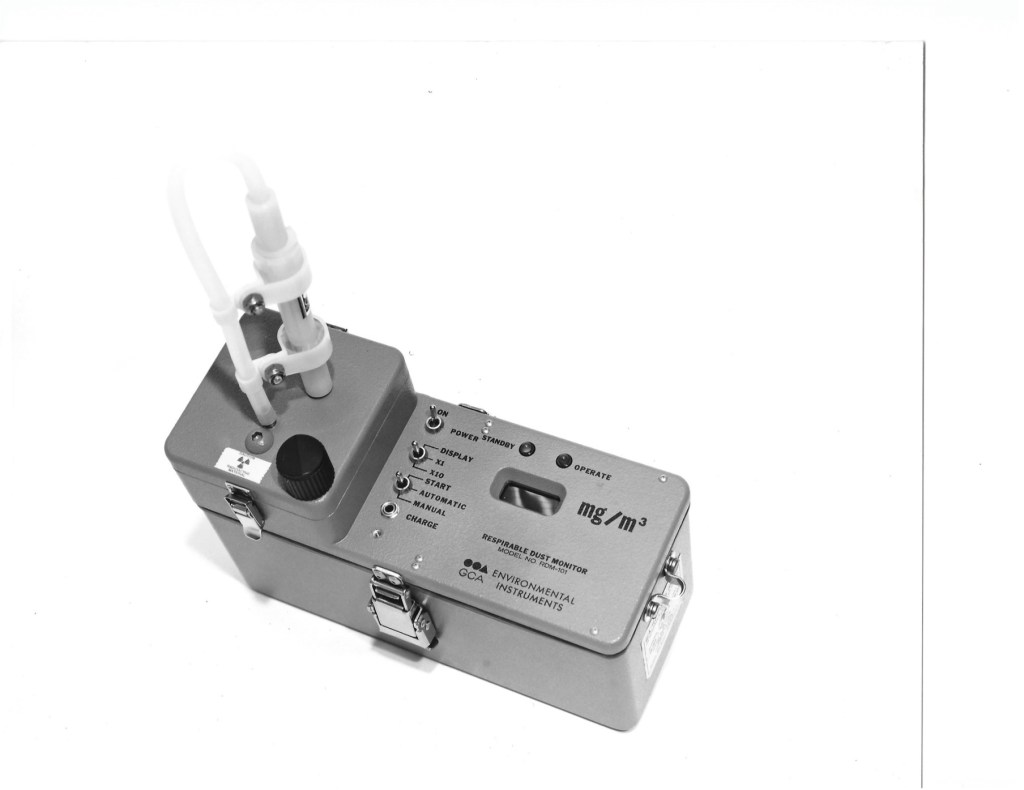
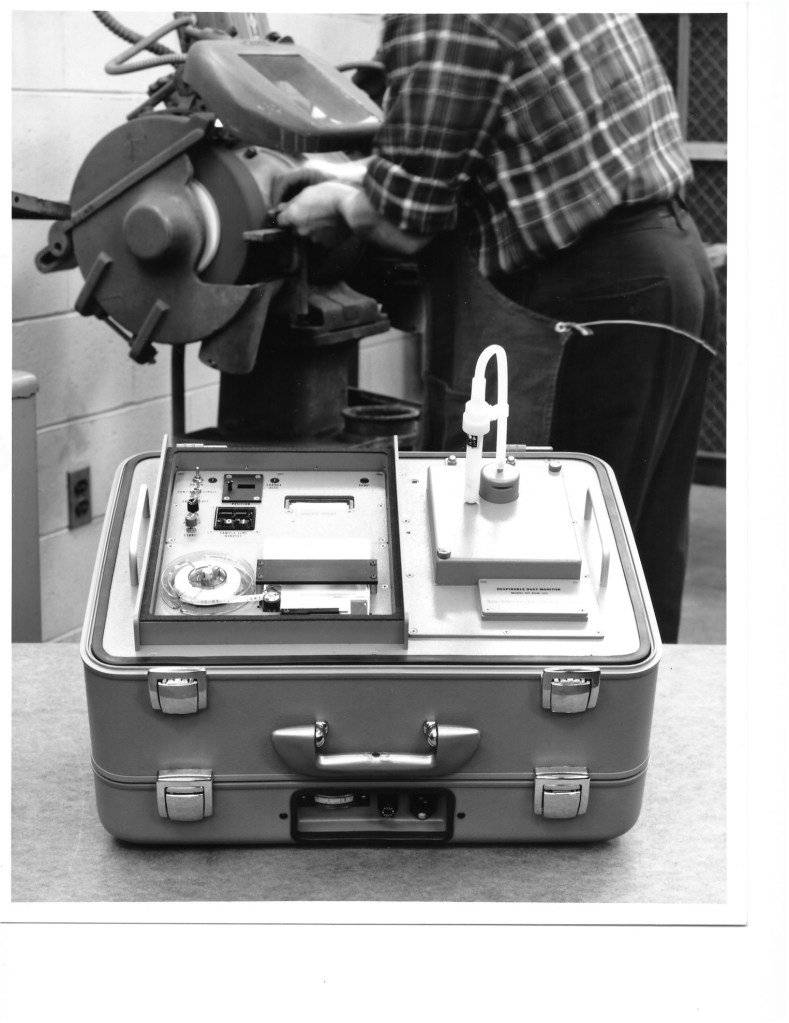

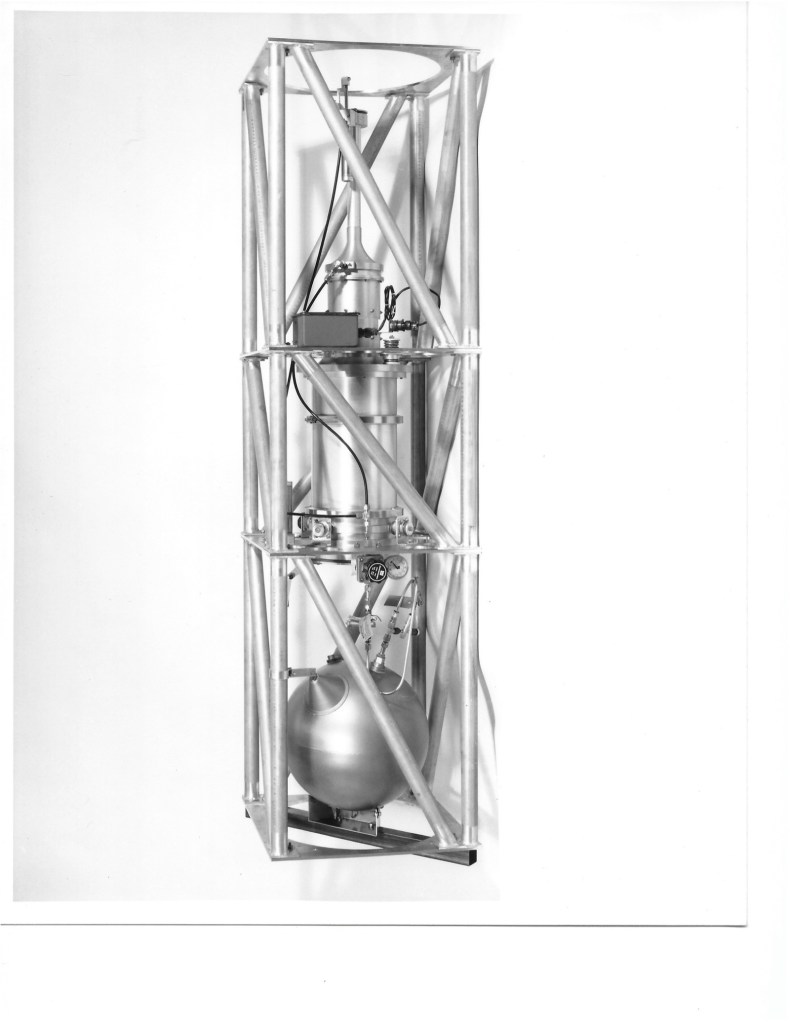
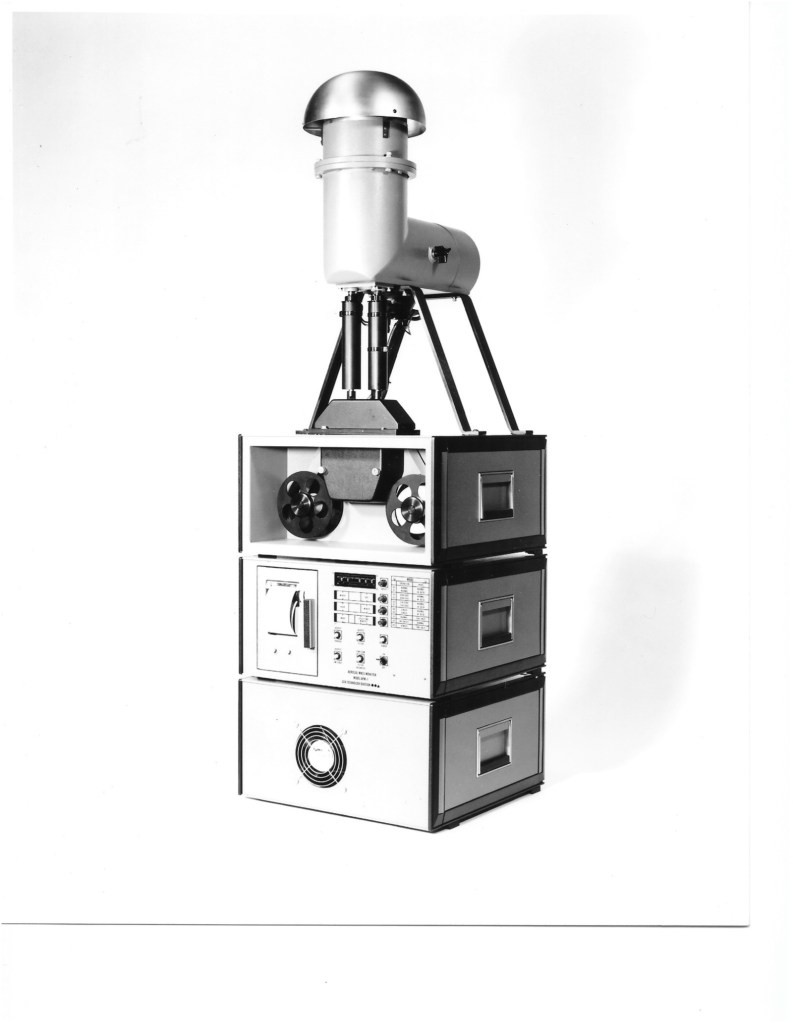
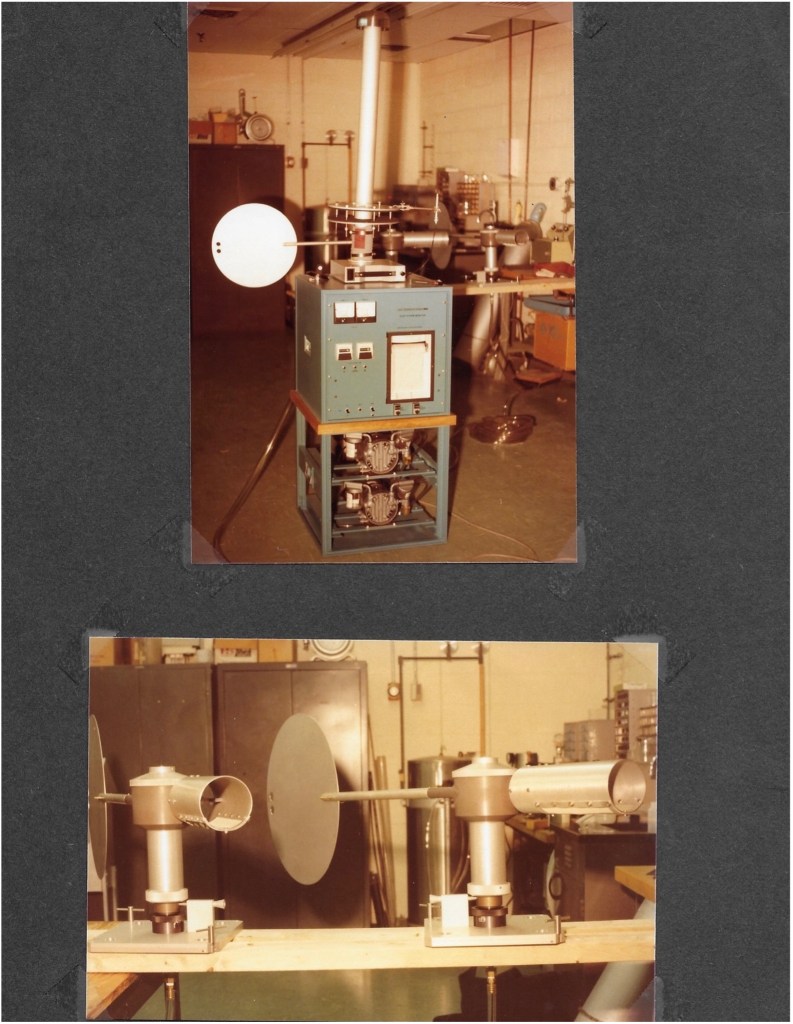
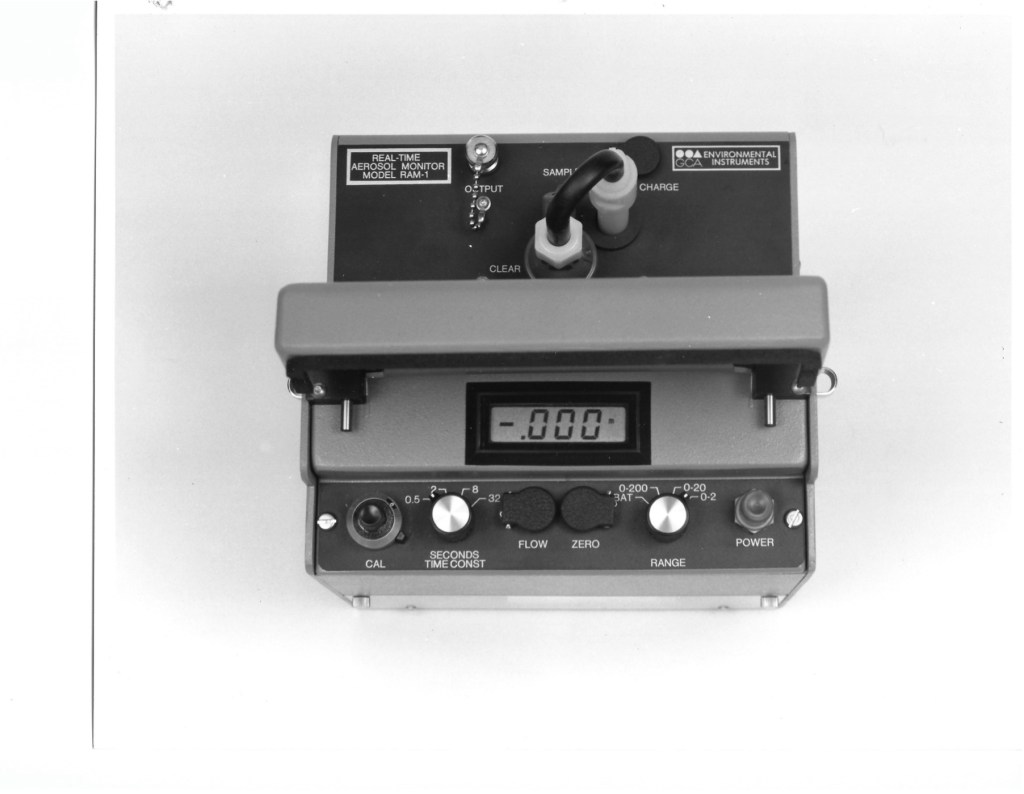
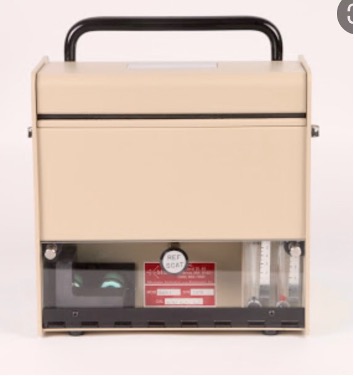
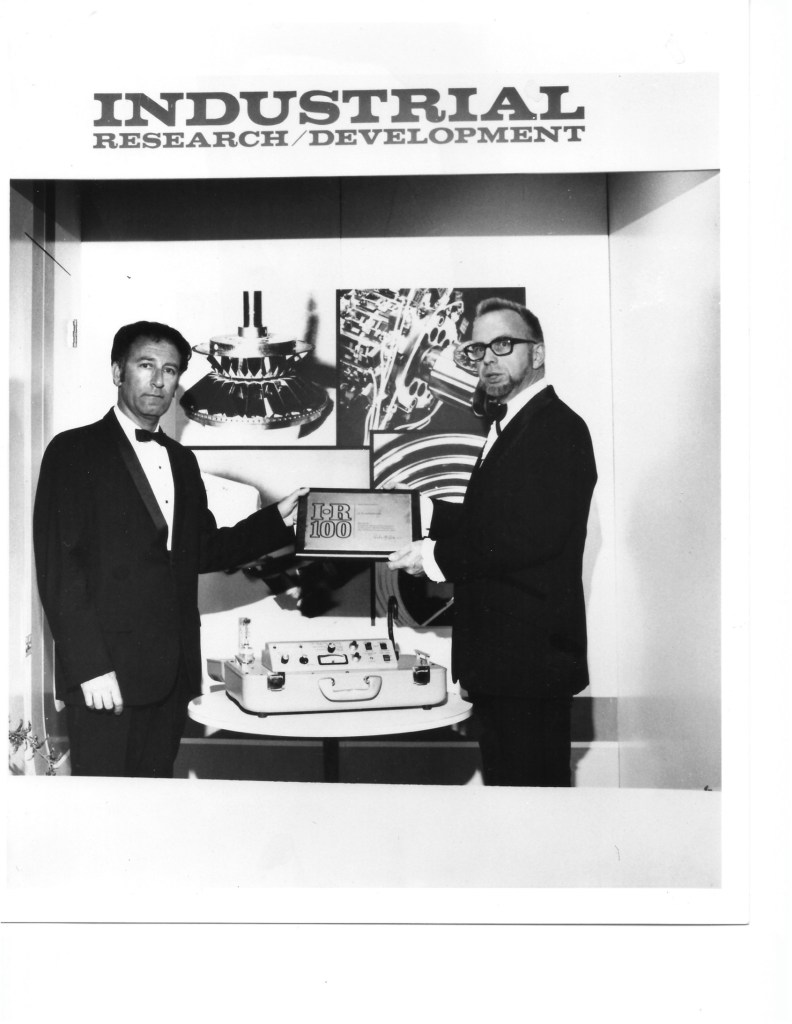
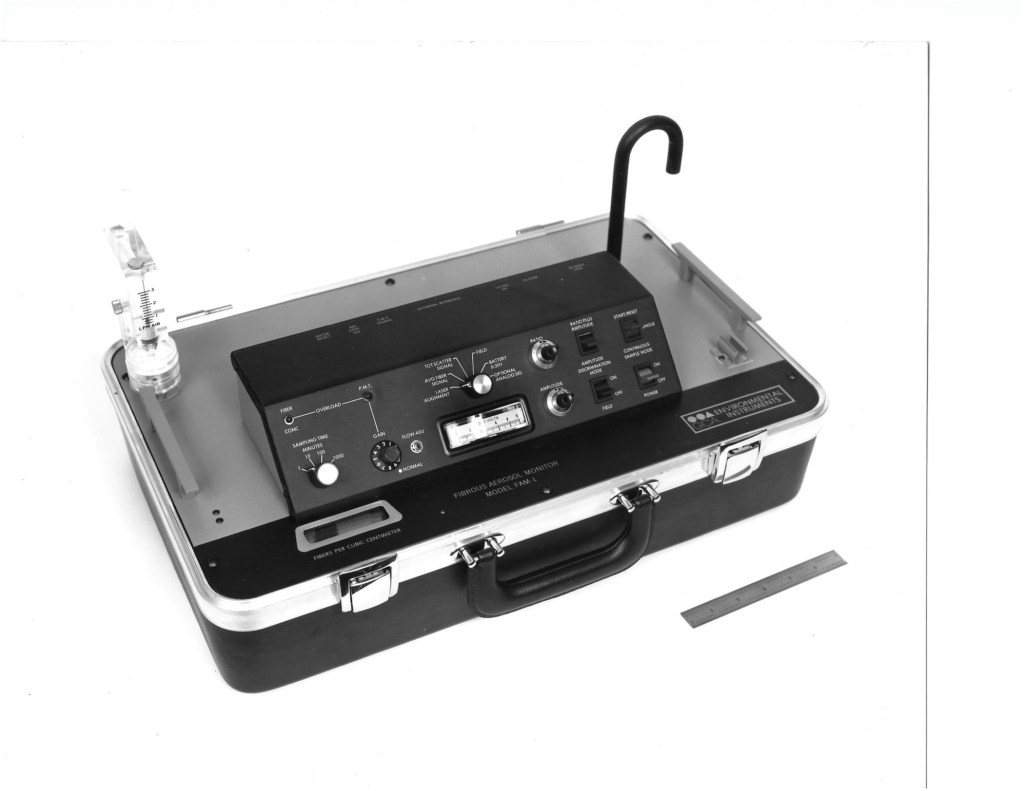
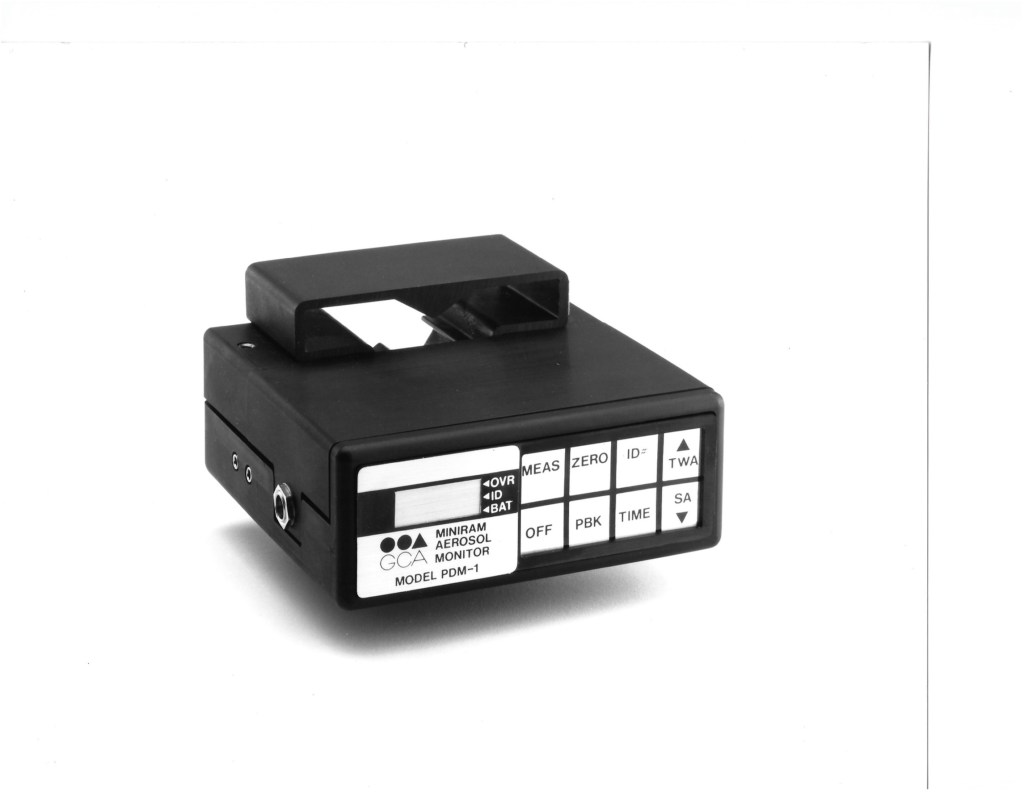
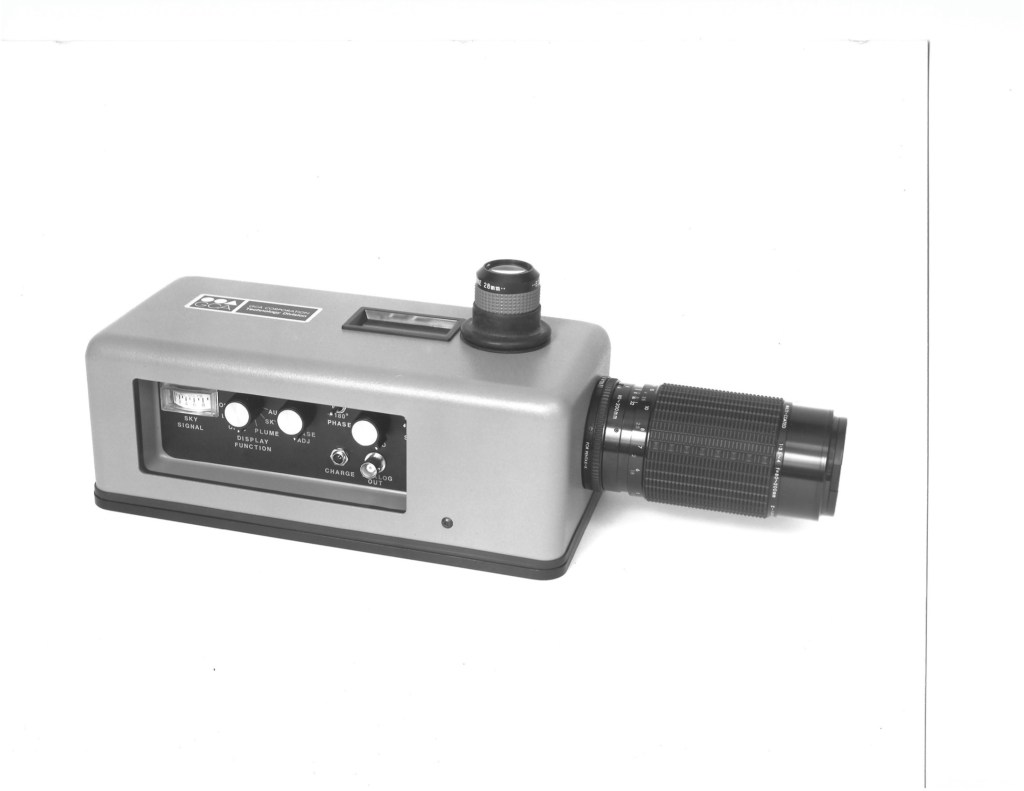

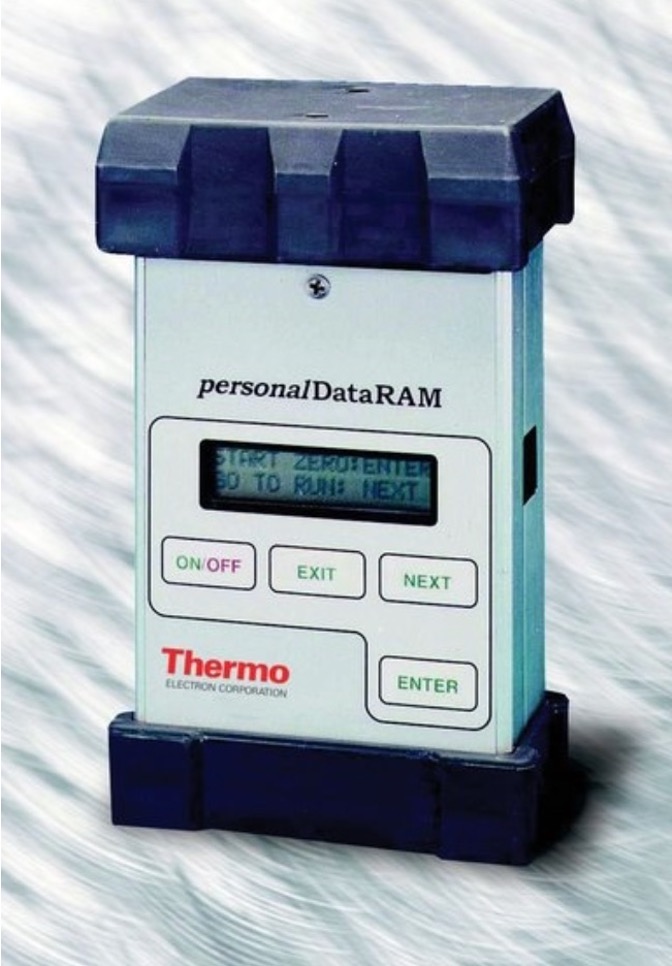
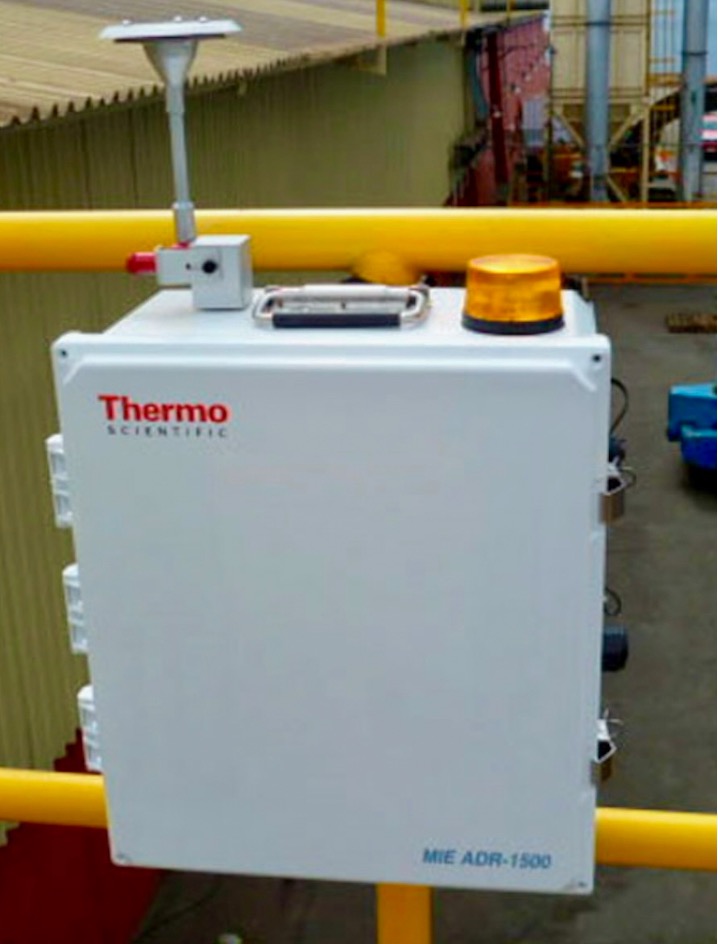
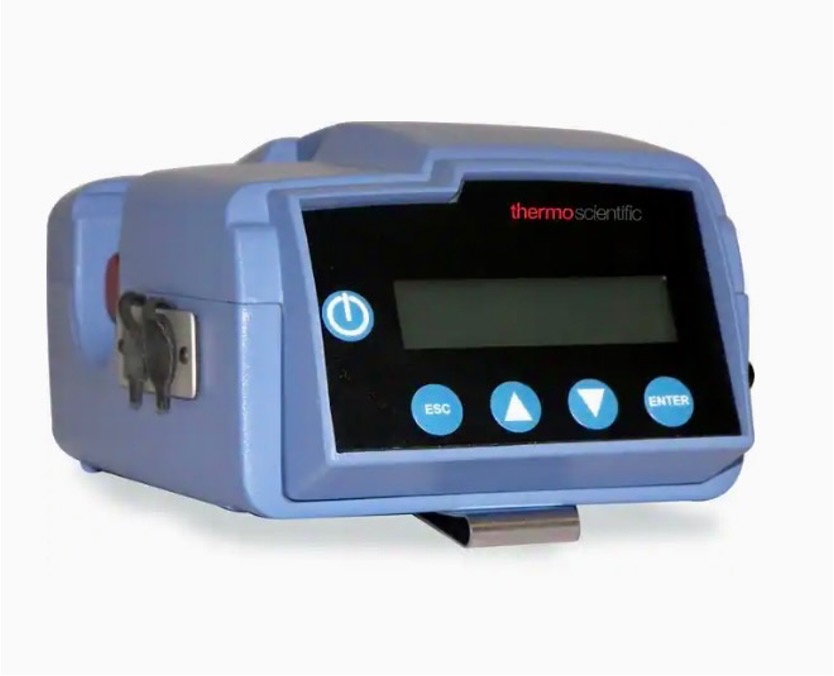
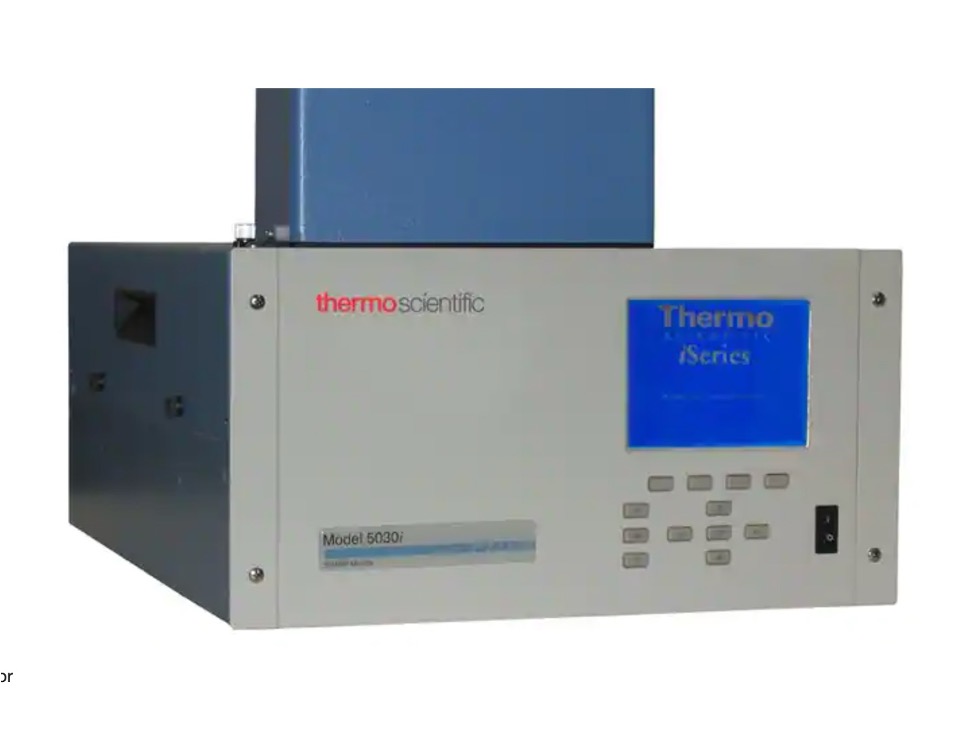
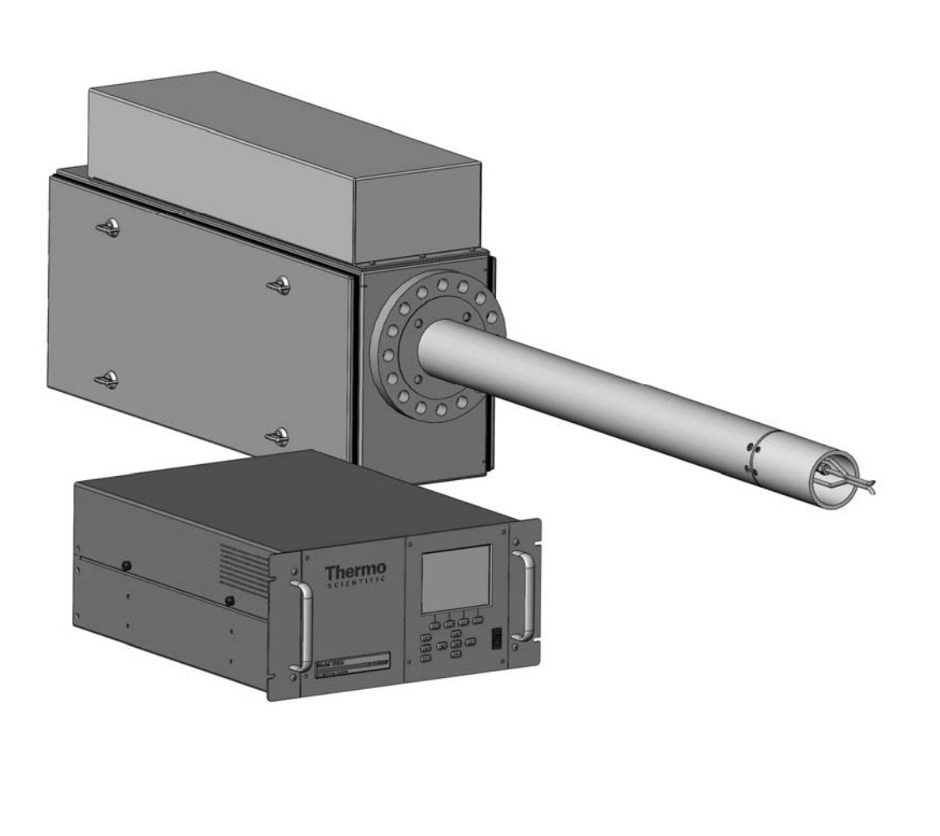
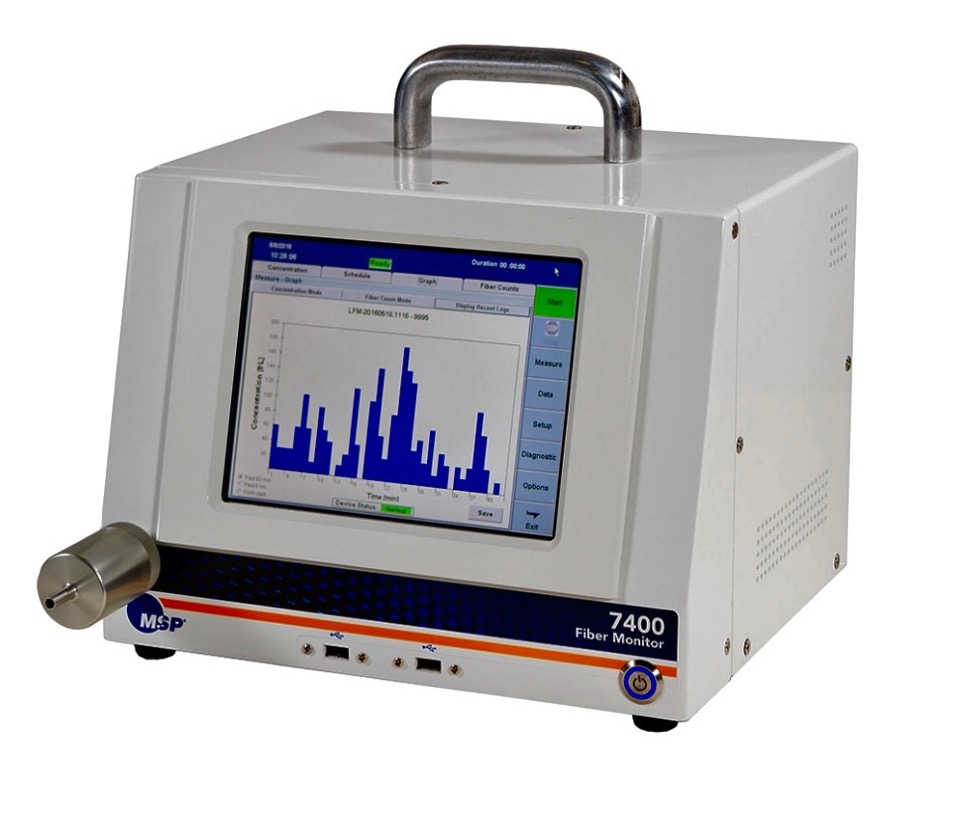
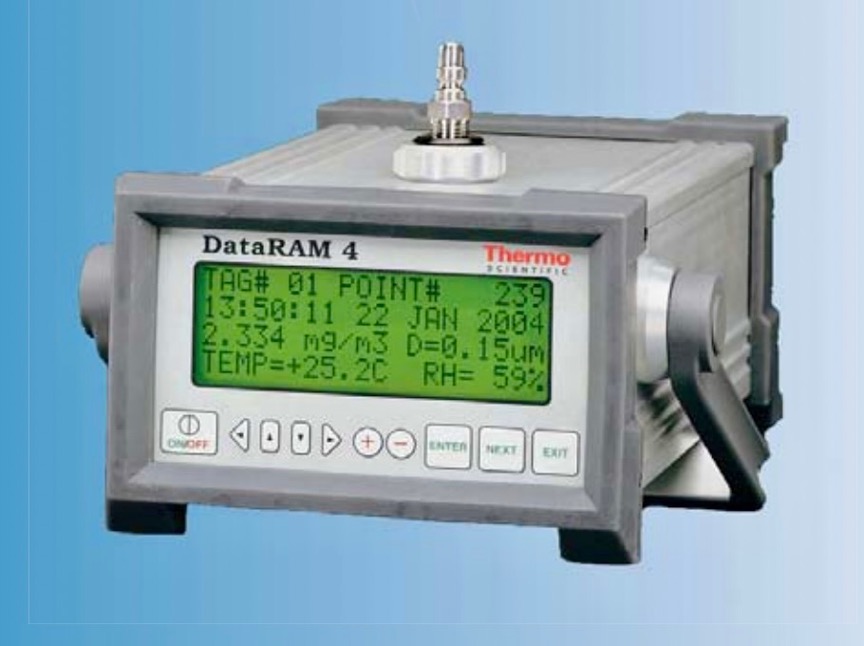
§
Curriculum Vitae
Education
- Electrical Engineering degree, Summa Cum Laude, first ever to be awarded this honor, at Escuela Politécnica Nacional, Quito, Ecuador, 1958. Thesis: Design of a National Radio Broadcasting Station. Top in graduating class, entitled to Fulbright scholarship (denied by U.S. based on Ecuadorian citizenship requirement).
- Intensive course in Astronomy (Space Trigonometry and Celestial Mechanics) offered by UNESCO during IGY (1956-1957). Graduated with scholarship at French university (not pursued).
- Graduate Studies, Electrical Engineering, Columbia University, New York, NY, 1958-1959.
Professional Experience
2004 – present:
- Technical and Scientific Consultant
2001 – 2004:
Thermo-Fisher Scientific, Environmental Instruments Div., Lowell and Franklin, MA
Principal Science Adviser
Principal Responsibilities:
- Scientific and technical advice, and support in the design, development and application of advanced, direct reading instrumentation for the measurement and monitoring of airborne particles.
1986 – 2001:
MIE, Inc., Billerica and Bedford, MA, a subsidiary of TRC, Inc. and from 1998 on, a subsidiary of Thermo Electron Corp.
President and Director of R&D
Principal responsibilities:
- Management, administration and operational direction of MIE, Inc. and Thermo MIE
- Technical direction in the design, development, fabrication and testing advanced, direct reading instrumentation for the measurement and monitoring of airborne particles.
- Technical direction in the preparation of proposals, and management of government-sponsored projects.
1967 – 1986:
GCA/Technology Division, GCA Corporation, Bedford, MA
Initially Senior Research Scientist, then Manager Instrumentation Department, and finally Chief Scientist and Technical Fellow.
Principal responsibilities:
- Management of Instrumentation Department.
- Design, development, fabrication and testing of instrumentation for the measurement and monitoring of airborne particles.
- Preparation of technical proposals and technical direction of government-sponsored projects
- investigation of optical, dynamic and electrical properties of aerosols and deposited particles.
- Scientific and technical advice and support to GCA Corp.in clean-room technology, and particle contamination/monitoring.
- Identification and pursuit of novel technologies in environmental, aerosol, surface contamination and fluid flow metrology.
1960 – 1967:
DEL Electronics Corp., Mount Vernon, NY
Senior Research Engineer
Principal Responsibilities:
- Development, design, laboratory evaluation and field test supervision of stratospheric air sampling systems for the US Atomic Energy Commission.
- Applied research in rarified air electrostatic precipitation, altimetry, flow metrology, electric discharge and plasma phenomena.
- Work on aerosol generation, electric charge neutralization, detection and sampling.
- Conduct field operations supporting preparation, supervision and ground support of stratospheric balloon launches of sampling and ancillary equipment.
Teaching Experience
1978 – 2008:
Faculty Instructor of the Aerosol and Particle Measurement Short Course at the University of Minnesota. Lectures on beta attenuation mass monitoring, light scattering fundamentals and optical measurement of aerosols, and laboratory demonstrations of optical instrumentation.
1983:
Conducted Intensive Short Course (in Spanish) on Aerosol Detection and Measurement at the Physics Dept. of the University of Santiago, Chile.
Professional Societies
- American Physical Society
- New York Academy of Sciences
- American Association for the Advancement of Science
- The International Society for Optical Engineering
- Optical Society of America
- Gesellschaft für Aerosolforschung
- American Association for Aerosol Research
- Air & Waste Management Association
Patents and Awards
- 12 patents of detection and measurement techniques (see list below).
- 2 IR-100 awards for instrumentation developments.
- 1 Pollution Engineering 5-Star award for instrumentation development.
Committee Activities
- Chairman of the Aerosol Instrumentation sub-group of the Interagency Research Group on Indoor Air Quality.
- Member of the TT-1 Committee of the Air Pollution Control Association.
- Chairperson on working group of Fibrous and Asbestos Aerosols of the American Association for Aerosol Research.
- Member of the Committee on Measurement of Pollution from Hazardous Wastes of the Organization Internationale de Metrologie Légale.
- Member of the Long-Range Planning Committee of the American Association for Aerosol Research.
- Member of the technical panel Aerosol Sampling Subsystems, sponsored by by the US Army Chemical Research, Development and Engineering center, March, 1987.
- Member of the National Science FoundationWorkshop Panel on Research Needs in Micro-contamination, December 1987.
- Member of technical review panel of the 2nd International Congress on Optical Particle Sizing, Tempe, AZ, March 1990.
- Member of technical review panel of the 3rd International Congress on Optical Particle Sizing, Yokohama, Japan, August 1993.
- Member of technical review panel of the 5th International Congress on Optical Particle Sizing, Minneapolis, MN, August 1998.
Publications and Patents
Journal Papers and Book Chapters
- Lippmann, M., DiGiovanni, H. J., Cravitt, S. and Lilienfeld, P., Lightweight, High-Volume Electrostatic Precipitator Survey Sampler, Am. Ind. Hug. Assoc. J., Vol. 26, p. 485, 1965.
- Lilienfeld, P., Stratospheric Altimeter Based on the Density Dependence of a Corona Discharge in Air, Rev. Sci. Instr., Vol.36, p. 979, 1965.
- Lilienfeld, P. Ion Tracer Anemometer for the measurement of Low density Air Flow, Rev. Sci. Instr., Vol.38, p. 405, 1967.
- Solon, L. R., Lilienfeld, P. and DiGiovanni, H. J., A System for Large Volume Aerosol Sampling in the Stratosphere Using Electrostatic Precipitation, Arch. Met. Geoph. Bioko., Ser. A, Vol. 17, p. 251, 1968.
- Lilienfeld, P., Beta-Absorption-Impactor Aerosol Mass Monitor, Am. Ind. Hyg. Assoc. J. Vol. 31, p. 722, 1970.
- Lilienfeld, P., Coherent Ion Plasma Oscillations in a D.C. Corona Discharge in Rarefied Air, j. Plasma Physics, Vol. 5, p. 459, 1971.
- Lilienfeld, P. and Dulchinos, J., Portable Instantaneous Mass Monitor for Coal Mine Dust, Am. Ind. Hyg. Assoc. J., Vol. 33, p. 136, 1972.
- Lilienfeld, P., Design and Operation of Dust Measuring Instrumentation Based on the Beta-Radiation Method, Staub-Reinhalt. Luft, Vol. 35, p. 458, 1975.
- Lilienfeld, P., A New Ambient Particulate Mass Monitor Using Beta Attenuation, paper # 75-65.2, presented at the 68th Annual Meeting of the Air Pollution Control Association, Boston, MA, June 1975.
- Lilienfeld, P., Coherent Ion Plasma Oscillations in a Corona Discharge in Rarefied Air, IEEE Trans. Indust. Appl., Vol. 1A-13, p. 374, 1977.
- Lilienfeld, P., Development and Testing of an In-Stack Virtual Impactor, paper # 77-32.7 presented at 70th Annual Meeting of the Air Pollution Control Association, Toronto, Ontario, Canada, June 1977.
- Lilienfeld, P., Elterman, P. B. and Baron, P., Development of a Prototype Fibrous Aerosol Monitor, Am. Ind. Hug. Assoc. J., Vol. 40, p. 270, 1979.
- McVay, L., Lilienfeld, P. and Entine, G., Small CdTe Gamma Backscatter Assay Meter, IEEE Trans. Null. Sci., Vol. NS-27, p. 752, 1980.
- Lilienfeld, P., Woker, G., Stern, R. and McVay, L., Passive Remote Smoke Plume Opacity Sensing: a Technique, Appl. Opt., Vol. 20, p. 800, 1981.
- Lilienfeld, P., Current Mine Dust Monitoring Developments, Chapter 53 in Aerosols in the Mining and Industrial Work Environments, Marple, V. A. and Liu, B. Y. H., editors, Ann Arbor Science, 1983
- Lilienfeld, P., High Concentration Dust Mass Monitor, Particulate Sci. & Tech., Vol. 1, p. 91, 1983.
- Lilienfeld, P., Smoke Obscurant Real-Time Sensor, paper A-05, Proceedings of the Smoke/Obscurants Symposium VIII, p. 37, Harry Diamond Laboratories, Adelphi, MD, April 1984.
- Lilienfeld, P., Methods for Continuous Monitoring for Particulates as Applied to the PM10 Standard, Transactions on Quality Assurance in Air Pollution Measurements, p. 64, APCA/AsQC Specialty Conference, Boulder, CO, October 1984.
- Lilienfeld, P., Rotational Electrodynamics of Airborne Fibers, J. Aerosol Sci., Vol. 16, p. 315, 1985.
- Lilienfeld, P., Broude, S., Chase, E. and Quackenbos, G., Automated Inspection of Magnetic Media by Laser Scanning, Proceedings of the International Conference on Automatic Inspection and Measurement of the SPIE, Vol. 557, p. 146, San Diego, CA, August 1985.
- Lilienfeld, P., Optical detection of Particle Contamination on Surfaces: a Review, Aerosol Sci. Techno., Vol. 5, No. 2, p. 145, 1986.
- Lilienfeld, P., The Defocussing Barrier: An Optical Shield Against Particle Contamination, Microcontamination, Vol. 4, No. 10, p. 36, 1986.
- Lilienfeld, P., Application of Pellicles in Clean Surface technology, Chapter 13 of Treatise on Clean Surface Technology, Vol. 1, edited by K. K. Mittal, Plenum Publishing Corp., 1987.
- Lilienfeld, P., Light Scattering from Oscillating Fibers at Normal Incidence, J. Aerosol Sci., Vol. 18, No. 4, p. 389, 1987.
- Lilienfeld, P. and Steg, R., Magnetic Dynamics of Asbestos Fibers: Theory and Experiment, Proceedings of the 3rd International Aerosol Conference, p. 327, Kyoto, Japan, September 1990.
- Lilienfeld, P., Selective Detection of Asbestos Fiber Aerosols by Electro-Magnetic Alignment and Oscillation, Proceedings of the Seminar: Trends in Aerosol Research II, p.54, Duisburg, Germany, June 1991.
- Lilienfeld, P., Gustav Mie: the Person, Appl. Opt., Vol. 30, No. 33, p. 4696, 1991.
- Lilienfeld, P., Rapid determination of Particle Concentration Bounds from Zero or Low Counts, Proceedings of the Institute of Environmental Sciences Annual Technical Meeting, Vol. 1, p. 187, Nashville, TN, May 1992.
- Lilienfeld, P., Multiple-Fiber Length Distribution by Fourier Analysis of Time-Dependent Fraunhofer Diffraction, Proceedings of the 3rd International Congress on Optical Particle Sizing, p. 17, Yokohama, Japan, August 1993.
- Lilienfeld, P., Filter Disc resonance: a New Technique for Mass Concentration Measurement, J. Aerosol Sci., Vol. 25, Suppl. 1, S527, 1994.
- Lilienfeld, P., Nephelometry, an Ideal PM-2.5/10 Method? Particulate Matter, Health and Regulatory Issues VIP-49, Proceedings of an International Specialty Conference Hosted by the A&WMA, p. 211, Pittsburgh, PA, April 1995.
- Lilienfeld, P., Nephelometry Applied to Continuous Monitoring of Ambient Fine Particulate, Optical Remote Sensing for Environmental and Process Monitoring, Proceedings of a Symposium Sponsored by the A&WMA, p. 484, San Francisco, CA, September 1995.
- Marijnissen, J., Lilienfeld, P. and Zhou, Y., A Laser Monitor for the Fiber Deposition in a Lung Model, J. Aerosol Sci., Vol. 27, Suppl. 1, p. S523, 1996.
- Lilienfeld, P., Airborne Fiber Length and Diameter Determination in Real Time, Proceedings of the 5th International Congress on Optical Particle Sizing, p. 77, Minneapolis, MN, August 1998.
- Lilienfeld, P. and Steg, R., Mass Sensing by Filter Disc Resonance: a Progress Report, J. Aerosol Sci., Vol. 29, Suppl.1, p. S961, 1998.
- Lilienfeld, P., Dual-Wavelength nephelometry for PM2.5 Monitoring, J. Aerosol Sci., Vol. 29, Suppl.1, p. S1209, 1998.
- Lilienfeld, P., A Blue Sky History, Optics & Photonics News, Vol. 15, No. 6, p. 32, 2004.
- Lilienfeld, P. Aerosol Photometry, a Brief History, chapter in History & Reviews of Aerosol Science, pp. 113 – 156,edited by G. J. Sem et al, AAAR publication, 2005.
- Goohs, K. J., Lilienfeld, P. and Wilbertz, J., A Synchronized Hybrid Real-Time Particulate Monitor, European Aerosol Conference, Karlsruhe, Abstract TO91A13, 2009.
- Lilienfeld, P., Advanced Sensing System for the Selective Detection of Airborne Asbestos Fibers, in preparation, 2018.
Patents
- Corona Discharge Plasma Oscillation Gas Trace Detector, US Patent No. 3,569,825, Mar. 9, 1971.
- Aerosol Particle Monitor, US Patent No. 3,711,707, Jan. 16, 1973.
- Passive Smoke Plume Opacity Monitor, US Patent No. 4,320,975, Mar. 23, 1982.
- Automatic detector for Microscopic Dust on Large-Area Optically Unpolished Surfaces, US Patent No. 4,402,607, Sep. 6, 1983.
- Method and Apparatus for Real-Time Asbestos Monitoring, US Patent No. 4,940,327, Jul. 10, 1990.
- System and Method for Determining and Outputting Airborne Particle Concentration, US Patent No. 5,319,575, Jun. 7, 1994.
- System and Method for Resonant Filter Mass Monitoring, US Patent No. 5,349,844, Sep. 27, 1994.
- System for, and Method of , Monitoring Airborne Particulate, Including Particulate of the PM2.5 Class, US Patent No. 6,055,052, Apr. 25, 2000.
- Method and Apparatus for Monitoring a Mass Concentration of Particulate Matter, US Patent No. 7,111,496, Sep. 26, 2006.
- Method and apparatus for Mechanical Resonance Monitoring a Mass of particulate Matter, US Patent No. 7,197,911, Apr. 3, 2007
- Apparatus for High-Accuracy Fiber Counting in Air, US Patent No. 7,830,510, Nov. 9, 2010.
- Particulate Detection and Calibration of Sensors, US Patent No. 8,351,035, Jan. 8, 2013.
§ § §
[1] Petain’s Praise and Other Incongruities
[2] Died in 2018 at age 92.
[3] Technically, this can be explained by Fourier analysis of the frequency content of transient duration sine waves.
[4] U.S. patent No. 3,569,825.
[5] Died in 2014 at age 93.
[6] Died in 2024 at age 99.
[7] Died in 2014 at age 85
[8] Died in 2018 at age 91.
[9] U.S. patent No. 3,711,707.
[10] Died in 2024 at age 95.
[11] Died in 2009 at age 65.
[12] U.S. Patent No. 5,319,575
[13] Died in 2017
[14] Died in 2018 at age 80.
[15] U.S. Patent No. 6,055,052
[16] As of this writing (Spring 2009) both the DataRAM II and the personalDataRAM are still being produced and sold by Thermo Fisher Scientific.
[17] Schaefer became a good friend. He obtained a doctorate in law at age 88 with a thesis (later a book) about the trial of Otto John in Germany. He also wrote an autobiography: Hitler its an allem schuld. Klaus Schaefer died in 2022 at the age of 100.
[18] U.S. Patent No. 7,111,496.
[19] Died in 1983 at age 83.
[20] An update: due to the corona-virus pandemic W. Harmon, K. Lachapelle and D. Kita lost their employment at Thermo Fisher in May of 2020.
[21] Due to my uninterrupted GCA, MIE, Thermo employment sequence.
[22] From late 2010s on.
 Pedro Lilienfeld