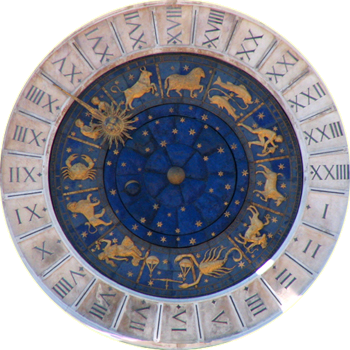
Enough has been written about this subject but I can not avoid contributing to it with my own thoughts.
The first point I would like to make is that there is not just one astrology but many. There is the Western one with which people in the U.S. and Europe are most familiar. There is a Vedic one in India and a Chinese one.
There is the African astrology, which differs from western astrology. It is based on ancestral symbols of African culture: The Baobab Tree, The Wealth of Amber and Silver, The Family, Small Services to the Neighborhood, The Market, The Ancestor, The Judge, The Kola Nut, The Traveller, The Distance, The Child of the World, etc.
There is an Hawaiian astrology, and there is a Native American astrology which is based on the lunar calendar and natural cycles, whereas Western astrology is primarily based on the solar calendar and the positions of the stars and planets. Native American zodiac signs often use animals, natural elements, and totems to represent different months or seasons, reflecting the close relationship indigenous cultures have with nature. Each animal or element symbolizes certain personality traits and life paths. In contrast, Western astrology uses symbols based on constellations and mythological figures from Greek and Roman cultures.
Obviously all these astrologies — and others — do not agree with each other. So, what are we to conclude? Astrology is irrational nonsense. It has never been proven. Besides, How can you prove so many differing beliefs at the same time?
By contrast, there is only one astronomy, which is a science. Astrology is basically only a type of superstition with as much validity as knocking on wood to ward off bad luck or to believe that black cats are an ominous sign.
Astrologers have never been able to explain the physical mechanism or process by which planets and stars influence the character, behavior or destiny of human beings on Earth.
Astrology flourished in ancient cultures such as the Sumerian and Egyptian, lost its importance in Classical Greece but was revived by Ptolemy. The Romans had a fraught relationship with astrology: Emperor Claudius (10 BCE – 54 AD) banned astrologers preferring to believe in augurs (e.g., consulting with the behavior of animals such as birds). Cicero (105 BCE – 43 BCE), the great Roman orator and writer rejected astrology, among other beliefs in the occult in his book De Divinatione, written in 44 BCE. Astrology regained strength in the West during the Middle Ages, and kings and other nobles had their private astrologers. Great scientists such as Galileo (1564 – 1642), Tycho Brahe (1546 – 1601) and Kepler (1571 – 1630) provided astrological predictions to such princes for reasons of financial gain.
It is noteworthy that the famous medieval Sephardic rabbi and philosopher Maimonides (1135 – 1204) rejected astrology based on its incompatibility with science and religion. His view was principally the result of astrology’s reliance on predestination and its resulting denial of free will.
Martin Luther (1483 – 1546) denounced astrology in his Table Talk. He asked why twins like Esau and Jacob had two different natures yet were born at the same time. Luther also compared astrologers to those who say their dice will always land on a certain number. Although the dice may roll on the same number a couple of times, the predictor is silent for all the times the dice fails to land on that number.
Pico della Mirandola (1463 – 1494), notable Italian Renaissance philosopher, presents arguments in his Disputationes adversus astrologiam divinatricem against the practice of astrology that have had enormous resonance for centuries, up to our own time. Disputationes is influenced by the arguments against astrology espoused by one of his intellectual heroes, Augustine of Hippo (354 – 430). Pico’s antagonism to astrology seems to have been derived mainly from the conflict of astrology with Christian notions of free will.
In seventeenth century Spain, Lope de Vega (1562 – 1635), with a detailed knowledge of astronomy, wrote plays that ridicule astrology. In his pastoral romance La Arcadia (1598), it leads to absurdity; in his novel Guzman el Bravo (1624), he concludes that the stars were made for man, not man for the stars.
It appears that Newton (1643 – 1727) did not support the ideas of astrology and, thereafter, the Enlightenment thinkers predominantly rejected it.
The famous German philosopher and mathematician Gottfried Leibniz (1646- 1716) wrote in 1714: “I despise almost nothing, except fortune-telling astrology and trickeries of that kind”.
Later on, in his analysis of horoscopes in his book The Stars Down to Earth and Other Essays on the Irrational in Culture, Theodor Adorno (1903 -1969), German philosopher, musicologist, and social theorist, hilariously dissected the techniques and tropes of the newspaper astrologer. He noted, for example, how “the contradictory requirements of life” were conveniently solved by predicting hard work in the morning and pleasure later in the day. Adorno concluded that astrology is a large-scale manifestation of systematic irrationalism, where individuals are subtly led— through flattery and vague generalizations — to believe that the author of the column is addressing them directly. Adorno drew a parallel with the phrase opium of the people, by Karl Marx (1818 – 1883), by commenting, “occultism is the metaphysic of the dopes.”
Finally, as far as authorized opinion is concerned, here is what Einstein (1879 – 1955) wrote in a letter to a friend: “I fully agree with you concerning the pseudo-science of astrology. The interesting point is that this kind of superstition is so tenacious that it could persist through so many centuries”.
It is interesting to note that many astrologers believe that, within our solar system, only those planets closer than, and including, Saturn influence our lives (Uranus and Neptune were unknown to astrologers before the 18th century). At the same time, the stars of the Zodiac are purported to play an important role in our destiny. Don’t they realize that those zodiacal stars are of the order of one million times farther from us than Saturn? Which means that the gravitational effect on us by those stars of Gemini, Taurus, Pisces, etc. is about one trillionth of that of Saturn.
Here is another comparison: The gravitational force on an average person, exerted by Jupiter, the largest of the planets of our solar system, is about equal to the force exerted by Mt. Everest, on a person standing at about 100 km from that mountain. No wonder all those mountaineers are attracted to Everest!
Also, ignorance is bliss as far as astrologers are concerned. The stars of each of those zodiacal constellations are not related to each other. For example, stars visible to the naked eye that form the constellation Gemini range in distances from the Earth from 34 to 1200 light years. We see this as an apparent grouping because of their fortuitous alignment. In fact, a few thousand years from now that constellation will not appear as it does now due to the mutually unrelated motion of each of its stars. None of the constellations in the sky is gravitationally bound, i.e., the stars of all these constellations have no gravitational effect on each other, except in the case of the Pleiades whose stars are sufficiently close to each other in order to be gravitationally bound. The Pleiades, however, are not among the zodiacal constellations and are thus outside the realm of astrology.
I would tend to disregard the belief in astrology were it not that it is rather widespread and quite possibly expanding at this time. That this anachronism can still attract so many people as we approach the middle of the 21st century is, to me, shocking and disheartening.
Take the case of contemporary India. Astrology remains an important facet of folk belief in the contemporary lives of many Hindus. In Hindu culture, newborns are traditionally named based on their astrological charts, and astrological concepts are pervasive in the organization of the calendar and holidays, and in making major decisions such as those about marriage, opening a new business, or moving into a new home. Many Hindus believe that heavenly bodies, including the planets, have an influence throughout the life of a human being, and these planetary influences are the “fruit of karma“. The Navagraha, planetary deities, are considered subordinate to Ishvara (the Hindu concept of a supreme being) in the administration of justice. Thus, it is believed that these planets can influence earthly life[1].
India’s University Grants Commission and Ministry of Human Resource Development decided to introduce “Vedic astrology” as a discipline of study in Indian universities, stating that “Vedic astrology is not only one of the main subjects of our traditional and classical knowledge but this is the discipline which lets us know the events happening in human life and in the universe” in spite of the complete lack of evidence that astrology actually does allow for such accurate predictions. The decision was backed by a 2001 judgement of the Andhra Pradesh High Court, and some Indian universities now offer advanced degrees in astrology. This was met with widespread protests from the scientific community in India and Indian scientists working abroad.
A petition sent to the Supreme Court of India stated that the introduction of astrology to university curricula is “a giant leap backwards, undermining whatever scientific credibility the country has achieved so far”.
In 2004, the Supreme Court dismissed that petition, concluding that the teaching of astrology did not qualify as the promotion of religion. In February 2011, the Bombay High Court referred to the 2004 Supreme Court ruling when it dismissed a case which had challenged astrology’s status as a science.
As of 2014, despite continuing complaints by scientists, astrology continues to be taught at various universities in India, and there is a movement in progress to establish a national Vedic University to teach astrology together with the study of tantra, mantra, and yoga.
Indian astrologers have consistently made claims that have been thoroughly debunked by skeptics. Astrologers regularly fail in attempts to predict election results in India, and have failed to predict major events such as the assassination of Indira Gandhi. Predictions by the head of the Indian Astrologers Federation about war between India and Pakistan in 1982 also failed.
In 2000, when several planets happened to be close to one another, astrologers predicted that there would be catastrophes, volcanic eruptions and tidal waves. This caused an entire sea-side village in the Indian state of Gujarat to panic and abandon their houses. The predicted events did not occur and the vacant houses were burgled.
When Evelyn and I visited India in 2016, our travel agency had set up a session for us with an astrologer who had a desk at one of the more luxurious hotels in Rajasthan. I decided to cancel that appointment.
In Japan, strong belief in astrology has led to dramatic changes in the fertility rate and the number of abortions in the years of Fire Horse. Adherents believe that women born in hinoeuma years are un-marriageable and bring bad luck to their father or husband. In 1966, the number of babies born in Japan dropped by over 25% as parents tried to avoid the stigma of having a daughter born in the hinoeuma year.
Unfortunately, the pervasiveness of the belief in astrology seems to be growing even in the U.S. Astrology is currently enjoying a broad cultural acceptance under the guise of New Age cults, especially among the younger generations, that hasn’t been seen since the nineteen-seventies. The shift began with the advent of the personal computer, accelerated with the Internet, and has achieved new life through social media. According to a 2017 Pew Research Center poll, almost thirty per cent of Americans believe in astrology. Astrology apps became popular in the late 2010s, some receiving millions of dollars in Silicon Valley venture capital.
In its penetration into our shared lexicon, astrology is a little like psychoanalysis once was. At mid-century, you might have heard talk of id, ego, or superego at a party; now it’s common to hear someone explain herself by way of sun, moon, and rising signs. It’s not just that you hear it. It’s who’s saying it: people who aren’t kooks or climate-change deniers, who see no contradiction between using astrology and believing in science.
Finally, to put the nail in the coffin to which astrology belongs, here is an illustration of its absurdity: In 1941, Rudolf Hess (1894 – 1987), German politician and a leading member of the Nazi Party in Nazi Germany, appointed Deputy Führer to Adolf Hitler in 1933, made a risky decision based on the alignment of Uranus and Neptune, as advised by astrologers. They believed this was a favorable time for peace negotiations with Britain and encouraged Hess to act on it. However, Hess’s plane crashed in Scotland during the journey after he managed to parachute out. Then, he was arrested and imprisoned upon being discovered in Britain without authorization. He spent the rest of his life in prison where he eventually committed suicide. Hitler was enraged by this incident, and it affected negatively his view of astrology forever after (perhaps his sanest reaction). In 1944, the Führer sent all the astrologers in the country to concentration camps. He also burned their books to demonstrate that he no longer believed in the influence of astrology on his men. Many of his loyal followers adhered to that change in belief, too.
Astrologers usually have only a limited knowledge of astronomy, and often do not take into account basic principles—such as the precession of the equinoxes, which changes the position of the sun with time. For example, Élizabeth Teissier, a well known French astrologer wrote that, “The sun ends up in the same place in the sky on the same date each year”, as the basis for the idea that two people with the same birthday, but a number of years apart, should be under the same planetary influence. In fact, there is a difference of about twenty-two thousand miles between Earth’s location on any specific date in two successive years, and thus they should not be under the same influence according to astrology. Over a 40-year period there would be a difference greater than 780,000 miles.
Astrology followers tend to selectively remember predictions that turn out to be true, and do not remember those that turn out false. This is known as confirmation bias which is a form of cognitive bias, a psychological factor that contributes to the belief in astrology.
And here is another absurdity of astrology: any horoscope (daily, weekly, monthly), implies that the entirety of humanity’s population of over 8 billion is divided into 12 groups since each person belongs to one of the 12 signs of the zodiac. Ergo, each forecast or expected set of happenings must be experienced equally by about 680,000,000 people!
And, to cap it all off, about 3000 people died on the NYC towers on 9/11.
How many of these were warned by astrologers of their impeding demise?
In fact, about 150,000 people die every day across the globe, and has any horoscope ever predicted that fate to any single person?
[1] Information taken from Wikipedia.
 Pedro Lilienfeld

Leave a comment